


SaaS Tenant Isolation Strategies for Building Secure and Scalable Multi-Tenant Applications
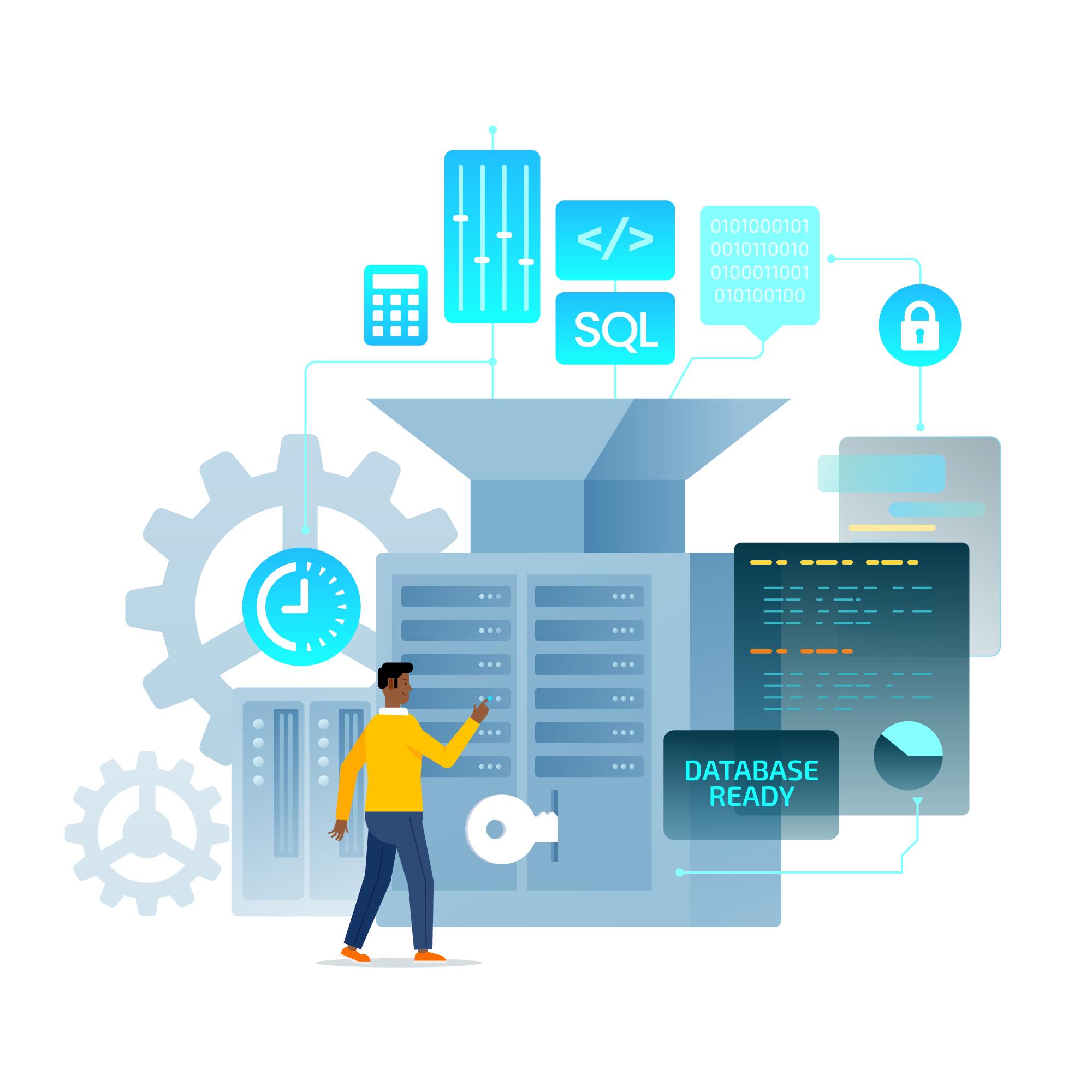
The creation of a prosperous SaaS offering extends far beyond the mere development of functional features or the delivery of a seamless user interface.
As these applications scale to accommodate numerous organizations, safeguarding client data evolves into a critical architectural imperative.While a multi-tenant architecture enables distinct enterprises to operate within a unified software infrastructure, it is imperative that each organization maintains complete autonomy over its proprietary data, user base, and resources.Consequently, the deployment of robust tenant isolation strategies empowers developers to enforce this necessary separation without compromising the application's performance or its capacity for scalability.
Technologies including Next.js, TypeScript, Prisma, and PostgreSQL are capable of facilitating robust, well-structured multi-tenant ecosystems when integrated with stringent security protocols.
SaaS tenant isolation refers to the techniques and architectural practices used to separate customer environments and prevent unauthorized access to another tenant's resources.
Why Tenant Isolation Matters in Modern SaaS Development
The adoption of a multi-tenant architecture enables the deployment of a singular software platform to serve a diverse client base; however, the reliance on shared infrastructure precipitates significant security vulnerabilities should tenant isolation mechanisms fail to function with requisite precision.
In a subscription-based SaaS ecosystem serving hundreds of enterprises that oversee personnel, client databases, and internal workflows, a fundamental expectation persists: the sanctity of proprietary data must be rigorously maintained, despite the fact that all clients operate within a singular, shared application infrastructure.
Vulnerabilities inherent in database queries, API authorization protocols, or authentication mechanisms may inadvertently compromise data integrity, allowing one entity's proprietary information to be accessed by another.
Such breaches not only erode consumer confidence but also precipitate severe operational and financial repercussions for the affected organization.
1.Design a Reliable Tenant-Aware Database Structure
Robust database design stands as a cornerstone of security within multi-tenant application architectures.
It is imperative that developers employ a standardized methodology to rigorously bind each customer record to its corresponding organizational entity.
PostgreSQL offers a range of architectural strategies for handling tenant data, wherein a shared database employing a unified schema often proves highly effective for numerous SaaS platforms.
In such configurations, tenant-specific records are systematically structured through the utilization of a dedicated `tenant_id` column.
Leveraging Prisma ORM enables developers to articulate the intricate relationships among tenants, users, subscriptions, and other application assets, thereby streamlining the preservation of coherent data integrity throughout the system.
In scenarios requiring heightened security, PostgreSQL Row-Level Security (RLS) imposes supplementary, database-enforced constraints to safeguard data integrity.
These policies function by restricting query results to exclusively return records pertinent to the authenticated tenant, thereby ensuring strict adherence to access controls.
The choice of a suitable database model is contingent upon the platform's security mandates, the intricacy of its operational framework, and the anticipated scale of expansion for the SaaS solution.
2.Build Secure Tenant Authentication Workflows
Authentication mechanisms must serve a dual function, verifying the identity of individual users while simultaneously validating the specific organizations to which they are granted access.
Given that a user may simultaneously belong to multiple organizations, establishing the appropriate tenant context becomes a critical component of the authentication workflow.
Upon successful login, the backend must subsequently determine and enforce the user's authorized tenant context by leveraging verified session data.
Contemporary authentication frameworks facilitate robust session management, granular access control, and rigorous user verification.
Developers leveraging the Next.js and TypeScript ecosystem must prioritize the validation of tenant data through dependable server-side mechanisms to ensure security and integrity.
Implementing role-based access control significantly enhances security architecture by delineating distinct permission sets for organization owners, administrators, managers, and standard users.
This strategy effectively safeguards administrative functionalities and confidential organizational assets from intrusion by unauthorized individuals.
3.Strengthen Backend APIs With Tenant-Level Authorization
In a secure multi-tenant architecture, it is imperative that every API endpoint rigorously enforces tenant isolation.
Even when authentication mechanisms function flawlessly, the absence of dedicated authorization checks can inadvertently compromise data integrity and expose sensitive information.
For instance, a user may seek to access an invoice belonging to a different organization by altering the resource identifier within an API request.
To mitigate this issue, backend services must rigorously validate that any requested resource falls within the scope of the authenticated user's authorized tenant.
Developers should implement consistent authorization rules for:
- Customer and employee management.
- Details pertaining to subscription access and billing arrangements.
- Project records and business documents.
- File uploads and downloadable resources.
- Reporting and analytics endpoints.
By consolidating these verification protocols, the organization not only eliminates redundant security mechanisms but also streamlines the overall application maintenance process.
4.Implement Scalable Tenant Context Management
With the escalating intricacy of SaaS architectures, it becomes imperative to ensure the uniformity of tenant data throughout all constituent application modules.
A centralized tenant context framework empowers developers to precisely ascertain the originating organization behind any request.
This critical context is established via validated authentication sessions, organizational membership verification, or confirmed custom domains.
Within a Next.js application, the orchestration of tenant identification workflows can be effectively streamlined by leveraging server-side middleware alongside dedicated backend authorization services.
Nevertheless, middleware must not serve as the sole line of defense.
Both database queries and standalone API calls must rigorously uphold their respective access controls, ensuring that permissions are validated independently for each operation.
Furthermore, a coherent tenant context significantly facilitates the seamless integration of background jobs, notifications, scheduled tasks, and third-party services.
SaaS Tenant Isolation is a critical architectural requirement for developing secure, reliable, and scalable multi-tenant applications. From database separation and authentication to API authorization, caching, and background processing, every application layer must maintain clear boundaries between customer environments.
5.Prevent Cross-Tenant Data Exposure Through Secure Caching
While caching mechanisms can substantially enhance the performance of SaaS applications by mitigating redundant database queries, the implementation of shared caching infrastructures introduces notable vulnerabilities if tenant identifiers are omitted from cache key generation.
For instance, when two distinct organizations request analogous dashboard data, a misconfigured cache may inadvertently serve previously stored information intended for a different tenant.
Developers are required to implement tenant-specific cache keys and exercise rigorous control over cache invalidation protocols whenever modifications occur within organizational data structures.
This principle extends equally to file storage, background processing, and transient data maintained at the application level.
By augmenting these protective measures, we not only fortify data privacy but also enhance the operational efficiency of multi-tenant architectures.
6.Test Tenant Isolation Before Scaling
Security testing is essential when developing applications that serve multiple organizations.
Developers should verify that users cannot access resources outside their assigned tenant, even when they manipulate request parameters or resource identifiers.
Automated integration tests are capable of emulating diverse organizational environments to assess the application's capacity for managing unauthorized access attempts.
In the context of Prisma and PostgreSQL-based applications, the testing regimen must comprehensively encompass database queries, relationship-based access controls, transaction management, and the retrieval of data scoped to individual tenants.
Furthermore, the implementation of routine security audits, comprehensive log analysis, and continuous system monitoring serves as a critical mechanism for detecting anomalous access patterns.
The continuous validation of tenant isolation empowers development teams to fortify application security incrementally, ensuring robust protection as novel features and integrations are progressively incorporated.
Conclusion
Constructing a secure multi-tenant Software-as-a-Service (SaaS) environment demands meticulous orchestration across database architecture, authentication protocols, backend API integrations, and infrastructure governance.
Robust tenant isolation mechanisms are essential to delineate distinct organizational boundaries while simultaneously enabling the efficient sharing of computational resources.
The integration of Next.js, TypeScript, Prisma, and PostgreSQL, augmented by tenant-aware authorization mechanisms, rigorous database security protocols, and persistent testing practices, empowers developers to construct scalable, full-stack SaaS applications.
A meticulously designed isolation architecture safeguards client data, streamlines application upkeep, and establishes a robust foundation for SaaS solutions capable of accommodating the growing demands of an expanding organizational landscape.

 English
 French
 Spanish
 Portuguese
 Deutsch
 Turkish
 Dutch
 Italiano
 Russian
 Romaian
 Portuguese (Brazil)
 Greek