


What Buyers Should Know About Baking Paper Production
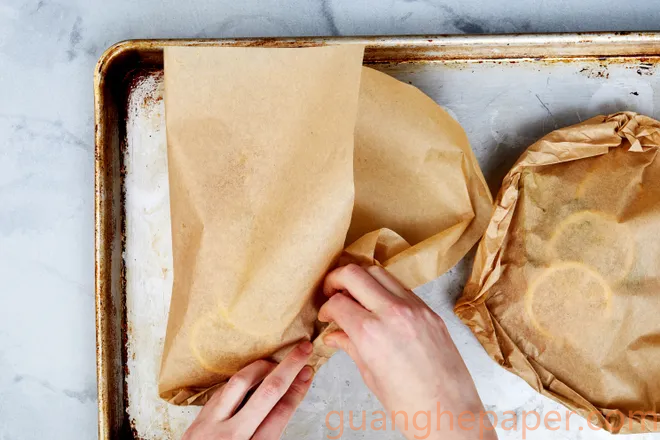
As demand for convenient food preparation materials grows across international markets, manufacturers of specialized paper products play an important role in supporting bakeries, foodservice businesses, and distributors. Choosing a Baking Paper Manufacturer requires an understanding of the materials, processing methods, product formats, and quality considerations that influence finished product performance. For professional purchasers, evaluating these factors helps establish realistic expectations and supports more effective long-term sourcing decisions.
Baking paper is a functional paper product developed for applications involving food preparation and oven baking. It is commonly used as a liner for trays and other suitable cooking surfaces. Depending on its construction, it may incorporate a release coating that helps reduce adhesion between food and the paper. This function is especially useful when preparing cookies, pastries, bread products, and other baked goods that can be difficult to remove from untreated surfaces.
Manufacturing starts with the selection of the paper base. The material needs to provide suitable strength, flexibility, and dimensional stability for its intended applications. Different thicknesses and paper characteristics may be appropriate for different product formats. A manufacturer must consider how the material will be handled during converting, packaged for distribution, and used by the final customer.
Surface treatment is an important technical consideration in many baking paper products. Silicone coatings are commonly used to provide non-stick release characteristics. The coating needs to be suitable for the intended application and consistently applied across the material. Variations in coating quality may affect the product's handling characteristics and the experience of commercial users. Product evaluation should therefore consider both the paper substrate and its finished surface.
Once the paper has been prepared, converting operations create the final formats. These operations may include slitting, rewinding, cutting, and sheet preparation. The accuracy of these processes influences roll width, sheet dimensions, edge quality, and packaging efficiency. For customers operating standardized baking equipment, dimensional consistency is particularly important because it reduces the need for repeated manual adjustments.
Different customer groups have different product requirements. Industrial bakeries may purchase large rolls or bulk sheet quantities to support continuous operations. Restaurants and catering companies may prefer practical formats that can be handled easily by kitchen employees. Retail brands often require compact consumer packaging with clear product information. Manufacturers serving multiple market segments need to understand these distinctions when discussing available product configurations.
Quality control should be integrated into the manufacturing process. Incoming materials can be reviewed against purchasing specifications, while production checks may monitor material appearance, converting dimensions, and packaging condition. Finished goods inspection can help identify visible defects or deviations from approved specifications. The actual inspection program depends on the manufacturer's procedures and the product requirements agreed with the customer.
Food-contact requirements are particularly important in this industry. Buyers need to understand the regulatory expectations of their destination markets and request documentation relevant to the exact product being supplied. Material declarations, technical specifications, and other supporting records may be necessary depending on the market and application. Manufacturers should communicate the scope of available documentation accurately and avoid presenting unrelated certificates as proof of product compliance.
International procurement also involves commercial and logistical considerations. Buyers should clarify minimum order quantities, production schedules, lead times, shipping arrangements, and packaging specifications before confirming an order. These details affect purchasing costs and inventory planning. A clearly documented order specification can help prevent misunderstandings about material construction, dimensions, pack quantities, and labeling requirements.
Customization may be relevant to businesses that serve specialized distribution channels. Depending on available equipment and production arrangements, customers may discuss different sheet sizes, roll widths, packaging formats, and private-label requirements. A brand owner may prioritize consumer-facing packaging, while an industrial distributor may need bulk cartons. Every requested variation should be reviewed for feasibility before production begins.
For manufacturers and buyers alike, sample evaluation is an important part of product development and supplier approval. Samples can be tested using representative food products, baking trays, and operating temperatures. Buyers should assess handling, release performance, dimensions, and packaging rather than relying solely on appearance. Testing should follow the product's stated instructions and avoid conditions outside its recommended usage range.
Environmental considerations may also influence material selection. International buyers increasingly request information about paper sourcing, packaging efficiency, and the characteristics of coatings. These subjects require precise communication because the disposal properties of finished baking paper depend on its complete construction. A paper-based product should not automatically be described as recyclable or compostable without suitable supporting evidence.
Long-term cooperation depends on technical understanding and consistent communication. A manufacturer should be able to explain product specifications, discuss practical application requirements, and provide clear information about order arrangements. Buyers should evaluate responsiveness, documentation, sample consistency, and the ability to manage agreed specifications over repeat orders. Such factors contribute to a more stable supply relationship.
For distributors developing their product portfolios, choosing a suitable Baking Paper Manufacturer means matching production specifications with the requirements of their intended customers. Reviewing available product formats at https://www.guanghepaper.com/product/baking-parchment-paper-sheets/ can help purchasing teams assess potential options for retail, foodservice, and commercial baking applications.

 English
 Arabic
 French
 Spanish
 Deutsch
 Turkish
 Dutch
 Italiano
 Russian
 Romaian
 Portuguese (Brazil)
 Greek