


Ametank Training: Learn Advanced Storage Tank Engineering
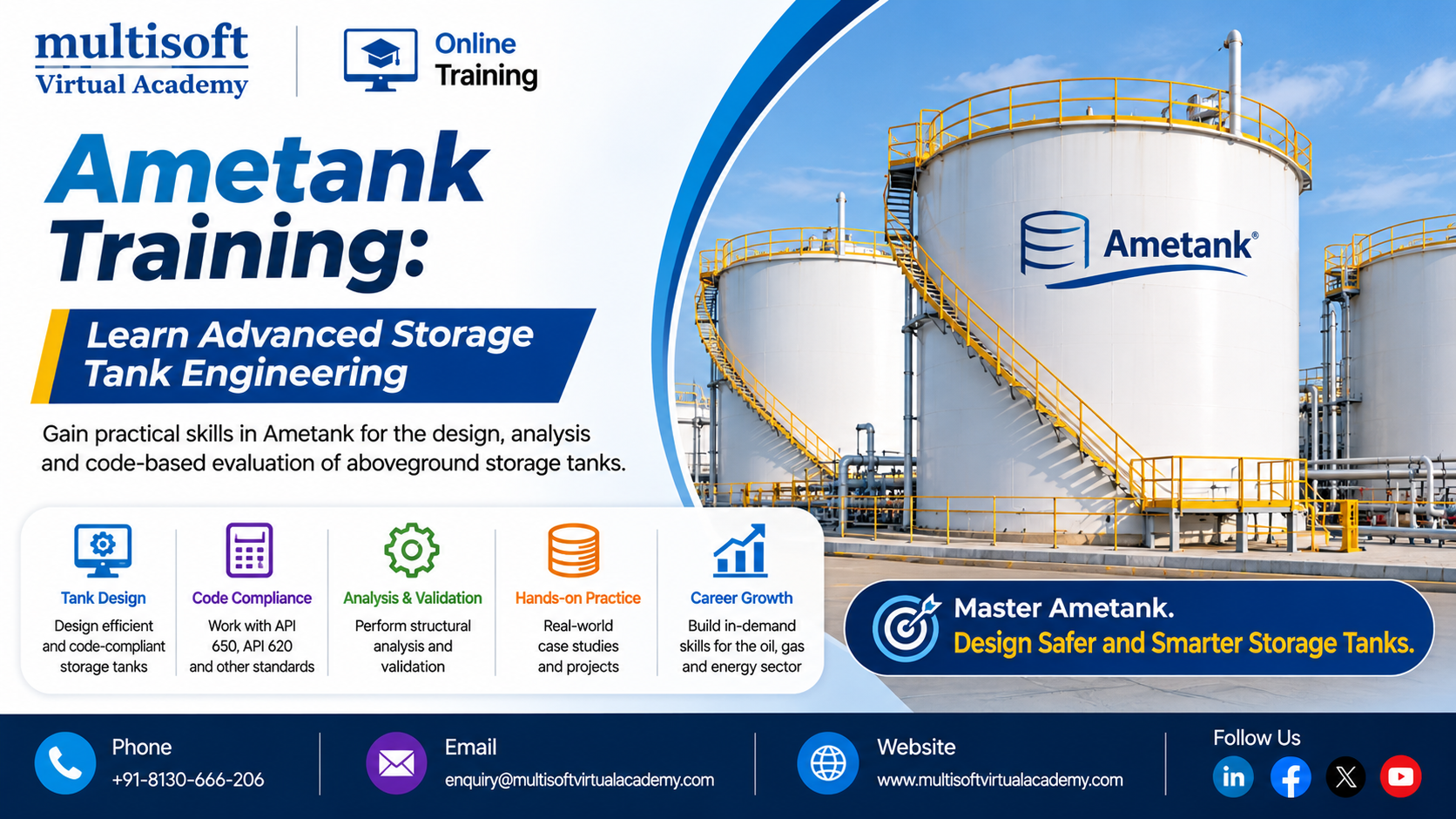
Storage tanks are widely used across industries to store petroleum products, chemicals, water, and other industrial materials. Their design requires careful consideration of structural strength, material properties, operating conditions, and engineering standards. Even a small design error can affect the reliability, safety, and performance of a storage system. As a result, engineering professionals need reliable tools and technical knowledge to develop accurate tank designs.
Ametank Training provides an opportunity to learn specialized software used for aboveground storage tank design and detailing. AMETank helps engineers work with tank configurations, structural components, engineering calculations, and technical drawings through a structured design environment.
For professionals working in mechanical engineering, oil and gas, petrochemical facilities, and EPC projects, learning AMETank can strengthen their understanding of storage tank engineering. It also helps them become familiar with software-based design activities that support industrial engineering projects.
Understanding AMETank and Its Role in Tank Engineering
AMETank is a specialized engineering application developed by TechnoSoft Inc. for the design and detailing of aboveground storage tanks. It supports engineering activities involving tank geometry, components, design parameters, and technical documentation.
The application can help engineers configure different tank arrangements and work with components such as shells, roofs, bottoms, stiffeners, structural supports, platforms, and access systems.
Storage tank design involves multiple engineering considerations. These include the type of stored material, tank dimensions, design temperature, operating conditions, wind loads, seismic requirements, and applicable design codes.
AMETank provides tools to support relevant design workflows. However, engineers must still review software inputs and outputs carefully and verify that the final design complies with project specifications and applicable standards.
Why Should Engineers Learn AMETank Software?
Specialized engineering software knowledge can help professionals handle complex design activities more efficiently. AMETank training introduces learners to a software environment focused on aboveground storage tank engineering.
Develop Practical Tank Modeling Skills
Tank modeling involves defining dimensions, selecting configurations, and organizing different structural components. Training helps participants understand how these elements are represented in the software.
Learners can become familiar with the modeling environment and develop a better understanding of how individual components contribute to the complete tank arrangement.
Understand Engineering Calculations
Storage tank design involves calculations related to shell thickness, roof arrangements, structural requirements, and different loading conditions.
Training introduces learners to the relevant design parameters and calculation workflows supported by the application. This knowledge helps engineers understand how design inputs influence the results.
Improve Design Documentation
Engineering projects require detailed technical documentation for design review, fabrication, and construction activities. AMETank supports workflows for preparing drawings and related design information.
Learning these functions can help professionals understand how to organize engineering outputs and review technical deliverables.
Support Industrial Project Requirements
Oil and gas facilities, refineries, and manufacturing plants require storage systems designed according to specific operating conditions and engineering requirements.
AMETank knowledge can be useful for professionals involved in these projects, particularly when their organizations use the application as part of their tank design workflow.
Major Modules and Topics Covered in Ametank Training
A practical Ametank Training Course should introduce the software interface and gradually move toward tank configuration, component design, and documentation. The following topics provide a useful framework for learning the application.
1. Software Introduction and Workspace Navigation
The initial stage focuses on understanding the software environment and its primary functions.
Topics may include:
- Introduction to AMETank software
- Software interface and navigation
- Menu options and toolbars
- Modeling workspace
- Model tree structure
- Basic modeling operations
- Project organization
- Working with different design views
This foundation helps learners become comfortable with the application before performing detailed engineering activities.
2. Tank Project Setup and Basic Configuration
Project setup establishes the information required for subsequent design activities. Incorrect inputs can affect the accuracy of the model and related calculations.
Training may introduce:
- Creating a new tank project
- Entering project details
- Defining tank diameter and height
- Selecting tank configurations
- Setting design conditions
- Defining material information
- Reviewing design parameters
- Managing project settings
Learners can understand how basic project information influences the overall tank design.
3. Storage Tank Shell Design
The shell is one of the primary structural components of an aboveground storage tank. It must be designed to withstand the relevant loads and operating conditions.
Important learning areas include:
- Shell course configuration
- Shell plate arrangement
- Shell thickness considerations
- Material selection
- Wind girder arrangements
- Stiffener configuration
- Structural properties
- Design output review
These topics help engineers understand the relationship between shell geometry, material properties, and structural requirements.
4. Roof Modeling and Design
The roof arrangement depends on tank dimensions, stored material, operating conditions, and project specifications.
Training may cover:
- Fixed roof configurations
- Floating roof arrangements
- Roof geometry
- Roof structural components
- Roof support arrangements
- Roof design parameters
- Relevant modeling activities
Learners can understand how different roof components are configured and represented in the software.
5. Bottom Plate and Foundation Arrangement
The bottom plate and foundation are important elements in tank engineering. Their configuration must be considered in relation to tank geometry, loading, and supporting conditions.
Topics may include:
- Tank bottom arrangement
- Bottom plate rows
- Annular ring configuration
- Foundation-related information
- Bearing ring details
- Bottom component properties
- Design information review
Understanding these elements helps professionals develop a more complete view of storage tank construction and design.
6. Structural Components and Support Arrangements
Storage tanks include several structural elements that contribute to their stability and accessibility.
Ametank training may introduce:
- Structural support arrangements
- Center bay configurations
- Radial bay configurations
- Wind girders
- Structural members
- Support components
- Connection-related details
Practical modeling exercises can help participants understand how these components fit into the overall tank arrangement.
7. Nozzles, Platforms, and Tank Accessories
Industrial tanks require additional components to support operation, inspection, and maintenance.
Depending on the course syllabus, learners may explore:
- Nozzle arrangements
- Manholes
- Roof platforms
- Shell platforms
- Stairways and ladders
- Handrails and walkways
- Anchor straps
- Equipment supports
- Other tank appurtenances
These components contribute to the completeness of the engineering model and associated documentation.
8. Engineering Drawings and Design Deliverables
Drawing preparation is an important part of storage tank engineering. Drawings communicate design information to fabrication teams, construction professionals, and project stakeholders.
Training may include:
- Drawing setup and configuration
- General arrangement drawings
- Component detailing
- Drawing layers and line settings
- Title block configuration
- Bill of material drawings
- Drawing editing
- Reviewing engineering outputs
The specific drawing types and deliverables depend on the software version and training syllabus.
Important Standards Used in Storage Tank Design
Knowledge of industry standards is essential for professionals involved in storage tank projects. AMETank-related training may introduce standards and design concepts relevant to aboveground storage tanks.
API 650: Covers welded tanks for oil storage within its specified scope. It addresses design, material, fabrication, and inspection requirements.
API 620: Addresses the design and construction of large, welded, low-pressure storage tanks.
API 653: Focuses on inspection, repair, alteration, and reconstruction of aboveground storage tanks.
EN 14015: Provides requirements for site-built, vertical, cylindrical, flat-bottomed, aboveground welded steel tanks.
AWWA Standards: Address particular types of water storage tanks and related engineering requirements.
Engineers should understand that these standards serve different applications. The correct design standard must be selected according to the stored product, operating conditions, project specifications, and applicable regulations.
Industrial Applications of AMETank
Storage tanks are important assets across several industrial sectors. AMETank knowledge can be relevant wherever organizations use aboveground storage tank design workflows.
Oil and Gas Industry
Oil and gas facilities use storage tanks for crude oil, refined products, and other materials. Engineering teams must consider tank dimensions, material properties, loading conditions, and applicable design requirements.
Petrochemical and Chemical Processing
Chemical facilities require storage systems suitable for the characteristics of different substances. Tank engineering involves appropriate materials, structural considerations, and project-specific design requirements.
Water and Wastewater Treatment
Water treatment facilities use storage tanks for different operational purposes. Tank design must consider the intended service, environmental conditions, and relevant engineering standards.
Power Generation and Energy
Power plants and energy facilities may use storage tanks for fuel, water, and other operational requirements. Reliable engineering documentation supports project development and maintenance planning.
EPC and Engineering Consultancies
EPC organizations manage engineering, procurement, and construction activities for industrial projects. Storage tank design software can support the preparation of models, calculations, and technical drawings.
Industrial Manufacturing
Manufacturing facilities may require tanks for raw materials, process liquids, and other industrial applications. Accurate design information supports facility development and equipment planning.
Who Can Benefit from Ametank Training?
The course can be useful for professionals who want to develop specialized knowledge of tank design applications.
- Mechanical Engineers: Those interested in storage tank engineering and static equipment design.
- Structural Engineers: Professionals seeking knowledge of tank structural arrangements and components.
- CAD Designers: Designers who want to expand their skills into specialized tank modeling.
- Project Engineers: Professionals involved in industrial engineering coordination.
- EPC Professionals: Team members responsible for engineering deliverables and project documentation.
- Oil and Gas Engineers: Professionals working with storage facilities and industrial infrastructure.
- Engineering Graduates: Candidates interested in developing practical knowledge of specialized engineering applications.
A background in mechanical, structural, or related engineering disciplines can make the learning process easier.
Career Scope After Learning AMETank
Specialized software skills can complement an engineer's academic background and professional experience. Learning AMETank may support career development in areas involving storage tank design and industrial engineering.
Possible career roles include:
- Storage Tank Design Engineer
- Mechanical Design Engineer
- Static Equipment Engineer
- Tank Design Specialist
- Structural Design Engineer
- Mechanical CAD Designer
- Project Design Engineer
- Engineering Consultant
Career opportunities depend on practical knowledge, educational qualifications, industry experience, and employer requirements. Professionals should also develop their understanding of applicable design codes and engineering calculations.
How to Select the Best AMETank Training Program
A suitable course should provide more than basic software demonstrations. It should explain the engineering concepts behind the application and include practical learning activities.
Evaluate the curriculum: Check whether the program includes project setup, shell design, roof configuration, bottom arrangement, structural components, and drawing generation.
Prioritize hands-on practice: Practical exercises help learners understand the complete design workflow and become familiar with software operations.
Check instructor knowledge: Trainers should be able to explain both software functions and the engineering principles relevant to storage tank design.
Confirm software availability: Ask about software version, system requirements, and access to the practice environment.
Review training support: Understand whether learners receive additional resources, doubt-clearing sessions, and guidance after the training.
Check course certification: Confirm the nature of the completion certificate and whether any separate certification examination is involved.
Frequently Asked Questions About AMETank Training
What is AMETank Training?
AMETank Training teaches participants how to use AMETank software for aboveground storage tank modeling, design, and detailing. It may include project configuration, tank components, design parameters, and technical drawing workflows.
What is AMETank software used for?
The software supports the engineering design and detailing of aboveground storage tanks, including relevant shell, roof, bottom, structural, and accessory components.
Is AMETank useful for mechanical engineers?
Yes. Mechanical engineers working in tank design, static equipment, oil and gas, and EPC projects may benefit from learning the application.
Does AMETank support API 650?
AMETank supports design workflows associated with API 650. Engineers must verify the applicable software version, design settings, and project requirements before relying on generated results.
Do beginners need engineering knowledge?
Basic mechanical or structural engineering knowledge is recommended. Familiarity with engineering drawings and storage tank fundamentals can also be helpful.
Can AMETank skills help in EPC projects?
Yes. AMETank knowledge can be relevant to EPC professionals involved in aboveground storage tank design, modeling, and engineering documentation.
Conclusion
Storage tank design requires technical expertise, careful engineering judgment, and a clear understanding of applicable standards. Learning AMETank can help professionals develop knowledge of tank modeling, shell and roof configurations, bottom arrangements, structural components, and engineering drawing preparation. Combining software proficiency with practical design knowledge can strengthen an engineer's ability to contribute to industrial projects. For professionals seeking structured instruction and practical software learning, Multisoft Virtual Academy offers Ametank Training to help learners develop their understanding of aboveground storage tank design and specialized engineering workflows.
Originally Content Posted at: https://www.multisoftvirtualacademy.com/blog/ametank-training-learn-advanced-storage-tank-engineering

 English
 Arabic
 French
 Spanish
 Portuguese
 Deutsch
 Turkish
 Dutch
 Italiano
 Russian
 Romaian
 Greek