


Sagging Ceilings Repair Services: How to Restore Ceiling Safety and Stability
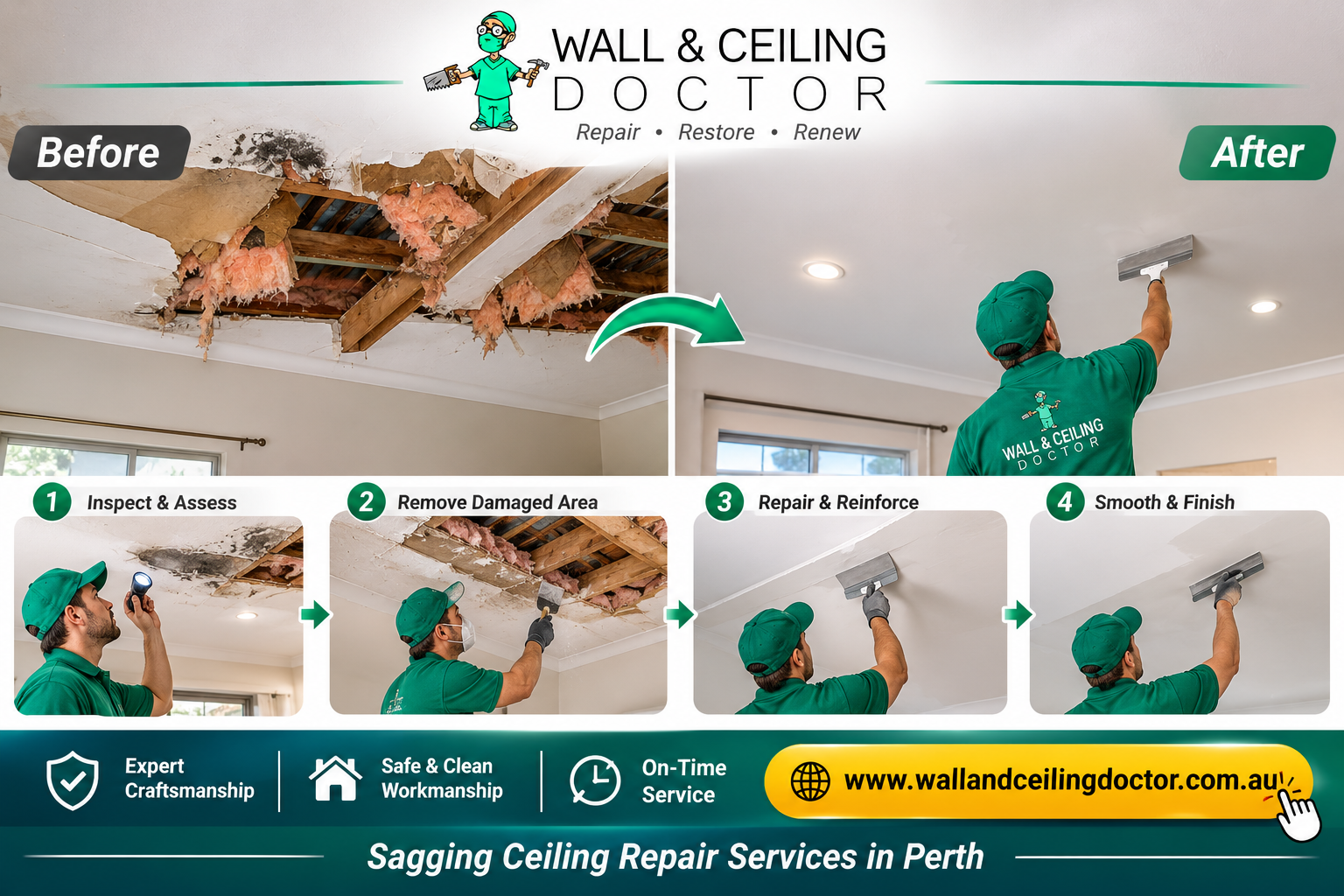
A sagging ceiling is more than just an appearance problem. It can indicate underlying structural issues, moisture damage, weakened plasterboard, or failing ceiling supports. If left untreated, the damage may become worse and create safety concerns for people living or working inside the property. Whether it is a residential home or a commercial building, addressing ceiling problems early helps maintain a safe and comfortable environment.
Professional sagging ceiling repair services help identify the cause of the damage and restore the ceiling's strength, stability, and appearance. Property owners in Perth should pay attention to early warning signs and arrange an inspection before minor ceiling issues develop into major repairs.
What Causes a Ceiling to Sag?
Several factors can contribute to a sagging ceiling. Understanding the cause is important because the correct repair method depends on the extent and type of damage.
1. Water Damage: Roof leaks, plumbing problems, and poor waterproofing can allow moisture to enter the ceiling. Over time, plasterboard absorbs water, becomes heavier, and starts to sag.
2. Ageing Ceiling Materials: Older ceilings may weaken as materials deteriorate over time. Plasterboard joints, fixings, and supporting components can gradually lose their strength.
3. Incorrect Installation: Poor installation, insufficient fasteners, or inadequate support can cause ceiling sheets to loosen and move away from their original position.
4. Structural Movement: Changes in the building structure, shifting supports, or movement within the property can contribute to ceiling cracks and uneven surfaces.
Warning Signs That Your Ceiling Needs Repair
Recognising early warning signs can help prevent further damage. Some common indicators include:
-
Visible dips or uneven sections across the ceiling.
-
Cracks appearing around ceiling joints or corners.
-
Plasterboard separating from supporting frames.
-
Loose, bulging, or visibly weakened ceiling sections.
-
Water stains, damp patches, or peeling paint.
-
Unusual movement or sounds coming from the ceiling.
If a ceiling appears to be dropping or has developed a significant bulge, avoid standing underneath it. Keep people away from the affected area and arrange a professional assessment. If there is a risk of collapse, treat it as an urgent safety issue.
How Professional Sagging Ceiling Repairs Restore Stability
Repairing a sagging ceiling involves more than covering visible damage. A proper repair begins with identifying why the ceiling has become unstable.
Inspection and Damage Assessment: A professional examines the affected area, checks for moisture damage, loose plasterboard, damaged fixings, and potential support issues. This helps determine whether the ceiling needs minor repairs or more extensive work.
Addressing the Underlying Problem: If water damage is responsible, the source of moisture must be identified and resolved before the ceiling is repaired. Otherwise, the same problem may return.
Reinforcing or Replacing Damaged Sections: Depending on the condition, loose plasterboard may need to be secured, damaged sections replaced, or supporting components repaired. Severely weakened materials should not simply be covered with new plasterboard.
Surface Restoration: Once the ceiling is stable, professionals can repair joints, fill cracks, sand uneven areas, and prepare the surface for painting. This creates a smoother and more consistent finish.
Why Timely Ceiling Repairs Matter
Delaying ceiling repairs can increase the extent of damage and lead to more complicated restoration work. A small sagging section may indicate a larger issue involving moisture, weakened fixings, or deteriorating materials.
Timely repairs help reduce the risk of falling ceiling materials, protect the interior of the property, and maintain the overall condition of the building. They can also help property owners avoid unnecessary repair costs by addressing problems before they spread.
For Perth homeowners, landlords, and commercial property managers, professional assessment is a practical way to understand the condition of a ceiling and determine the most suitable repair approach.
Choosing Reliable Ceiling Repair Services in Perth
When selecting a ceiling repair professional, look for experience with sagging ceilings, plasterboard repairs, ceiling cracks, and water-damaged surfaces. A reliable service provider should inspect the problem, explain the recommended repair process, and provide a clear understanding of the work involved.
It is also important to check whether the repair addresses the underlying cause rather than simply improving the visible appearance. Wall & Ceiling Doctor provides wall and ceiling repair services in Perth, helping property owners address common ceiling and wall damage and maintain their interiors.
Before arranging repairs, ask about the condition of the existing ceiling, the materials required, the expected timeframe, and whether any additional work may be necessary. These details help you make an informed decision.
Maintaining a Safe and Stable Ceiling
Regular property inspections can help identify early signs of ceiling deterioration. Check for roof leaks, plumbing issues, damp patches, and developing cracks. After heavy rainfall or any water-related incident, inspect ceilings for new stains or changes in their surface.
Avoid attaching heavy fixtures to ceiling areas without confirming that adequate structural support is available. If you notice unusual movement, persistent cracking, or visible sagging, arrange a professional inspection rather than attempting an unsupported DIY repair.
Restoring a sagging ceiling promptly protects both the appearance and safety of your property. With the right assessment and repair work, damaged ceiling areas can regain their stability and provide a durable finish.
Frequently Asked Questions
1. What causes a ceiling to sag?
Common causes include water leaks, ageing materials, poor installation, loose fixings, and structural movement. Identifying the exact cause is essential before starting repairs.
2. Is a sagging ceiling dangerous?
Yes. A sagging ceiling may indicate weakened plasterboard or failing supports. If the ceiling is bulging or appears close to collapsing, keep people away from the area and seek urgent professional assistance.
3. Can a sagging ceiling be repaired without replacing the entire ceiling?
In many cases, yes. If the damage is limited, professionals may be able to secure loose sections, reinforce supports, or replace only the affected areas. Extensive damage may require larger sections to be replaced.
4. How much do sagging ceiling repair services cost in Perth?
The cost depends on the size of the damaged area, the cause of the sagging, the materials involved, and the amount of repair work required. A professional inspection is the best way to obtain an accurate estimate.

 English
 Arabic
 Spanish
 Portuguese
 Deutsch
 Turkish
 Dutch
 Italiano
 Russian
 Romaian
 Portuguese (Brazil)
 Greek