


ElfLiq Nic Salts Ingredients and Nicotine Strength Explained
Introduction
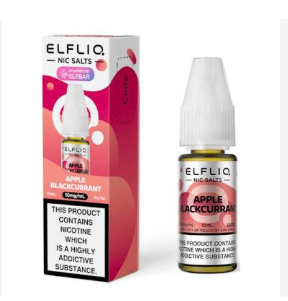
Understanding ingredients and nicotine concentrations is essential when examining any nicotine-containing e-liquid. ElfLiq Nic Salts by Elf Bar is a bottled e-liquid range that uses nicotine salts and common e-liquid carrier ingredients. Its packaging provides information that helps identify the formulation and relevant safety warnings.
This article explains the main ingredient categories, nicotine measurements and label information associated with ElfLiq.
What Is Nicotine Salt?
ElfLiq Nic Salts by Elf Bar are formulations that combine nicotine with an acid to create a nicotine salt. This form is used in various e-liquids.
Nicotine salt liquids are often associated with a smoother throat sensation compared with some freebase nicotine formulations. However, this does not make them non-addictive or risk-free.
The amount of nicotine in a bottle remains an important consideration regardless of the formulation.
Vegetable Glycerin
Vegetable glycerin, commonly abbreviated as VG, is a widely used ingredient in e-liquids.
It contributes to the liquid's thickness and vapour characteristics. The amount of VG in a formulation can influence how the liquid behaves in a compatible vaping device.
The presence of VG does not make inhaling the finished aerosol equivalent to consuming a food-grade ingredient. Inhalation and ingestion are different exposure routes.
Propylene Glycol
Propylene glycol, or PG, is another common e-liquid ingredient.
It acts as a carrier for flavouring substances and affects the physical properties of the liquid. Different e-liquids use different proportions of VG and PG depending on their formulation.
ElfLiq product information identifies a 50/50 VG/PG ratio for certain versions.
Flavouring Ingredients
Flavouring components give individual products their named profiles. Depending on the formulation, natural and artificial flavouring substances may be included.
A flavouring ingredient considered suitable for food use is not automatically established as safe for inhalation. Consumers should not interpret flavour descriptions as evidence of safety.
Understanding Nicotine Concentration
Nicotine concentration is generally displayed in milligrams per millilitre, written as mg/ml.
For example:
-
10mg/ml means 10 milligrams of nicotine per millilitre.
-
20mg/ml means 20 milligrams of nicotine per millilitre.
-
30mg/ml means 30 milligrams of nicotine per millilitre.
The total nicotine content in a bottle depends on both its concentration and its liquid volume.
The official Elf Bar product information lists different concentrations across certain ElfLiq formats. Other market-specific products may have different specifications.
Why Reading the Label Matters
A bottle's front design may emphasise its flavour and branding, but important technical details are often printed on the side or back.
Before handling any nicotine-containing e-liquid, consumers should identify its nicotine concentration, total volume, ingredients, manufacturing details and warnings.
They should also check whether the product meets the legal requirements of their country.
Nicotine-Related Health Risks
Nicotine is an addictive substance that can affect the cardiovascular and nervous systems. Possible unwanted effects include increased heart rate, increased blood pressure, nausea and dizziness.
Young people and pregnant individuals face particular risks from nicotine exposure. Non-smokers should not start using nicotine-containing vaping products.
People experiencing an adverse reaction should stop exposure and seek appropriate medical advice.
Storage and Handling
Proper storage is important because concentrated nicotine liquids can be dangerous if swallowed or absorbed through the skin.
Keep bottles closed and stored securely. Never leave e-liquid where children or animals can reach it. Follow the manufacturer's instructions for handling, storage and disposal.
Conclusion
ElfLiq Nic Salts by Elf Bar contain several ingredient categories, including vegetable glycerin, propylene glycol, flavourings and nicotine. Understanding these components and the difference between nicotine concentration and total nicotine content makes product labels easier to interpret. Nicotine addiction and other health risks remain important considerations with every formulation.

 English
 Arabic
 French
 Spanish
 Portuguese
 Deutsch
 Dutch
 Italiano
 Russian
 Romaian
 Portuguese (Brazil)
 Greek