


SaaS Webhook Retries and Exponential Backoff for Reliable Event Processing
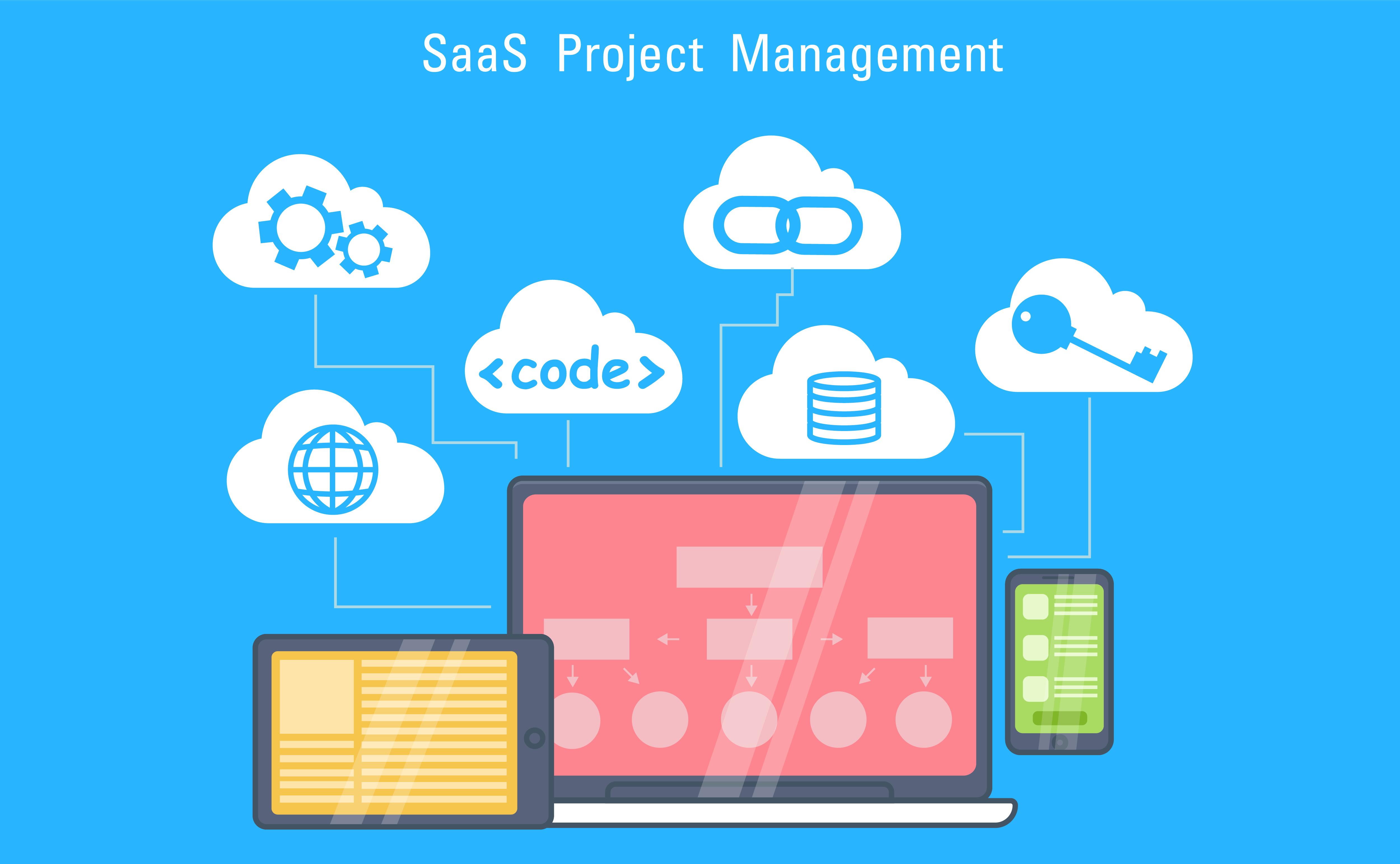
With the increasing interconnectivity of SaaS ecosystems, applications require robust mechanisms to facilitate seamless communication with both external platforms and internal services.
Webhooks fulfill this critical function by enabling one system to proactively notify another upon the occurrence of a designated event.Such events encompass a diverse range of occurrences, including subscription modifications, payment validations, account updates, and alterations to application data.
In the absence of an adequate recovery strategy, such failures risk disrupting critical application workflows.Consequently, the implementation of SaaS webhook retries coupled with exponential backoff empowers developers to navigate these challenges, thereby ensuring robust and dependable communication across interconnected services.
SaaS webhook retries work helps developers build more reliable applications, improve event delivery, and maintain consistent communication between different services.
Why Webhook Delivery Needs a Retry Mechanism
Reliance on a solitary successful HTTP request for webhook-based integration is ill-advised, particularly within real-world SaaS ecosystems where external APIs function autonomously and are susceptible to transient outages or unforeseen latency.
In a multi-tenant SaaS environment where account activity notifications are dispatched to diverse customer endpoints, system resilience must ensure that the unavailability of a single customer's server does not result in the permanent loss of associated events.
Rather than discarding failed deliveries, the application should retain all relevant delivery metadata and automatically initiate retry mechanisms to retransmit the notifications until successful delivery is achieved.
This recovery process is facilitated by a retry mechanism.
The backend system detects failed requests, archives their delivery status, and orchestrates subsequent attempts in accordance with established parameters.
By adopting this methodology, organizations can ensure the integrity of data while simultaneously mitigating the risk of notification gaps within customer integrations.
Using Exponential Backoff to Control Repeated Requests
The persistent transmission of failed webhook requests can exacerbate server strain and intensify existing service outages; exponential backoff mitigates this risk by progressively extending the intermission between successive retry attempts.
For example, an application may implement an exponential backoff strategy by delaying the initial retry attempt by five seconds, extending this interval to ten seconds for the second attempt, doubling it to twenty seconds for the third, and finally postponing the fourth retry by forty seconds.
The progressive expansion of this schedule affords the receiving service additional temporal capacity for recuperation while simultaneously mitigating resource exhaustion on the sending application by curbing the issuance of requests poised for immediate failure.
Developers must establish a defined ceiling for retry intervals and determine a prudent limit on the number of attempts.
Such constraints are essential for regulating background processing expenditures and ensuring that delivery jobs do not persist indefinitely in an active state.
Designing a Webhook Retry System for Next.js Applications
In the context of developing a SaaS product powered by Next.js, webhook delivery must be conceptualized as an autonomous backend function, distinct from and not contingent upon the original API request.
A more scalable methodology entails persisting events prior to initiating delivery.
Upon an application's generation of a business event, the backend system establishes a durable event record that encapsulates the event identifier, destination URL, payload, and current delivery status.
Consequently, the background processing system may subsequently retrieve queued events and dispatch corresponding requests to the designated endpoints.
Developers constructing applications in TypeScript may leverage the language's capabilities to define structured event payloads and enforce rigorous data validation prior to processing.
In this architecture, Prisma serves as a streamlined interface for database operations, while PostgreSQL functions as the robust storage engine for critical metadata, including webhook configurations, delivery histories, and retry logic.
This architectural framework effectively decouples business operations from external communication channels.
Consequently, should a destination service experience an outage, the primary application workflow proceeds uninterrupted, unaffected by delays in webhook request completion.
Preventing Retry Storms with Randomized Delays
While exponential backoff refines retry scheduling, it fails to entirely mitigate the risk of request synchronization.
Consider a scenario where thousands of webhook deliveries falter simultaneously during a single service outage; under these conditions, numerous requests may abruptly become eligible for re-attempt at nearly identical intervals.
Such a scenario may impose undue strain upon the recipient infrastructure.
Randomized delay, frequently referred to as jitter, serves to disperse retry attempts across a spectrum of distinct time intervals.
Instead of rigidly scheduling every request to adhere to an identical latency, the application incorporates controlled stochasticity into its retry logic.
Integrating jitter with exponential backoff significantly bolsters the resilience of webhook delivery mechanisms when confronting periods of elevated traffic or transient service interruptions.
Furthermore, developers are able to adhere to HTTP 429 status codes and utilize Retry-After headers, provided the receiving API supports such directives.
SaaS webhook retries are an essential part of building dependable and scalable software applications. They help applications recover from temporary delivery failures, maintain consistent data, and reduce disruptions in communication between integrated services.
Handling Duplicate Events with Idempotent Processing
The act of retrying webhook requests presents a significant challenge, as it introduces the possibility of a single event being delivered to its destination multiple times.
For instance, a receiving application might successfully execute an update to a subscription yet fail to transmit the corresponding HTTP response prior to the sender's timeout expiring; consequently, the originating system may erroneously attempt to resend the request, despite the underlying operation having already been finalized.
Idempotent processing ensures that repeated deliveries do not result in the execution of duplicate business operations.
To ensure the receiving application can reliably distinguish between new notifications and those already processed, every event must be assigned a distinct identifier.
Employing a database record or implementing a unique constraint serves as an effective mechanism to prevent the redundant application of duplicate events.
This holds particular significance for payment infrastructures, subscription administration, and applications tasked with harmonizing customer data across disparate service ecosystems.
Managing Delivery Attempts with PostgreSQL and Background Workers
Ensuring the reliability of a webhook system necessitates the implementation of persistent tracking mechanisms, as reliance solely on ephemeral application memory is insufficient.
PostgreSQL is capable of tracking comprehensive metadata regarding event generation, destination endpoints, the cumulative number of attempts, the most recent response codes, and scheduled retry intervals.
Concurrently, Prisma empowers developers to architect these records within structured database models, thereby establishing robust relational mappings among tenants, integrations, and webhook events.
Background workers facilitate the independent processing of pending deliveries, operating entirely separate from user-facing application requests.
In the event of job failure, these tasks are automatically rescheduled for subsequent execution; however, events that surpass their allotted retry thresholds are diverted into a dead-letter queue for thorough investigation.
Comprehensive monitoring must encompass delivery success rates, instances of recurring failures, queue latency, and endpoint response times.
These critical metrics enable developers to assess the overall health of integrations and pinpoint specific issues impacting individual customers.
Creating More Resilient Event-Driven SaaS Systems
Ensuring webhook reliability constitutes a fundamental pillar in the architecture of contemporary full-stack applications.
As Software-as-a-Service platforms scale, their integration landscapes grow increasingly intricate, often resulting in a substantial surge in the volume of events transmitted between disparate services.
A robust architectural framework integrates persistent event storage, background processing workers, exponential backoff mechanisms with jitter, idempotency protocols, and comprehensive delivery monitoring.
Each element is engineered to mitigate a distinct reliability hurdle, collectively fostering a backend ecosystem that is both resilient and tractable.
Through the deployment of SaaS webhook retries paired with exponential backoff mechanisms, developers are empowered to engineer resilient event-processing pipelines capable of self-healing from transient failures while mitigating undue load on interconnected services.
Such methodologies establish a robust architectural bedrock for high-scale Next.js applications, multi-tenant ecosystems, and contemporary SaaS offerings that rely fundamentally on the consistency and reliability of API interactions.

 English
 Arabic
 French
 Portuguese
 Deutsch
 Turkish
 Dutch
 Italiano
 Russian
 Romaian
 Portuguese (Brazil)
 Greek