


MRI Scan Centres Near Me: 7 Things to Check First
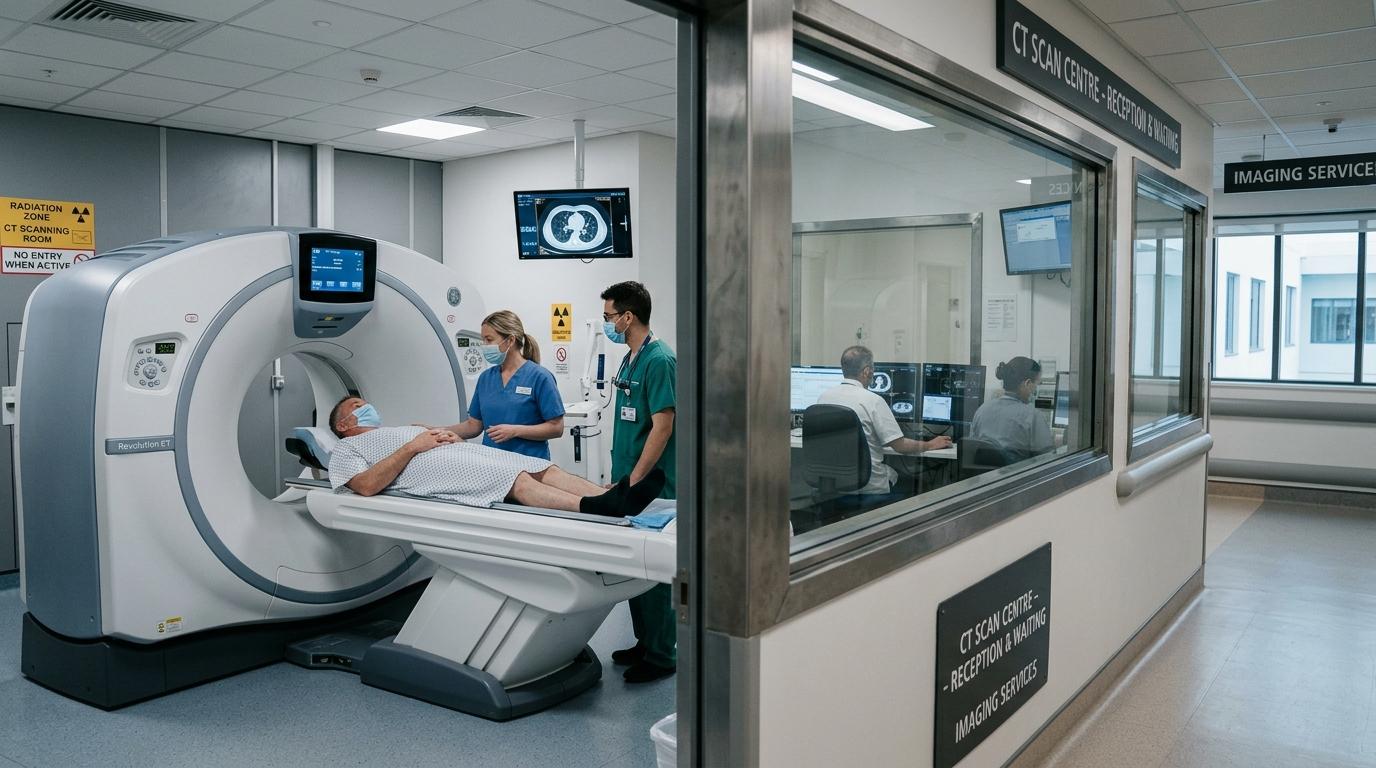
MRI Scan Centres Near Me: What to Check Before Choosing a Diagnostic Facility
Finding an MRI facility is not simply about choosing the nearest location. The correct examination, equipment suitability, implant safety screening, image quality, and reporting arrangements all matter when arranging diagnostic imaging. If you are comparing MRI Scan Centres near me for a suitable examination and reliable reporting, use a practical checklist to avoid booking the wrong scan or making an unnecessary second visit.
Why the Nearest Facility May Not Always Be the Right Choice
An MRI examination uses magnetic fields and radio waves to produce detailed images of internal structures. It is commonly requested to investigate problems involving the brain, spine, joints, muscles, and certain internal organs.
However, MRI is not one standard examination. A brain scan, lumbar spine scan, knee examination, and angiography study require different imaging protocols.
A nearby facility may not offer the specific examination prescribed by your doctor. It is therefore important to confirm the exact scan name before booking.
Seven Factors to Evaluate Before Making an Appointment
1. Availability of the Required MRI Examination
Start by checking whether the centre performs the precise examination written on your prescription. Similar-sounding scan names may refer to different anatomical areas or imaging protocols.
For example, a cervical spine MRI is not interchangeable with a lumbar spine MRI.
2. MRI Equipment and Imaging Protocols
Ask about the available scanner and whether its specifications are appropriate for your examination. The required imaging protocol matters alongside the equipment itself.
Do not assume that a higher advertised machine specification automatically makes every scan more suitable.
3. Implant and Metal Safety Screening
MRI involves a strong magnetic field. Patients must disclose pacemakers, implants, surgical clips, metal fragments, and other implanted devices.
Some devices are MRI-conditional and can be scanned only under specified conditions. Others may make MRI unsuitable. The radiology team must verify the device details before proceeding.
4. Radiologist Reporting
The images need professional interpretation. Ask how reports are prepared, whether previous scans can be compared, and how the final findings are shared with your referring doctor.
5. Contrast Availability
Some examinations require gadolinium-based contrast material, while others do not.
If contrast is prescribed, inform the team about kidney disease, previous contrast reactions, pregnancy, and other relevant medical circumstances.
6. Appointment Convenience
Consider travel time, appointment availability, expected examination duration, and accessibility.
Patients with pain or mobility difficulties may benefit from confirming whether assistance is available during positioning.
7. Transparent Charges
Request a quotation for the exact examination. Confirm whether contrast, additional sequences, or other services involve separate charges.
Comparing MRI Facilities: A Useful Checklist
|
Selection factor |
Important question |
What to confirm |
|
Scan availability |
Is my prescribed scan offered? |
Exact examination name |
|
Equipment |
Is the scanner suitable? |
Relevant technical capability |
|
Safety |
Is screening performed? |
Implant and medical history review |
|
Reporting |
Who interprets the images? |
Report delivery process |
|
Contrast |
Is contrast required? |
Preparation and assessment |
|
Pricing |
What is included? |
Written cost breakdown |
This comparison is more useful than relying exclusively on promotional claims or online ratings.
How to Book Without Making Common Mistakes
When evaluating MRI Scan Centres near me, follow these steps:
-
Check your prescription: Identify the body part, side, and exact examination requested.
-
Collect previous records: Keep earlier scans, reports, and relevant medical documents ready.
-
Ask about safety requirements: Disclose implants, previous surgeries, and metal-related injuries.
-
Confirm contrast instructions: Find out whether additional preparation or kidney-function assessment is necessary.
-
Verify the quotation: Request the complete cost and clarify what is included.
-
Confirm the appointment: Check the date, reporting timeline, and instructions before travelling.
These steps can reduce avoidable booking errors and help the facility prepare for your examination.
Two Practical Examples
Example 1: A patient with previous knee surgery
A patient needs an MRI of the knee but has metal fixation hardware from an earlier operation. Instead of booking immediately, the patient shares the implant details with the radiology team. The team verifies whether the device can be scanned safely and selects the appropriate protocol.
Example 2: A patient requiring a brain examination
Another patient receives a prescription for a specialized brain MRI. A basic brain imaging appointment may not include the additional sequences requested by the neurologist. Confirming the exact protocol before booking avoids confusion.
Illustrative Case Study: Avoiding a Repeat Appointment
Consider a hypothetical patient who books an imaging appointment based only on location and an advertised price.
On arrival, the centre discovers that the prescribed examination requires a specific protocol that was not confirmed during booking. The appointment must be reviewed and rearranged.
The patient subsequently contacts another facility, shares the prescription in advance, and confirms the examination requirements before travelling.
Lesson: A short pre-booking conversation can prevent unnecessary delays.
Exploring MRI Services in Bengaluru
Patients can review the imaging information offered by EcoTown Diagnostics and contact the centre to confirm scan availability, safety screening, locations, and reporting arrangements.
When comparing MRI Scan Centres near me, prioritize the suitability of the examination and the quality of the diagnostic process rather than distance alone.
Frequently Asked Questions
1. Do I need a prescription for an MRI?
Requirements vary by facility and examination. A doctor's recommendation helps establish the correct scan and imaging protocol.
2. Can I undergo MRI with a metal implant?
Some implants are MRI-conditional, while others may be unsafe. The device's make, model, and conditions must be verified by the MRI safety team.
3. Is contrast required for every examination?
No. Contrast is used only when clinically indicated for the requested imaging study.
4. How long does an MRI appointment take?
Duration varies by body part and protocol. Some examinations take around 15–30 minutes, while more complex studies can take longer.
5. Should I carry previous scan reports?
Yes. Previous images and reports may help the radiologist compare findings and provide useful context.
Conclusion
Selecting an MRI facility involves more than finding a convenient address. The correct imaging protocol, safety screening, professional reporting, and transparent charges all contribute to a suitable appointment.
Before booking, compare MRI Scan Centres near me using your doctor's prescription as the starting point. Confirm the examination, disclose relevant medical information, and ask questions about the reporting process. A well-planned appointment can make diagnostic imaging more convenient and help your doctor obtain the information needed for further evaluation.

 English
 Arabic
 French
 Portuguese
 Deutsch
 Turkish
 Dutch
 Italiano
 Russian
 Romaian
 Portuguese (Brazil)
 Greek