


Saudi Arabia E-commerce Shipping Market Size, Share, Analysis & Forecast 2026-2034
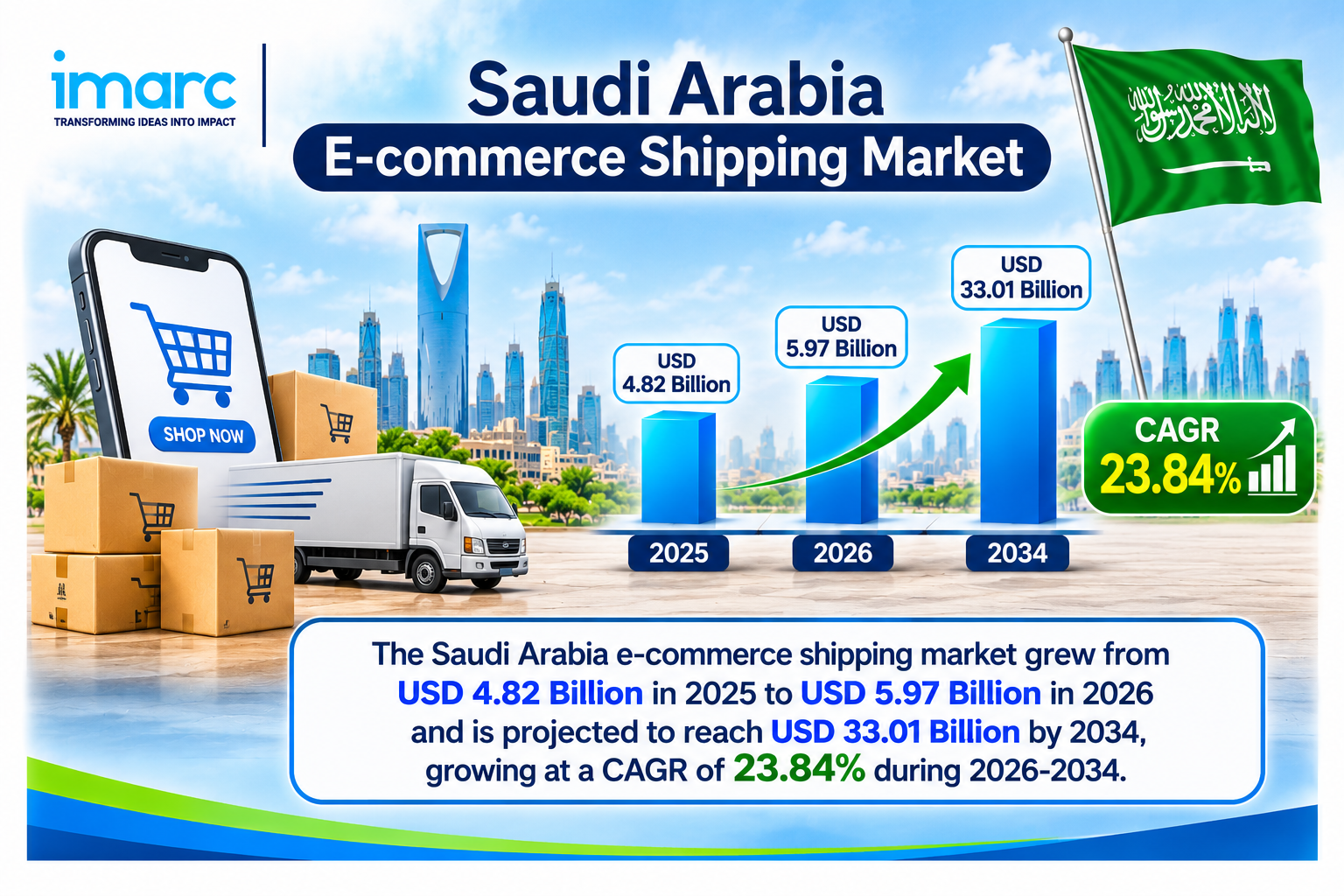
IMARC Group, a leading global market research and management consulting firm, has published its latest market intelligence report on the Saudi Arabia e-commerce shipping market. The Saudi Arabia e-commerce shipping market size grew from 𝐔𝐒𝐃 𝟒.𝟖𝟐 𝐁𝐢𝐥𝐥𝐢𝐨𝐧 in 2025 to 𝐔𝐒𝐃 𝟓.𝟗𝟕 𝐁𝐢𝐥𝐥𝐢𝐨𝐧 in 2026 and is projected to reach 𝐔𝐒𝐃 𝟑𝟑.𝟎𝟏 𝐁𝐢𝐥𝐥𝐢𝐨𝐧 by 2034, exhibiting a 𝐂𝐀𝐆𝐑 𝐨𝐟 𝟐𝟑.𝟖𝟒% during 2026-2034, driven by Vision 2030 logistics investment, a young and digitally native population, and rapid mobile commerce adoption.
Parcel delivery is one of the fastest-expanding logistics verticals in the Middle East. Every online order, cross-border purchase, and same-day delivery promise depends on reliable fulfillment, last-mile networks, and returns handling, and the market is forecast to add approximately USD 27 Billion in incremental value between 2026 and 2034. Three structural forces are shaping this trajectory: the Kingdom's ambition to become a regional logistics hub, the rise of same-day and mobile-first shopping, and the rapid adoption of AI-driven routing and automated fulfillment.
𝐒𝐚𝐮𝐝𝐢 𝐀𝐫𝐚𝐛𝐢𝐚 𝐄-𝐜𝐨𝐦𝐦𝐞𝐫𝐜𝐞 𝐒𝐡𝐢𝐩𝐩𝐢𝐧𝐠 𝐌𝐚𝐫𝐤𝐞𝐭 𝐚𝐭 𝐚 𝐆𝐥𝐚𝐧𝐜𝐞:
- 𝐌𝐚𝐫𝐤𝐞𝐭 𝐒𝐢𝐳𝐞 (𝟐𝟎𝟐𝟓): USD 4.82 Billion
- 𝐌𝐚𝐫𝐤𝐞𝐭 𝐒𝐢𝐳𝐞 (𝟐𝟎𝟐𝟔): USD 5.97 Billion
- 𝐅𝐨𝐫𝐞𝐜𝐚𝐬𝐭 𝐌𝐚𝐫𝐤𝐞𝐭 𝐒𝐢𝐳𝐞 (𝟐𝟎𝟑𝟒): USD 33.01 Billion
- 𝐂𝐀𝐆𝐑 (𝟐𝟎𝟐𝟔-𝟐𝟎𝟑𝟒): 23.84%
- 𝐃𝐨𝐦𝐢𝐧𝐚𝐧𝐭 𝐁𝐮𝐬𝐢𝐧𝐞𝐬𝐬 (𝟐𝟎𝟐𝟓): B2C, 74.6% share
- 𝐃𝐨𝐦𝐢𝐧𝐚𝐧𝐭 𝐄𝐧𝐝-𝐔𝐬𝐞 𝐈𝐧𝐝𝐮𝐬𝐭𝐫𝐲 (𝟐𝟎𝟐𝟓): Fashion and Apparel, 31.5% share
- 𝐋𝐞𝐚𝐝𝐢𝐧𝐠 𝐑𝐞𝐠𝐢𝐨𝐧 (𝟐𝟎𝟐𝟓): Northern and Central Region, 48.2% share
𝐇𝐨𝐰 𝐀𝐈 𝐚𝐧𝐝 𝐀𝐮𝐭𝐨𝐦𝐚𝐭𝐢𝐨𝐧 𝐚𝐫𝐞 𝐑𝐞𝐬𝐡𝐚𝐩𝐢𝐧𝐠 𝐭𝐡𝐞 𝐅𝐮𝐭𝐮𝐫𝐞 𝐨𝐟 𝐭𝐡𝐞 𝐒𝐚𝐮𝐝𝐢 𝐀𝐫𝐚𝐛𝐢𝐚 𝐄-𝐜𝐨𝐦𝐦𝐞𝐫𝐜𝐞 𝐒𝐡𝐢𝐩𝐩𝐢𝐧𝐠 𝐌𝐚𝐫𝐤𝐞𝐭
- 𝐀𝐈-𝐏𝐨𝐰𝐞𝐫𝐞𝐝 𝐑𝐨𝐮𝐭𝐞 𝐎𝐩𝐭𝐢𝐦𝐢𝐳𝐚𝐭𝐢𝐨𝐧: Shipping providers are using AI to analyze traffic, delivery locations, and parcel volumes in real time, reducing delivery times and transportation costs while improving fleet utilization.
- 𝐃𝐫𝐨𝐧𝐞 𝐚𝐧𝐝 𝐀𝐮𝐭𝐨𝐧𝐨𝐦𝐨𝐮𝐬 𝐃𝐞𝐥𝐢𝐯𝐞𝐫𝐲: Saudi Arabia conducted a drone-based parcel delivery trial in Jeddah in September 2025, and the regulator approved a drone delivery platform in January 2025, opening new routes to peri-urban and hard-to-reach addresses.
- 𝐒𝐦𝐚𝐫𝐭 𝐖𝐚𝐫𝐞𝐡𝐨𝐮𝐬𝐢𝐧𝐠 𝐚𝐧𝐝 𝐑𝐨𝐛𝐨𝐭𝐢𝐜𝐬: Automated fulfillment centers with robotic picking systems are lowering per-order fulfillment costs, and the Kingdom's energy costs make warehouse automation economically attractive compared with global peers.
𝐆𝐫𝐚𝐛 𝐚 𝐬𝐚𝐦𝐩𝐥𝐞 𝐏𝐃𝐅 𝐨𝐟 𝐭𝐡𝐢𝐬 𝐫𝐞𝐩𝐨𝐫𝐭: https://www.imarcgroup.com/saudi-arabia-e-commerce-shipping-market/requestsample
𝐒𝐚𝐮𝐝𝐢 𝐀𝐫𝐚𝐛𝐢𝐚 𝐄-𝐜𝐨𝐦𝐦𝐞𝐫𝐜𝐞 𝐒𝐡𝐢𝐩𝐩𝐢𝐧𝐠 𝐌𝐚𝐫𝐤𝐞𝐭 𝐓𝐫𝐞𝐧𝐝𝐬 𝐚𝐧𝐝 𝐃𝐫𝐢𝐯𝐞𝐫𝐬:
E-commerce growth is the primary engine of parcel volume. Each percentage point of growth in e-commerce gross merchandise value translates directly into additional shipping volume, while platforms continue investing in delivery speed and user experience to expand their customer base. Consumer expectations are moving quickly toward same-day and next-day delivery, pushing carriers to build hyperlocal fulfillment hubs in major cities.
Demographics and digital payments are supporting this growth. Around 69.4% of Saudi citizens are under the age of 35, and smartphone penetration exceeds 98%. According to the Saudi Central Bank, electronic payments accounted for 85% of total retail payments in 2025, up from 79% in 2024, and electronic transactions reached 14.6 billion. Smoother checkout experiences are lifting online conversion rates, which in turn increase delivery density and make urban last-mile networks more economical.
Customer demand is also shifting toward service-led models. Mobile-first platforms now combine curated product discovery with same-day delivery and extended warranties, which is encouraging logistics providers to develop faster, technology-enabled fulfillment capabilities. Fashion and apparel leads end-use demand, and social commerce and influencer-driven buying generate high order frequency along with significant reverse logistics volume from returns.
𝐆𝐨𝐯𝐞𝐫𝐧𝐦𝐞𝐧𝐭 𝐒𝐜𝐡𝐞𝐦𝐞𝐬 𝐚𝐧𝐝 𝐕𝐢𝐬𝐢𝐨𝐧 𝟐𝟎𝟑𝟎 𝐈𝐧𝐢𝐭𝐢𝐚𝐭𝐢𝐯𝐞𝐬 𝐃𝐫𝐢𝐯𝐢𝐧𝐠 𝐃𝐞𝐦𝐚𝐧𝐝:
- 𝐍𝐚𝐭𝐢𝐨𝐧𝐚𝐥 𝐈𝐧𝐝𝐮𝐬𝐭𝐫𝐢𝐚𝐥 𝐃𝐞𝐯𝐞𝐥𝐨𝐩𝐦𝐞𝐧𝐭 𝐚𝐧𝐝 𝐋𝐨𝐠𝐢𝐬𝐭𝐢𝐜𝐬 𝐏𝐫𝐨𝐠𝐫𝐚𝐦: The program targets raising the Kingdom's industrial GDP from approximately SAR 226 billion in 2016 to SAR 895 billion by 2030, benefiting shipping providers through expanded port capacity, automated customs, and smart logistics zones.
- 𝐆𝐥𝐨𝐛𝐚𝐥 𝐋𝐨𝐠𝐢𝐬𝐭𝐢𝐜𝐬 𝐇𝐮𝐛 𝐀𝐦𝐛𝐢𝐭𝐢𝐨𝐧: Saudi Arabia's goal of becoming a global logistics hub by 2030, bridging Asia, Europe, and Africa, is attracting investment in ports, free zones, and cross-border freight capacity.
- 𝐒𝐌𝐄 𝐃𝐢𝐠𝐢𝐭𝐢𝐳𝐚𝐭𝐢𝐨𝐧 𝐈𝐧𝐢𝐭𝐢𝐚𝐭𝐢𝐯𝐞𝐬: Vision 2030 programmes supporting small and medium enterprises are expanding B2B digital procurement and shipment volumes.
- 𝐑𝐮𝐫𝐚𝐥 𝐃𝐢𝐠𝐢𝐭𝐢𝐳𝐚𝐭𝐢𝐨𝐧 𝐏𝐫𝐨𝐠𝐫𝐚𝐦𝐦𝐞𝐬: Efforts to extend digital services to rural areas are opening delivery access to communities that were previously underserved by e-commerce logistics.
- 𝐒𝐮𝐬𝐭𝐚𝐢𝐧𝐚𝐛𝐢𝐥𝐢𝐭𝐲 𝐔𝐧𝐝𝐞𝐫 𝐕𝐢𝐬𝐢𝐨𝐧 𝟐𝟎𝟑𝟎: Green logistics priorities are encouraging electric delivery fleets, optimized routing, and energy-efficient fulfillment facilities.
𝐒𝐚𝐮𝐝𝐢 𝐀𝐫𝐚𝐛𝐢𝐚 𝐄-𝐜𝐨𝐦𝐦𝐞𝐫𝐜𝐞 𝐒𝐡𝐢𝐩𝐩𝐢𝐧𝐠 𝐈𝐧𝐝𝐮𝐬𝐭𝐫𝐲 𝐒𝐞𝐠𝐦𝐞𝐧𝐭𝐚𝐭𝐢𝐨𝐧:
𝐓𝐡𝐞 𝐫𝐞𝐩𝐨𝐫𝐭 𝐡𝐚𝐬 𝐬𝐞𝐠𝐦𝐞𝐧𝐭𝐞𝐝 𝐭𝐡𝐞 𝐦𝐚𝐫𝐤𝐞𝐭 𝐢𝐧𝐭𝐨 𝐭𝐡𝐞 𝐟𝐨𝐥𝐥𝐨𝐰𝐢𝐧𝐠 𝐜𝐚𝐭𝐞𝐠𝐨𝐫𝐢𝐞𝐬:
𝐁𝐫𝐞𝐚𝐤𝐮𝐩 𝐁𝐲 𝐁𝐮𝐬𝐢𝐧𝐞𝐬𝐬:
- B2C
- B2B
B2C commands a 74.6% share in 2025, driven by consumer-facing platforms that generate tens of millions of annual parcel deliveries. B2B holds 25.4%, covering corporate procurement, industrial supplies, and inter-business shipments that carry higher average weights and values per consignment.
𝐁𝐫𝐞𝐚𝐤𝐮𝐩 𝐁𝐲 𝐄𝐧𝐝-𝐔𝐬𝐞 𝐈𝐧𝐝𝐮𝐬𝐭𝐫𝐲:
- Fashion and Apparel
- Consumer Electronics
- Beauty and Personal Care
- Home Appliances
- Furniture
- Others
Fashion and apparel leads with a 31.5% share in 2025, supported by social commerce and influencer marketing. Consumer electronics holds 24.1%, beauty and personal care 15.2%, home appliances 13.4%, and furniture 8.3%, with furniture growing through specialized large-item delivery that requires white-glove service and assembly.
𝐁𝐫𝐞𝐚𝐤𝐮𝐩 𝐁𝐲 𝐃𝐞𝐬𝐭𝐢𝐧𝐚𝐭𝐢𝐨𝐧:
- Domestic
- International and Cross-Border
Domestic parcel movement forms the core of the market, while cross-border freight, supported by the Kingdom's gateway ports and customs modernization, is an important growth vector for international carriers.
𝐁𝐫𝐞𝐚𝐤𝐮𝐩 𝐁𝐲 𝐑𝐞𝐠𝐢𝐨𝐧:
- Northern and Central Region
- Western Region
- Eastern Region
- Southern Region
The Northern and Central Region commands a 48.2% share in 2025, reflecting Riyadh's commercial dominance, consumer density, and concentration of fulfillment warehouses. The Western Region holds 23.5%, supported by Saudi Arabia's primary import gateways and pilgrimage-driven seasonal shipping. The Eastern Region accounts for 18.1%, anchored by petrochemical sector B2B shipments and free zone warehousing, while the Southern Region holds 10.2% and offers the highest growth potential as rural digitization expands delivery access.
𝐂𝐨𝐦𝐩𝐞𝐭𝐢𝐭𝐢𝐯𝐞 𝐋𝐚𝐧𝐝𝐬𝐜𝐚𝐩𝐞:
The Saudi Arabia e-commerce shipping market features global express carriers, the national postal operator, platform-owned logistics arms, and technology-first domestic startups. Saudi Post | SPL, DHL Group, and FedEx are among the market leaders, while United Parcel Service and J&T Express are established and emerging players respectively. Competition is shaped by delivery speed, geographic coverage, technology capability, pricing, and depth of e-commerce platform integration.
Companies are investing in AI logistics management, electric delivery fleets, mobile-first delivery experiences, and e-commerce API integration. Saudi Post's nationwide network and rural reach give it a structural advantage, while global carriers lead premium cross-border segments. Platform-owned logistics arms are increasingly capturing B2C parcel volumes, and consolidation among traditional carriers is expected as scale becomes decisive for profitability.
𝐑𝐞𝐜𝐞𝐧𝐭 𝐃𝐞𝐯𝐞𝐥𝐨𝐩𝐦𝐞𝐧𝐭𝐬 𝐢𝐧 𝐭𝐡𝐞 𝐒𝐚𝐮𝐝𝐢 𝐀𝐫𝐚𝐛𝐢𝐚 𝐄-𝐜𝐨𝐦𝐦𝐞𝐫𝐜𝐞 𝐒𝐡𝐢𝐩𝐩𝐢𝐧𝐠 𝐌𝐚𝐫𝐤𝐞𝐭:
- 𝐉𝐚𝐧𝐮𝐚𝐫𝐲 𝟐𝟎𝟐𝟓: Matternet received approval from the General Authority of Civil Aviation (GACA) to operate its M2 delivery drone, marking the Kingdom's first authorization of its kind.
- 𝐀𝐩𝐫𝐢𝐥 𝟐𝟎𝟐𝟔: Kanaa launched in Saudi Arabia with a mobile-first, service-oriented shopping model offering same-day delivery and extended warranties, reflecting the shift toward faster and more convenient online shopping.
- 𝐒𝐞𝐩𝐭𝐞𝐦𝐛𝐞𝐫 𝟐𝟎𝟐𝟓: Saudi Arabia conducted a pioneering drone-based parcel delivery trial in Jeddah, supported by GACA and the Transport General Authority, to test more efficient logistics solutions.
𝐌𝐚𝐫𝐤𝐞𝐭 𝐂𝐡𝐚𝐥𝐥𝐞𝐧𝐠𝐞𝐬 𝐚𝐧𝐝 𝐑𝐞𝐬𝐭𝐫𝐚𝐢𝐧𝐭𝐬:
- 𝐋𝐚𝐬𝐭-𝐌𝐢𝐥𝐞 𝐀𝐝𝐝𝐫𝐞𝐬𝐬 𝐋𝐢𝐦𝐢𝐭𝐚𝐭𝐢𝐨𝐧𝐬: Traditional addressing relies on landmarks and coordinates, and coverage gaps in rural and peri-urban areas raise delivery failure rates and cost per successful delivery.
- 𝐋𝐨𝐠𝐢𝐬𝐭𝐢𝐜𝐬 𝐓𝐚𝐥𝐞𝐧𝐭 𝐒𝐡𝐨𝐫𝐭𝐟𝐚𝐥𝐥: Rapid growth has outpaced the supply of qualified logistics professionals, raising operational costs and limiting how fast carriers can expand across regions.
- 𝐏𝐫𝐢𝐜𝐞 𝐂𝐨𝐦𝐩𝐞𝐭𝐢𝐭𝐢𝐨𝐧 𝐟𝐫𝐨𝐦 𝐏𝐥𝐚𝐭𝐟𝐨𝐫𝐦-𝐎𝐰𝐧𝐞𝐝 𝐋𝐨𝐠𝐢𝐬𝐭𝐢𝐜𝐬: Platform logistics arms are internalizing deliveries, reducing third-party volumes, while aggressive pricing from global carriers compresses margins for domestic players.
- 𝐑𝐞𝐠𝐮𝐥𝐚𝐭𝐨𝐫𝐲 𝐚𝐧𝐝 𝐃𝐚𝐭𝐚 𝐏𝐫𝐢𝐯𝐚𝐜𝐲 𝐁𝐮𝐫𝐝𝐞𝐧: Digital shipping platforms must invest in data security and compliance, creating a heavier cost burden for smaller carriers and logistics startups.
𝐖𝐡𝐚𝐭 𝐃𝐨𝐞𝐬 𝐓𝐡𝐞 𝐅𝐮𝐥𝐥 𝐑𝐞𝐩𝐨𝐫𝐭 𝐂𝐨𝐯𝐞𝐫?
If you are tracking the Saudi Arabia e-commerce shipping market for investment decisions, market entry planning, competitive benchmarking, or strategic advisory, IMARC Group's report gives you everything in one place:
- Complete market sizing in value terms with forecasts covering the full 2026-2034 projection period, with historical analysis from 2020-2025
- Segment breakdowns by service, business, destination, end-use industry, and region, each with individual share and growth data
- Quantified growth drivers, restraints, and opportunities, along with Porter's five forces assessment
- Value chain analysis, technology landscape coverage across AI routing, drone delivery, and smart warehousing, and competitive profiles of key carriers
- Market outlook with PDF and Excel deliverables, along with 10% free customization and 10-12 weeks of post-sale analyst support
𝐍𝐨𝐭𝐞: 𝐈𝐟 𝐲𝐨𝐮 𝐫𝐞𝐪𝐮𝐢𝐫𝐞 𝐬𝐩𝐞𝐜𝐢𝐟𝐢𝐜 𝐝𝐞𝐭𝐚𝐢𝐥𝐬, 𝐝𝐚𝐭𝐚, 𝐨𝐫 𝐢𝐧𝐬𝐢𝐠𝐡𝐭𝐬 𝐭𝐡𝐚𝐭 𝐚𝐫𝐞 𝐧𝐨𝐭 𝐜𝐮𝐫𝐫𝐞𝐧𝐭𝐥𝐲 𝐢𝐧𝐜𝐥𝐮𝐝𝐞𝐝 𝐢𝐧 𝐭𝐡𝐞 𝐬𝐜𝐨𝐩𝐞 𝐨𝐟 𝐭𝐡𝐢𝐬 𝐫𝐞𝐩𝐨𝐫𝐭, 𝐰𝐞 𝐚𝐫𝐞 𝐡𝐚𝐩𝐩𝐲 𝐭𝐨 𝐚𝐜𝐜𝐨𝐦𝐦𝐨𝐝𝐚𝐭𝐞 𝐲𝐨𝐮𝐫 𝐫𝐞𝐪𝐮𝐞𝐬𝐭. 𝐀𝐬 𝐩𝐚𝐫𝐭 𝐨𝐟 𝐨𝐮𝐫 𝐜𝐮𝐬𝐭𝐨𝐦𝐢𝐳𝐚𝐭𝐢𝐨𝐧 𝐬𝐞𝐫𝐯𝐢𝐜𝐞, 𝐰𝐞 𝐰𝐢𝐥𝐥 𝐠𝐚𝐭𝐡𝐞𝐫 𝐚𝐧𝐝 𝐩𝐫𝐨𝐯𝐢𝐝𝐞 𝐭𝐡𝐞 𝐚𝐝𝐝𝐢𝐭𝐢𝐨𝐧𝐚𝐥 𝐢𝐧𝐟𝐨𝐫𝐦𝐚𝐭𝐢𝐨𝐧 𝐲𝐨𝐮 𝐧𝐞𝐞𝐝, 𝐭𝐚𝐢𝐥𝐨𝐫𝐞𝐝 𝐭𝐨 𝐲𝐨𝐮𝐫 𝐬𝐩𝐞𝐜𝐢𝐟𝐢𝐜 𝐫𝐞𝐪𝐮𝐢𝐫𝐞𝐦𝐞𝐧𝐭𝐬. 𝐏𝐥𝐞𝐚𝐬𝐞 𝐥𝐞𝐭 𝐮𝐬 𝐤𝐧𝐨𝐰 𝐲𝐨𝐮𝐫 𝐞𝐱𝐚𝐜𝐭 𝐧𝐞𝐞𝐝𝐬, 𝐚𝐧𝐝 𝐰𝐞 𝐰𝐢𝐥𝐥 𝐞𝐧𝐬𝐮𝐫𝐞 𝐭𝐡𝐞 𝐫𝐞𝐩𝐨𝐫𝐭 𝐢𝐬 𝐮𝐩𝐝𝐚𝐭𝐞𝐝 𝐚𝐜𝐜𝐨𝐫𝐝𝐢𝐧𝐠𝐥𝐲 𝐭𝐨 𝐦𝐞𝐞𝐭 𝐲𝐨𝐮𝐫 𝐞𝐱𝐩𝐞𝐜𝐭𝐚𝐭𝐢𝐨𝐧𝐬.
𝐊𝐞𝐲 𝐐𝐮𝐞𝐬𝐭𝐢𝐨𝐧𝐬 𝐓𝐡𝐢𝐬 𝐑𝐞𝐩𝐨𝐫𝐭 𝐀𝐧𝐬𝐰𝐞𝐫𝐬
- What is the current Saudi Arabia e-commerce shipping market size and what is its projected value?
- Which business model, end-use industry, and region hold the largest shares in the Saudi Arabia e-commerce shipping market?
- What are the key drivers and restraints shaping Saudi Arabia e-commerce shipping market growth?
- How are AI, drone delivery, and automated warehousing changing last-mile economics in Saudi Arabia?
- Who are the key players in the Saudi Arabia e-commerce shipping market and how are they positioning themselves?
- What are the investment and market entry opportunities across same-day delivery, cold chain logistics, and rural delivery infrastructure in Saudi Arabia?
𝐀𝐛𝐨𝐮𝐭 𝐔𝐬
IMARC Group is a global management consulting firm that helps the world's most ambitious changemakers to create a lasting impact. The company provides a comprehensive suite of market entry and expansion services. IMARC offerings include thorough market assessment, feasibility studies, company incorporation assistance, factory setup support, regulatory approvals and licensing navigation, branding, marketing and sales strategies, competitive landscape and benchmarking analyses, pricing and cost research, and procurement research.
𝐌𝐞𝐝𝐢𝐚 𝐚𝐧𝐝 𝐒𝐚𝐥𝐞𝐬 𝐂𝐨𝐧𝐭𝐚𝐜𝐭
𝐈𝐌𝐀𝐑𝐂 𝐆𝐫𝐨𝐮𝐩
𝐄𝐦𝐚𝐢𝐥: sales@imarcgroup.com
𝐔𝐧𝐢𝐭𝐞𝐝 𝐒𝐭𝐚𝐭𝐞𝐬: +1-201-971-6302
𝐈𝐧𝐝𝐢𝐚: +91-120-433-0800
𝐔𝐧𝐢𝐭𝐞𝐝 𝐊𝐢𝐧𝐠𝐝𝐨𝐦: +44-753-714-6104

 English
 French
 Spanish
 Portuguese
 Deutsch
 Turkish
 Dutch
 Italiano
 Russian
 Romaian
 Portuguese (Brazil)
 Greek