


Which Design Details Make Gangnam Buck Basket Injection Mould Worth Considering
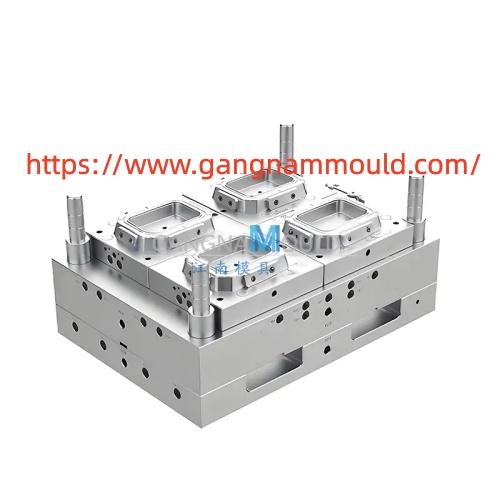
Buck Basket Injection Mould is an important consideration for manufacturers developing plastic products for storage, transportation, household organization, and commercial applications. Behind a practical plastic container is a carefully planned manufacturing process that connects product appearance, structural design, material behavior, and tooling engineering. For businesses looking to develop new product collections, understanding these elements can help turn an initial concept into a practical production solution.
Product design often begins with the intended application. Some containers are developed for household organization, while others are designed for agricultural handling, retail distribution, warehouse storage, or daily commercial use. Each application brings different expectations. A product intended for frequent handling may require comfortable edges and convenient grip areas. A design for storage and transportation may benefit from stable stacking structures and carefully arranged openings. These differences should be considered before engineering work begins.
Material selection is another important part of the development process. Different plastics offer different characteristics in terms of flexibility, rigidity, impact resistance, and surface appearance. Polypropylene is commonly considered for products requiring a balance between stiffness and flexibility. High density polyethylene may also be suitable for applications where impact resistance and practical handling are relevant. The final choice depends on the working environment, expected usage, product structure, and manufacturing requirements.
Color is also worth considering during material planning. Plastic products may be developed in different colors to distinguish product categories, support retail presentation, or match a company's visual identity. Color consistency across production batches can influence how a product collection looks when displayed together. Manufacturers should communicate their appearance expectations and material preferences during the early development stage.
Structural design has a direct relationship with everyday usability. Handles, reinforced corners, ventilation openings, and connecting edges are not simply decorative details. Each feature serves a particular purpose and needs to work together with the overall product structure. Handle placement can influence carrying comfort, while openings may support air circulation and make the finished product easier to clean. Reinforcing ribs can contribute to structural support without relying entirely on solid sections.
The arrangement of these features also influences the manufacturing process. Uneven wall sections may cool at different rates, potentially contributing to shrinkage or surface deformation. Rounded transitions can help avoid abrupt changes in geometry, while suitable draft angles support easier product release. Gate placement, air ventilation, and cooling arrangements also deserve attention because they influence how plastic moves through the cavity and how the finished component takes shape.
For manufacturers, these technical considerations are closely connected with production planning. A design that looks attractive on a computer screen still needs to be evaluated for manufacturing feasibility. Engineers can review product drawings and three dimensional models to identify potential challenges before tooling development moves forward. This stage provides an opportunity to discuss structural adjustments, surface requirements, material choices, and production expectations.
Buyers should also consider the relationship between product complexity and manufacturing costs. Additional decorative details, complicated internal structures, and unnecessary design variations may increase tooling requirements. Simplifying certain features can sometimes make production planning easier while preserving the intended appearance and functionality. The objective is to create a practical balance between product requirements and manufacturing feasibility.
Communication between the buyer and manufacturer is particularly valuable during this process. Product drawings, reference images, material preferences, application descriptions, and expected production quantities can help engineers understand the project. Buyers should also discuss the intended equipment, quality inspection requirements, and future product development plans. Clear information at the beginning can reduce misunderstandings during subsequent engineering stages.
Tooling maintenance is another subject worth including in the purchasing discussion. Cooling channels, replaceable components, moving structures, and accessible maintenance areas all influence how equipment can be inspected and serviced. A well-considered maintenance arrangement can make routine production management more convenient. Buyers may also ask about technical documentation, spare components, and after-sales communication before confirming a manufacturing partnership.
The experience of the tooling manufacturer matters because product development involves more than producing a metal structure. It requires coordination between design interpretation, engineering preparation, material understanding, manufacturing processes, and project communication. Gangnam focuses on plastic product tooling development and provides a manufacturing resource for businesses planning household and commercial product projects. Working with a supplier that understands these connected requirements can help buyers evaluate their ideas with greater clarity.
When planning a new plastic product, it is useful to look beyond its external appearance and consider how every feature contributes to its intended application. Material selection, structural layout, surface treatment, cooling, and release planning all deserve attention during development. Businesses interested in exploring tooling solutions and related product categories can visit https://www.gangnammould.com/product/ as part of their supplier research. Connecting product ideas with practical engineering discussions gives manufacturers a clearer foundation for developing products that suit their market requirements.

 English
 Arabic
 French
 Spanish
 Portuguese
 Deutsch
 Dutch
 Italiano
 Russian
 Romaian
 Portuguese (Brazil)
 Greek