


PLC vs SCADA: Key Differences in Industrial Automation
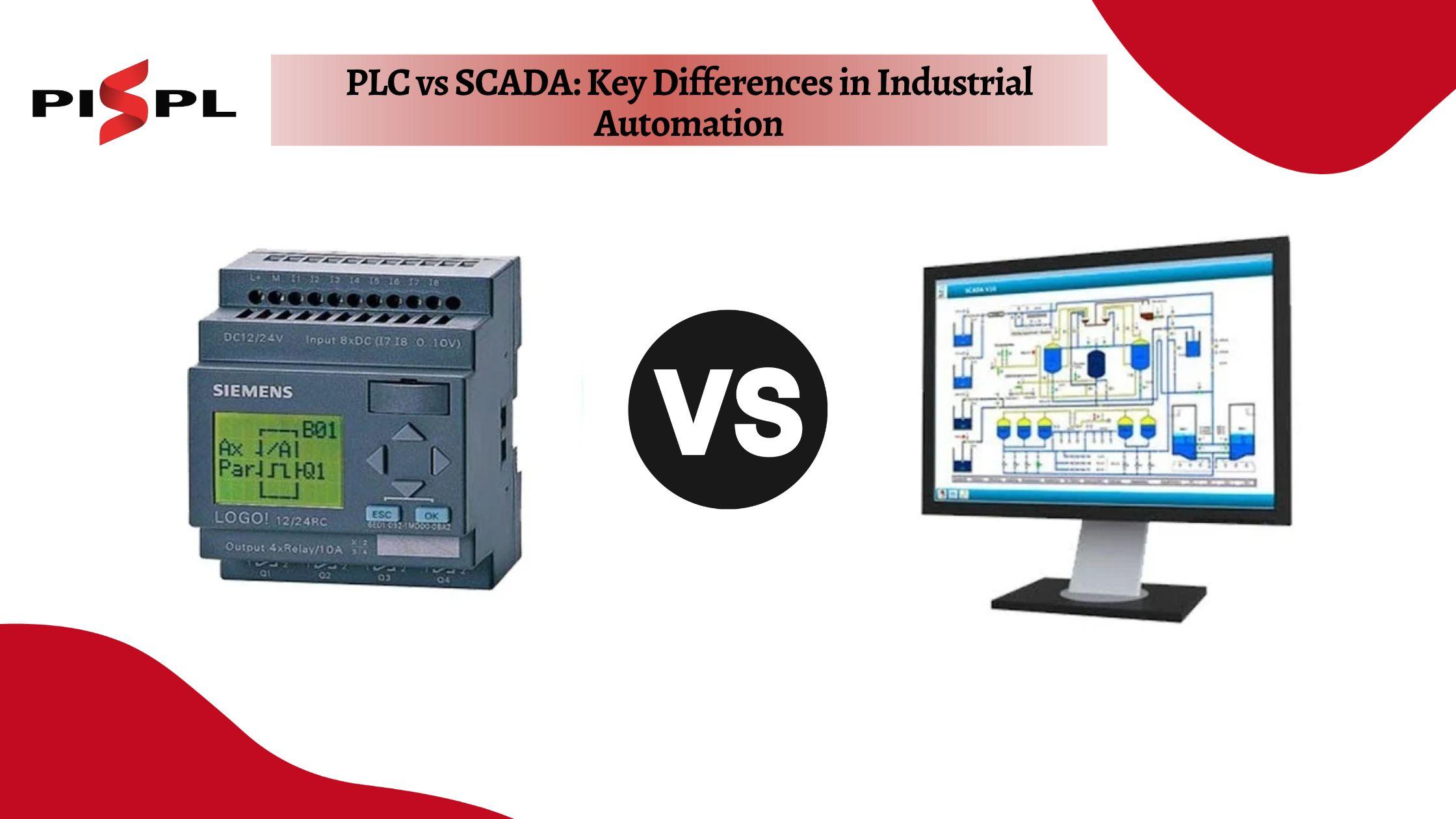
Industrial automation helps businesses manage machines, control production processes, and monitor equipment more efficiently. Two technologies commonly used in modern industrial facilities are Programmable Logic Controllers (PLCs) and Supervisory Control and Data Acquisition (SCADA) systems.
Although they are often mentioned together, PLC and SCADA have different responsibilities. A PLC controls machines and processes based on programmed instructions, while SCADA helps operators monitor and supervise industrial operations through a central interface.
Understanding the difference between PLC and SCADA is important when planning an automation system. It helps businesses select suitable technologies, improve process visibility, and manage industrial equipment more effectively.
What Is a PLC in Industrial Automation?
A Programmable Logic Controller (PLC) is an industrial computer designed to control machines and equipment automatically. It receives information from connected devices, processes that information according to its programmed logic, and sends commands to control the equipment.
PLCs are commonly used in manufacturing plants, water treatment facilities, packaging units, and other industrial environments.
For example, consider a conveyor system in a manufacturing plant. Sensors detect whether materials are present on the conveyor. The PLC processes these signals and controls the motor according to the programmed instructions.
Some important functions of a PLC include:
-
Reading signals from sensors and switches.
-
Controlling motors, pumps, valves, and other equipment.
-
Managing machine starting and stopping sequences.
-
Monitoring operating conditions.
-
Executing programmed safety interlocks and control logic.
-
Communicating with other automation devices.
PLCs are designed for industrial environments where reliable and predictable control is essential.
What Is SCADA in Industrial Automation?
SCADA stands for Supervisory Control and Data Acquisition. It is a system used to monitor and supervise industrial processes by collecting information from PLCs, Remote Terminal Units (RTUs), sensors, and other connected devices.
Unlike a PLC, which directly executes machine control logic, SCADA provides operators with a broader view of industrial operations.
Through SCADA software, operators can view equipment status, monitor process values, receive alarms, and review historical operating data.
The main functions of SCADA include:
-
Collecting real-time information from connected equipment.
-
Displaying operating conditions through graphical screens.
-
Monitoring temperature, pressure, flow, and other process values.
-
Generating alarms when operating conditions exceed defined limits.
-
Recording historical data for performance analysis.
-
Supporting supervisory control from a central location.
For example, in a water treatment plant, SCADA can help operators monitor multiple pumps, tank levels, flow rates, and filtration processes from a control room.
PLC vs SCADA: Understanding the Main Differences
The biggest difference between PLC and SCADA is their primary responsibility within an automation system.
A PLC focuses on direct equipment control. It receives input signals, executes programmed instructions, and operates connected devices.
SCADA focuses on supervision and monitoring. It collects information from different control devices and presents it in a format that operators can understand.
Here are some important differences:
1. Primary Function: PLCs execute control logic, while SCADA systems provide monitoring, visualisation, and supervisory control.
2. Operating Level: A PLC generally works closer to machines and field equipment. SCADA operates at a supervisory level, often covering multiple machines or processes.
3. Data Handling: PLCs process input and output signals to control equipment. SCADA collects and displays information from connected devices and can store historical data.
4. User Interaction: PLCs mainly execute programmed operations. SCADA provides graphical screens through which operators can monitor processes and issue authorised commands.
5. System Requirements: A PLC can operate independently for suitable control applications. SCADA typically relies on PLCs, RTUs, communication networks, or other control devices to obtain field data.
Both technologies perform different functions, but they are often used together to create an integrated industrial automation system.
How Do PLC and SCADA Work Together?
PLC and SCADA systems are most effective when their functions are properly coordinated.
A typical arrangement starts with sensors and field devices collecting information from industrial equipment. The PLC receives these signals and processes them using its programmed logic. It then sends the required commands to motors, pumps, valves, and other devices.
The SCADA system communicates with the PLC and collects relevant operating information. It displays this information on a central screen, allowing operators to monitor the process and respond to alarms or changing conditions.
For example, in an automated water treatment plant:
-
Sensors measure water levels, pressure, and flow.
-
The PLC processes the information and controls pumps and valves.
-
SCADA displays the operating conditions on the control room screen.
-
Operators monitor the process and respond to alerts.
-
Historical data helps engineers review system performance.
This arrangement allows the PLC to manage direct control while SCADA provides wider operational visibility.
Where Are PLC and SCADA Systems Used?
PLC and SCADA technologies are used across several industries. Their configuration depends on the production process, equipment, and monitoring requirements.
Manufacturing Industry: PLCs control conveyors, packaging machines, assembly lines, and production equipment. SCADA helps supervisors monitor production conditions and equipment performance.
Water Treatment Industry: PLCs manage pumps, filtration systems, and chemical dosing sequences. SCADA provides information about tank levels, flow rates, and plant operations. Businesses can explore automation solutions for water treatment and steel industries to understand how automation requirements differ across industrial sectors.
Steel Industry: PLCs control equipment involved in material handling, furnace operations, and production sequences. SCADA supports process monitoring and helps operators view operating conditions.
Food Processing Industry: Automation systems coordinate mixing, processing, packaging, and conveyor operations. SCADA can provide an overview of different production stages.
Power and Energy Facilities: PLC and SCADA systems help monitor equipment, manage electrical processes, and collect operational information.
What Is the Role of HMI in PLC and SCADA Systems?
HMI stands for Human-Machine Interface. It provides a graphical interface through which operators interact with industrial equipment and control systems.
An HMI may display motor status, temperature readings, pressure values, alarms, and operating conditions. Operators can also use it to issue permitted commands, such as starting or stopping equipment.
An HMI is often used with a PLC for local machine control. SCADA systems can provide a broader supervisory interface that brings information from multiple devices and processes together.
Although HMI and SCADA are related, they are not interchangeable. Their functions and scope depend on the system architecture.
Important Factors When Selecting PLC and SCADA Systems
Choosing suitable automation technology requires an understanding of the industrial process and its operating requirements.
Before finalising a system, consider the following factors:
-
Process complexity: Evaluate the number of machines, control sequences, and field devices involved.
-
Input and output requirements: Check the number and type of signals required from sensors and equipment.
-
Communication compatibility: Ensure that PLCs, SCADA software, instruments, and other devices can communicate properly.
-
Monitoring requirements: Decide whether local monitoring or plant-wide supervision is needed.
-
Future expansion: Consider whether the system can support additional equipment and process changes.
-
Maintenance and support: Evaluate programming documentation, troubleshooting facilities, and technical support.
Proper system architecture and integration are important for ensuring that all components work together as intended.
Why Professional Industrial Automation Integration Matters
Installing PLC hardware or SCADA software alone does not guarantee a successful automation system. The control architecture, electrical panels, instrumentation, communication network, and software must work together.
Professional engineering support helps businesses select suitable hardware, develop control logic, integrate field devices, and verify system performance.
Premium Industrial Solutions Private Limited (PISPL) provides industrial automation, PLC and SCADA engineering, control panel manufacturing, and system integration services. Businesses looking for PLC and SCADA engineering and integration can explore its range of industrial solutions.
Its industrial automation services include system design, hardware selection, control panel assembly, software development, testing, installation, and commissioning support.
The company also undertakes industrial automation projects involving process control and equipment integration. These industrial automation projects demonstrate how control systems can be applied to different industrial requirements.
Conclusion
PLC and SCADA systems play different but complementary roles in industrial automation. PLCs handle direct machine and process control, while SCADA provides centralised monitoring, data collection, and supervisory functions.
Choosing the right solution depends on the size of the facility, process complexity, equipment requirements, and future operational plans. When properly integrated, these technologies help industries improve process visibility, coordinate equipment, and manage operations more effectively.
Businesses should evaluate their automation requirements carefully and work with experienced engineering professionals to develop a suitable system for their facilities.

 English
 Arabic
 French
 Spanish
 Portuguese
 Deutsch
 Turkish
 Italiano
 Russian
 Romaian
 Portuguese (Brazil)
 Greek