


Heavy Duty Cleaning Tools for Commercial Floor Care
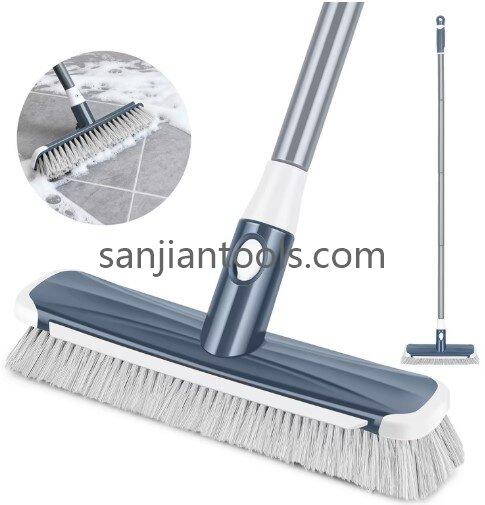
Maintaining clean floors in workshops, warehouses, commercial buildings, and outdoor facilities requires tools that can handle different levels of dirt and surface contamination. A Stiff Floor Brush is designed to provide a firm scrubbing action for removing accumulated debris and stubborn deposits from suitable durable surfaces. Its relatively rigid bristles help loosen dirt that may not be removed efficiently with softer sweeping tools. For cleaning equipment distributors and facility maintenance suppliers, understanding brush construction and application requirements helps identify suitable products for different working environments.
The basic structure generally includes a brush block, a set of bristles, and a handle or handle connection. The brush block supports the bristles and maintains their arrangement during repeated contact with the floor. The bristles provide the scrubbing action, while the handle allows the operator to control the direction and pressure of cleaning. Some designs are intended for direct hand use, while others can be connected to longer handles for cleaning larger floor areas without requiring the operator to work close to the surface.
Bristle material is one of the main factors affecting cleaning performance. Synthetic filaments are commonly used in floor cleaning products because they can offer practical flexibility and resistance to moisture in many routine applications. Their performance depends on the material composition, diameter, length, and arrangement. Different synthetic materials may provide different levels of stiffness and wear resistance, so buyers should review the actual product specifications before selecting a brush for a particular cleaning environment.
Bristle stiffness determines how the brush interacts with dirt and floor surfaces. Softer configurations are generally intended for light dust and loose debris, while firmer bristles can provide stronger contact when removing more persistent contamination. However, the stiffest option is not always the most effective choice. Excessively rigid bristles may scratch certain finishes, damage protective coatings, or create unnecessary wear on sensitive flooring. Selecting the correct level of stiffness is therefore essential for balancing cleaning efficiency and surface protection.
The dimensions of the brush head also influence productivity. A wider head can cover a larger area with fewer passes, which may be useful in warehouses, garages, and commercial facilities. Smaller configurations can offer better control around corners, narrow spaces, equipment bases, and other restricted areas. Bristle density and arrangement affect how the cleaning force is distributed across the working surface. A well-designed head should provide consistent contact during normal operation.
Handle construction is another consideration, particularly when the brush is used for extended periods. The connection between the handle and brush block should provide sufficient stability for the intended cleaning task. A suitable handle length can reduce unnecessary bending and improve access to larger areas. For manual products, grip comfort and overall balance influence handling efficiency. Buyers should confirm handle compatibility where the product is supplied with a separate handle or extension pole.
Commercial cleaning is one of the most common application areas. Maintenance teams may use firm-bristled floor brushes to clean durable flooring in storage facilities, workshops, loading areas, service rooms, and selected industrial spaces. These environments often accumulate dust, mud, grease residues, and other debris associated with daily operations. A suitable scrubbing brush can assist with routine maintenance when combined with an appropriate cleaning method and compatible cleaning solution.
Construction and renovation projects create additional demand for firm floor-cleaning tools. Concrete surfaces, outdoor paving, and certain unfinished flooring areas may accumulate dried dirt, loose construction debris, and residue. A brush with appropriate stiffness can help loosen these deposits before rinsing or further cleaning. However, users should distinguish between general floor scrubbing and specialized removal of hardened cement, adhesives, coatings, or chemical contamination. Such materials may require dedicated tools or approved treatment procedures.
Outdoor maintenance is another relevant market. Property management teams, commercial cleaning contractors, and facility operators may need to maintain entrances, patios, walkways, and other durable surfaces. Rain, soil, leaves, and regular foot traffic can cause dirt to accumulate in textured flooring. The correct brush design can help reach surface grooves and improve the effectiveness of manual cleaning. Surface compatibility should always be checked, particularly for decorative stone, coated concrete, and other finishes that may be sensitive to abrasion.
Cleaning procedures also influence the result. Before scrubbing, loose debris should be removed where practical so that it does not create unnecessary friction. The operator can then apply an appropriate cleaning solution if permitted by the floor material and product instructions. Working in manageable sections helps maintain consistent coverage. Excessive force is generally unnecessary when the brush stiffness and cleaning method are correctly matched to the task.
Maintenance helps preserve the working condition of the brush. After use, dirt and trapped particles should be removed from the bristles. If the product is compatible with water cleaning, it can be rinsed and allowed to dry before storage. The brush should be stored in a position that prevents permanent deformation of the bristles. Users should also inspect the brush block, handle connection, and bristle arrangement regularly. Replacement is appropriate when the bristles become excessively worn or lose their useful stiffness.
For wholesalers and importers, product selection should reflect the requirements of their target customers. Janitorial suppliers may focus on routine commercial cleaning, while industrial distributors may require brushes for more demanding maintenance environments. Important purchasing factors include bristle material, stiffness, head dimensions, handle configuration, packaging, and expected usage frequency. Retail buyers may also benefit from clearly differentiated product descriptions that explain which surfaces and cleaning tasks each brush is intended to address.
When evaluating a Stiff Floor Brush for commercial distribution, buyers should prioritize suitable bristle characteristics, reliable handle construction, practical dimensions, and compatibility with the intended floor surfaces. Offering different cleaning configurations allows distributors to serve facility managers, cleaning contractors, construction professionals, and hardware retailers more effectively. Zhejiang Pujiang Sanjian Tools Co., Ltd. supplies professional brushes and practical construction-related tools for overseas markets. Additional product information is available at https://www.sanjiantools.com/

 Arabic
 French
 Spanish
 Portuguese
 Deutsch
 Turkish
 Dutch
 Italiano
 Russian
 Romaian
 Portuguese (Brazil)
 Greek