


Which Reformer with Tower Features Support Versatile Pilates Workouts?
A physio I once heard about kept a plain reformer in the corner of her clinic for years. It did the job, until a patient needed overhead work and she had to send them elsewhere. That small frustration is what pushes many practitioners toward a Reformer with Tower. The features on these machines aren't just extras. They decide how many different workouts you can offer without buying more equipment. If you teach, treat patients or train at home, it helps to know which parts of the machine actually earn their place. Here's a plain walk through the ones that matter most for versatile Pilates sessions, with a Western Australian studio or clinic in mind.
The Tower Frame Itself
The tower is the obvious starting point. It's a vertical frame that rises from the end of the machine and carries spring loaded bars and attachment points above the body. On a Reformer with Tower, that frame lets a trainer set up resistance from above, which changes the whole feel of an exercise. Pulling against a spring from overhead engages the body differently from pushing against one at the foot end. Some moves become gentler, others become more demanding, and a skilled instructor can choose either. The frame needs to feel rock solid, though. If it flexes under load, it undermines the work, so build quality here is not something to compromise on.
Springs, Carriage and Adjustability
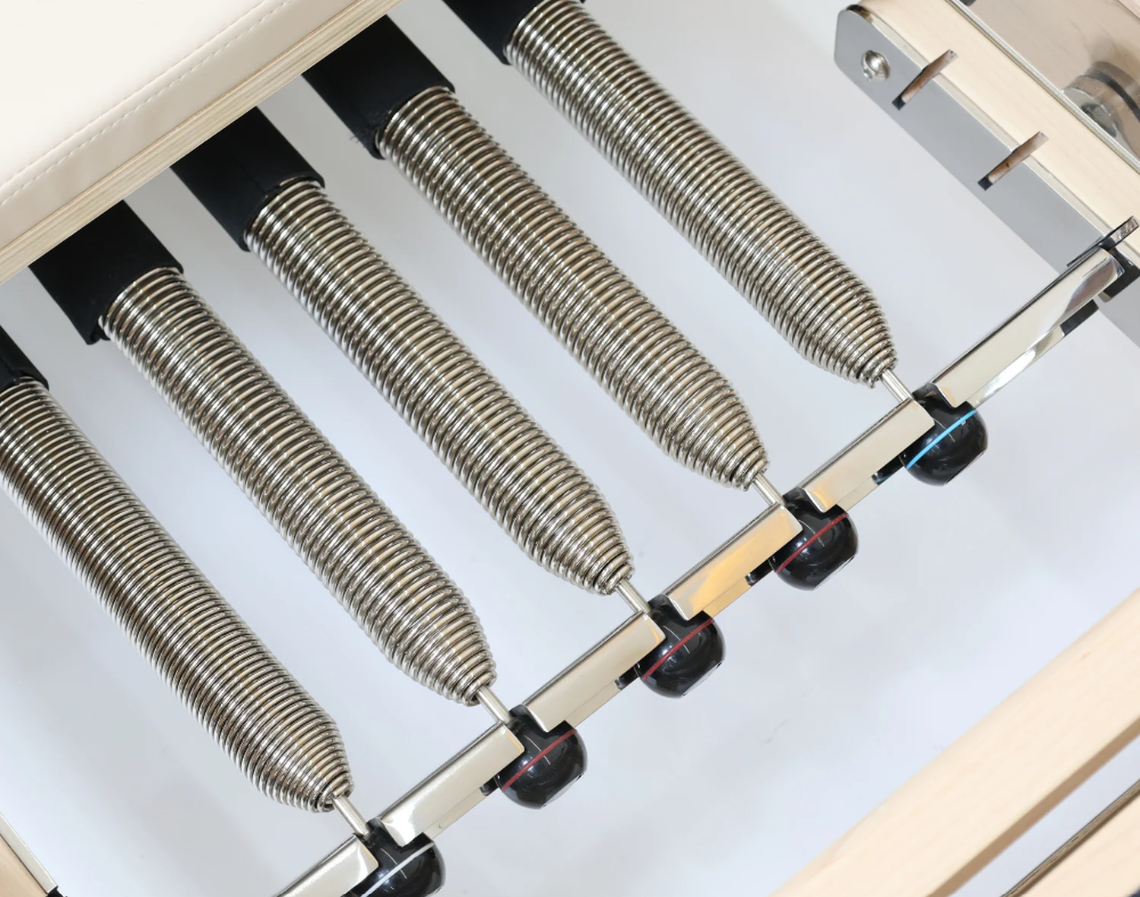
Next comes the part you can't see until you use it. Smooth carriage movement and a good range of spring settings let you scale an exercise up or down in seconds. A Reformer with Tower that glides quietly and holds its settings makes teaching easier and keeps clients focused on their movement instead of the machine. Adjustable footbars, headrests and shoulder supports matter just as much, because bodies come in all shapes. A tall client and a small one should both be able to get into a good position without awkward workarounds. Versatility really comes from this kind of fine adjustment, not just from having more attachments bolted on.
Materials, Finishes and Comfort
Features aren't only mechanical. Upholstery needs to feel comfortable through a long session and still stand up to constant cleaning. Timber needs to be sturdy and look good doing it. The Reformer Shop offers customisable timber finishes and upholstery options, so a Reformer with Tower can fit a home studio, a clinical space or a polished boutique room without looking out of place. Quality materials also affect how the machine ages. Cheap surfaces scuff and fade, while premium ones keep their character. Clients may not name it, but they feel the difference when the machine looks cared for, and that quietly lifts the whole experience.
Matching Features to Your Needs
No one needs every feature. A wellness professional working one on one might care most about fine adjustability, while a studio running group classes cares about durability and quick changeovers. Before buying a Reformer with Tower, list the workouts you actually plan to run and check that the machine supports them comfortably. Personalised consultations at The Reformer Shop help with exactly this. Their team gives expert guidance based on your space, movement goals and budget, so you don't end up paying for features you'll never use or missing one you'll want every day.
Conclusion
The features that support versatile Pilates workouts are a stable tower, smooth springs and carriage, plenty of adjustability and materials that last. A Reformer with Tower that gets these right lets you teach more, treat more and train more, all on one machine. If you're deciding, try one in person at a showroom appointment and ask plenty of questions. The right machine should feel natural the moment you step onto it.

 English
 French
 Spanish
 Portuguese
 Deutsch
 Turkish
 Dutch
 Italiano
 Russian
 Romaian
 Portuguese (Brazil)
 Greek