


Can Liposuction Tighten Loose Skin or Does It Only Remove Excess Fat?
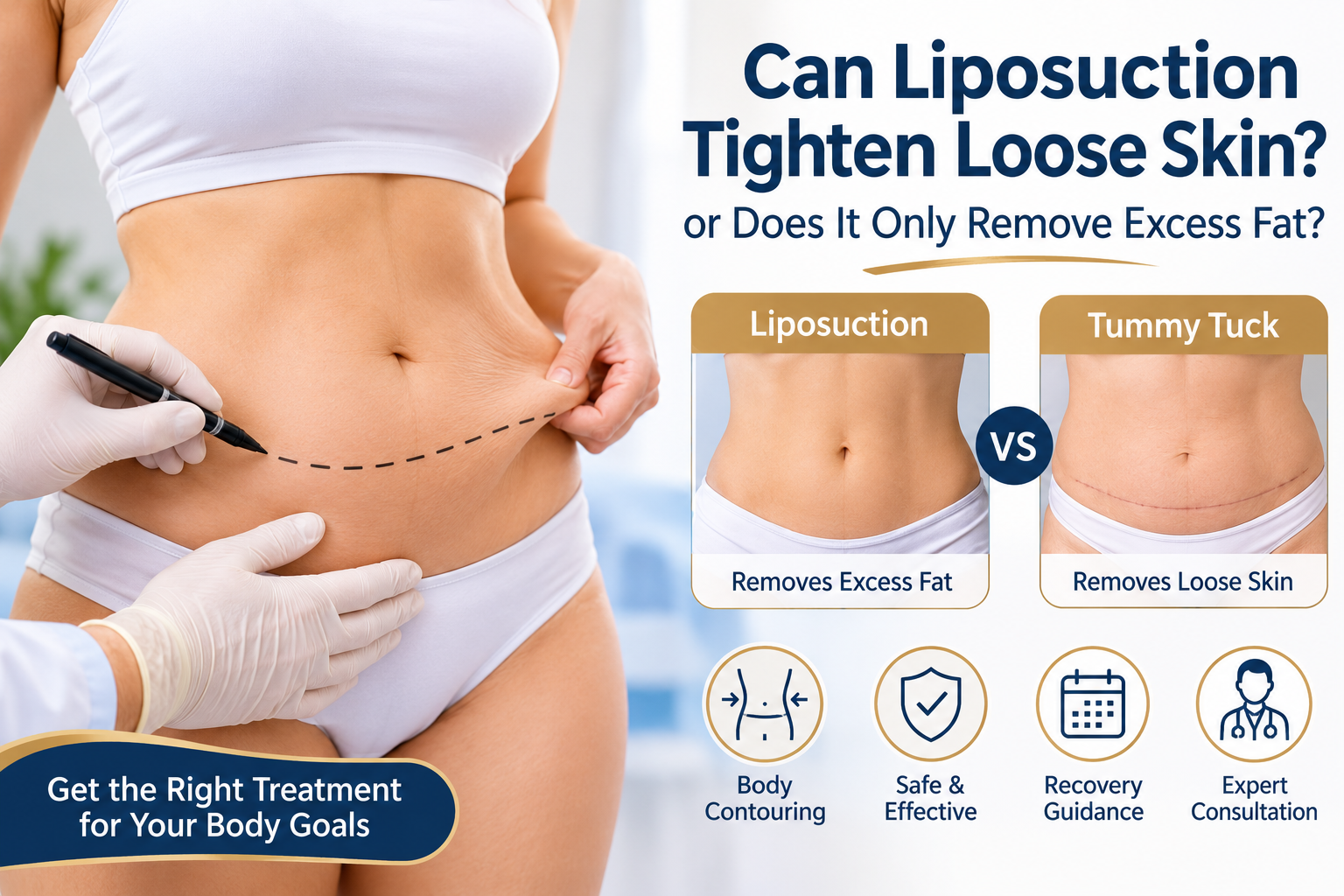
Liposuction is widely used to remove stubborn fat deposits and improve body proportions. However, one common misconception is that removing excess fat automatically tightens the skin. Many people considering abdominal liposuction, arm fat removal, thigh contouring, or waist sculpting want to know whether the procedure can also address sagging skin.
The direct answer is that traditional liposuction primarily removes excess fat rather than loose skin. Although the skin may naturally contract after fat removal, the extent of tightening depends on factors such as skin elasticity, age, genetics, the amount of fat removed, and the treatment area.
For individuals with good skin elasticity, Liposuction in Jeddah may produce smoother and more defined contours. However, patients with significant skin laxity may require an additional skin-tightening or skin-removal procedure to achieve their desired appearance.
Understanding the difference between fat reduction and skin tightening is essential before choosing a body contouring treatment.
Does Liposuction Actually Tighten Loose Skin?
Liposuction is designed to remove unwanted subcutaneous fat located beneath the skin. During treatment, a surgeon inserts a thin instrument called a cannula through small incisions to loosen and suction out fat cells.
After the fat is removed, the remaining skin may gradually adapt to the body's new shape. This natural process is known as skin retraction.
However, skin retraction is not guaranteed. Its effectiveness depends on the skin's ability to contract after the underlying fat volume decreases.
For example, someone with firm, elastic abdominal skin may experience a smoother stomach after liposuction. In contrast, someone with significant loose skin following pregnancy or substantial weight loss may notice that the skin remains saggy even after excess fat has been removed.
The key distinction: Liposuction reduces fat volume, while procedures such as tummy tuck surgery remove excess skin and tighten the underlying abdominal tissues when indicated.
Why Does Skin Become Loose After Fat Removal?
Skin is a flexible organ that stretches and contracts according to changes in body size. Its ability to return to its original shape depends largely on collagen, elastin, skin thickness, and overall tissue health.
When excess fat accumulates beneath the skin, the surrounding tissue expands. If the skin loses elasticity over time, it may not contract completely after the fat is removed.
Several factors can contribute to poor skin retraction:
-
Aging: Natural collagen and elastin production decreases with age, making skin less firm.
-
Pregnancy: Abdominal skin can stretch significantly during pregnancy, sometimes resulting in persistent loose skin.
-
Major weight loss: Rapid or substantial weight reduction can leave excess skin around the abdomen, arms, thighs, and waist.
-
Genetics: Some individuals naturally have better skin elasticity than others.
-
Sun exposure: Long-term ultraviolet exposure can damage collagen and contribute to premature skin aging.
-
Smoking: Tobacco use can negatively affect skin quality and wound healing.
These factors explain why two people receiving the same liposuction treatment may experience different body contouring results.
Which Patients Can Expect Better Skin Retraction After Liposuction?
The quality of the skin before surgery plays an important role in determining the final appearance.
Patients with good skin elasticity are generally more likely to achieve smoother results because their skin can adapt to the reduced fat volume.
Consider these common patient profiles:
|
Patient Profile |
Expected Skin Response |
|---|---|
|
Younger adults with firm skin |
Generally better natural skin contraction |
|
Individuals with localized fat deposits |
Often suitable for fat removal when skin quality is good |
|
Patients with mild skin laxity |
May experience some improvement, but results vary |
|
Individuals after pregnancy |
May have persistent abdominal looseness |
|
Patients after major weight loss |
More likely to have excess skin requiring surgical removal |
|
Older adults with reduced elasticity |
May experience limited skin retraction |
These are general patterns, not guarantees. A physical examination is necessary to assess skin thickness, stretch marks, fat distribution, and the degree of tissue laxity.
Liposuction vs Skin Tightening vs Tummy Tuck: Which Treatment Works Best?
Choosing the right cosmetic procedure depends on whether the primary concern is excess fat, loose skin, or weakened abdominal muscles.
1. Traditional Liposuction for Stubborn Fat
Traditional liposuction removes localized fat deposits through small incisions using a suction cannula.
It is commonly used for the abdomen, hips, thighs, arms, back, and other areas where stubborn fat remains despite maintaining a healthy lifestyle.
It is generally more suitable for patients with good skin elasticity and limited excess skin.
2. Laser-Assisted Liposuction for Fat Reduction
Laser-assisted liposuction uses laser energy to help loosen or liquefy fat before removal. The heat may also stimulate collagen-related tissue responses.
Some patients may experience an element of skin contraction, but the degree varies. Laser liposuction should not be considered a guaranteed solution for significant hanging or excess skin.
3. Tummy Tuck for Loose Abdominal Skin
A tummy tuck, medically known as abdominoplasty, is designed to address excess abdominal skin and may also tighten separated abdominal muscles when appropriate.
It is often considered for individuals with:
-
Loose skin following pregnancy.
-
Hanging abdominal skin after major weight loss.
-
Persistent lower abdominal skin folds.
-
Abdominal muscle separation.
-
Skin that cannot contract sufficiently after fat reduction.
Unlike liposuction alone, a tummy tuck involves removing excess skin and usually produces a longer surgical scar.
4. Arm Lift and Thigh Lift for Sagging Skin
When loose skin affects the upper arms or thighs, an arm lift or thigh lift may be considered.
These procedures remove excess skin and reshape the treated area. Liposuction may sometimes be combined with them to address remaining localized fat deposits.
Understanding the Differences
|
Treatment |
Main Purpose |
Suitable Concern |
|---|---|---|
|
Traditional Liposuction |
Fat removal |
Stubborn localized fat |
|
Laser-Assisted Liposuction |
Fat removal with possible tissue contraction |
Localized fat and selected mild laxity |
|
Tummy Tuck |
Skin removal and abdominal reshaping |
Loose abdominal skin |
|
Arm Lift |
Removes excess arm skin |
Sagging upper arms |
|
Thigh Lift |
Removes excess thigh skin |
Loose inner or outer thigh skin |
The International Society of Aesthetic Plastic Surgery explains that significant skin laxity may require an excisional body contouring procedure rather than liposuction alone.
Can VASER and HD Liposuction Improve Skin Tightness?
Advanced liposuction techniques are often discussed in connection with improved body definition and skin contraction.
VASER liposuction uses ultrasound energy to help separate fat cells before extraction. It can support more controlled fat removal in selected treatment areas, depending on the patient's anatomy and the surgeon's experience.
High-definition liposuction focuses on creating more visible muscular contours by selectively removing fat around anatomical structures.
Both approaches primarily target fat and body definition. Neither should be presented as a guaranteed replacement for surgical skin removal.
The most appropriate technique depends on the amount of excess fat, skin elasticity, treatment area, and desired outcome.
What Happens During a Liposuction Consultation?
A proper consultation helps determine whether fat removal alone will produce a satisfactory result or whether additional skin-removal surgery should be considered.
At Enfield Royal Clinic Jeddah, the published treatment information describes an individualized assessment involving body fat distribution, skin condition, body structure, and aesthetic goals.
The clinic identifies Dr. Mohamed Asem, a Consultant Plastic Surgeon licensed by the Saudi Commission for Health Specialties (SCFHS).
His listed areas of expertise include:
-
Traditional liposuction.
-
High-definition liposuction.
-
Tummy tuck surgery.
-
Body reshaping after weight loss.
This combination of listed expertise is relevant when evaluating patients who have both excess fat and loose abdominal skin. The appropriate treatment plan still depends on an individual medical examination and surgical assessment.
How Much Does Liposuction Cost in Jeddah?
The cost of Liposuction Surgery depends on the treatment technique, number of areas, amount of fat being removed, anesthesia requirements, and whether additional body contouring procedures are needed.
According to the published pricing at Enfield Royal Clinic Jeddah, the general liposuction cost ranges from SAR 4,999 to SAR 24,999.
Published Liposuction Prices
|
Treatment Type |
Cost |
|---|---|
|
Traditional Liposuction |
SAR 4,999–14,999 |
|
VASER Liposuction |
SAR 8,999–24,999 |
|
Laser Liposuction (SmartLipo) |
SAR 9,999–21,999 |
|
HD Liposuction |
SAR 14,999–24,999 |
Cost According to Treatment Area
|
Treatment Area |
Published Cost |
|---|---|
|
Abdomen |
SAR 6,999–16,999 |
|
Both Thighs |
SAR 5,999–14,999 |
|
Both Arms |
SAR 4,999–11,999 |
|
Full Body |
SAR 14,999–24,999 |
These are the prices published on the clinic's liposuction page. They are not guaranteed individual quotations. The final cost is determined after consultation with the medical team.
Patients considering a tummy tuck alongside liposuction should request a separate combined-treatment assessment because the published liposuction prices do not establish the total cost of additional skin-removal surgery.
How Long Does Skin Take to Adjust After Liposuction?
Skin contraction and tissue recovery do not happen immediately after fat removal. The body needs time to heal, swelling to decrease, and surrounding tissues to adapt to the new contours.
A general recovery overview includes:
|
Recovery Period |
Expected Changes |
|---|---|
|
Days 1–3 |
Swelling, bruising, and mild discomfort |
|
First Week |
Gradual improvement in mobility |
|
Weeks 2–3 |
Swelling begins to decrease |
|
Around One Month |
Body contours become more noticeable |
|
Following Months |
Continued tissue recovery and skin adaptation |
Compression garments may be recommended to support the treated areas and help manage swelling. However, they cannot remove excess skin or guarantee skin tightening.
Patients should follow their surgeon's instructions, maintain a stable weight, and attend follow-up appointments to monitor healing.
The American Society of Plastic Surgeons notes that skin may firm up after liposuction, but some patients require additional surgery depending on age, skin quality, and the amount of fat removed.
Frequently Asked Questions About Liposuction and Loose Skin:
Can liposuction make loose skin look worse?
Yes, it can. If the skin has poor elasticity, removing the underlying fat may make existing sagging more noticeable. This is why skin quality should be evaluated before treatment.
Does liposuction tighten abdominal skin after pregnancy?
Liposuction can remove stubborn abdominal fat after pregnancy, but it does not remove stretched skin or repair separated abdominal muscles. Patients with significant loose skin may benefit more from a tummy tuck assessment.
Can loose skin tighten naturally after liposuction?
Some skin contraction may occur naturally after surgery, particularly in patients with good elasticity. However, significant excess skin is unlikely to disappear through natural contraction alone.
Is VASER liposuction better for loose skin?
VASER uses ultrasound energy to assist fat removal and may offer some tissue contraction in selected patients. However, it is primarily a fat-removal procedure and cannot reliably correct significant skin laxity.
What is better for loose belly skin: liposuction or tummy tuck?
Liposuction is generally more appropriate for localized abdominal fat when the skin is firm. A tummy tuck is usually considered when the primary concern is excess hanging skin or abdominal muscle separation.
Can exercise tighten skin after liposuction?
Exercise can strengthen underlying muscles and improve overall fitness, but it cannot reliably remove significant excess skin. Maintaining a healthy weight can help preserve body contouring results.
Final Verdict: Does Liposuction Remove Fat or Tighten Skin?
Liposuction primarily removes excess fat rather than loose skin. Although natural skin contraction may improve the appearance of treated areas, the results depend on skin elasticity, age, genetics, and the amount of fat removed.
Patients with firm skin and localized fat deposits may achieve satisfying body contouring results with liposuction alone. However, individuals with significant sagging after pregnancy or major weight loss may require a tummy tuck, arm lift, thigh lift, or another skin-removal procedure.
For individuals exploring liposuction in Jeddah, a personalized consultation at Enfield Royal Clinic Jeddah can help determine whether traditional liposuction, VASER, laser-assisted fat removal, or combined body contouring is appropriate.
The best treatment is not necessarily the one that removes the most fat. It is the one that addresses the actual concern while considering skin quality, body proportions, medical suitability, and realistic expectations.

 English
 Arabic
 Spanish
 Portuguese
 Deutsch
 Turkish
 Dutch
 Italiano
 Russian
 Romaian
 Portuguese (Brazil)
 Greek