


Combining Neuromodulators with a Thread Lift in Dubai
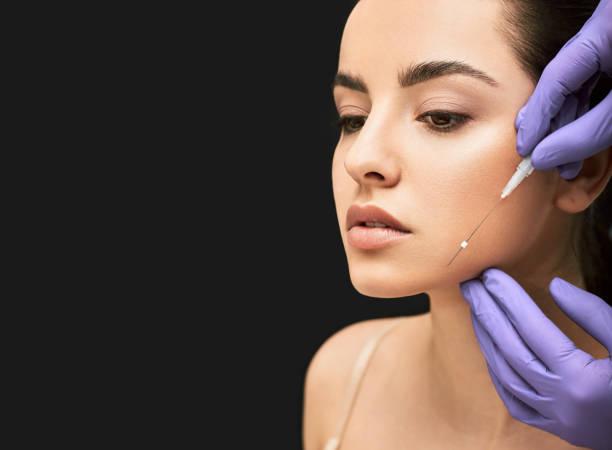
Facial rejuvenation often involves addressing more than one type of age-related change. Some patients notice dynamic forehead lines caused by repeated muscle movement, while others are concerned about mild tissue descent around the brows or cheeks. In selected cases, a Thread Lift in Dubai and neuromodulator treatment may be discussed as separate approaches within a broader facial rejuvenation plan.
These treatments work through different mechanisms. Neuromodulators temporarily reduce the activity of specific muscles, while absorbable threads provide mechanical support to selected soft tissues. Combining them requires careful assessment of facial movement, anatomy, treatment timing, and individual suitability.
Understanding the Difference Between the Two Treatments
Neuromodulators and thread lifts are not interchangeable. Each addresses a different aspect of facial appearance.
Neuromodulators are injectable medicines that temporarily reduce nerve signals to selected muscles. They are commonly used for certain expression-related lines and other approved or clinically appropriate indications.
A thread lift involves placing absorbable sutures beneath the skin to support selected soft tissues. Silhouette Soft threads use bidirectional cones to engage tissue along the planned placement pathway.
| Treatment feature | Neuromodulators | Thread lift |
|---|---|---|
| Main mechanism | Temporarily reduces selected muscle activity | Mechanically supports selected soft tissue |
| Main treatment focus | Dynamic lines and muscle-related concerns | Mild tissue descent |
| Method | Injection | Placement of absorbable threads |
| Typical effect | Gradual reduction in targeted muscle activity | Mechanical lifting effect with subsequent tissue settling |
| Duration | Temporary and product-dependent | Temporary and variable |
| Main planning concern | Muscle selection and dose | Anatomy, placement direction, and tissue engagement |
The treatments may address different concerns in the same patient, but their combination is not automatically necessary.
How a Thread Lift in Dubai May Contribute to Facial Harmony
Facial harmony depends on the relationship between the forehead, brows, cheeks, and lower face. Mild tissue descent may change these proportions, making selected areas appear heavier or less defined.
A thread lift may be considered when the practitioner identifies suitable soft-tissue laxity.
Mechanical Support from Silhouette Soft
Silhouette Soft threads use bidirectional cones to engage selected tissue and provide mechanical support. Their placement is planned according to facial anatomy and the desired direction of repositioning.
The threads are absorbable and made from PLLA. As the material gradually breaks down, it may contribute to a collagen-related tissue response, although the extent of this effect varies.
Thread lifting does not correct every form of facial ageing and is not equivalent to a surgical facelift.
How Neuromodulators Affect Upper-Face Movement
Neuromodulators work by temporarily reducing the activity of selected muscles. Depending on the product and treatment indication, they may be used for dynamic lines involving the forehead, glabella, or outer eye area.
Read More: Why Is Hair Direction Important in Sideburn Hair Transplant in Dubai?
Dynamic Lines and Muscle Activity
Expression lines become visible when facial muscles contract. Neuromodulators may soften certain lines by reducing activity in the targeted muscles.
The effect is temporary and depends on the product, dose, muscle characteristics, and individual response.
Preserving Natural Expression
A balanced treatment plan aims to address specific concerns without unnecessarily restricting normal facial expression. The practitioner must consider the relationship between muscles that elevate and lower the brows.
Excessive or poorly planned muscle relaxation can affect brow position or create an unnatural appearance. This is particularly important when upper-face treatments are being considered alongside a lifting procedure.
Why the Combination Requires Careful Planning
The upper face contains closely related muscles and soft tissues. A treatment that changes muscle activity may influence the appearance and movement of the brow, while a thread lift changes the support of selected tissue.
Combining the procedures requires an understanding of how these effects may interact.
Assessing Brow Position and Muscle Balance
The practitioner may examine the brows at rest and during expression. This helps distinguish between concerns related to muscle activity, tissue descent, eyelid anatomy, and natural facial structure.
Choosing Treatment Areas
Not every patient needs both procedures. Some may benefit from addressing dynamic lines alone, while others may have a separate concern involving tissue descent.
Treatment should be limited to areas where a clear clinical or aesthetic objective has been identified.
Considering Treatment Sequence
The timing of neuromodulators and thread placement should be decided by the treating practitioner. The plan may depend on the product used, treatment area, previous procedures, and recovery requirements.
There is no universal sequence or waiting period suitable for every patient.
Who May Be Considered for a Combined Approach?
A combined plan may be discussed for selected individuals who have both muscle-related lines and mild tissue laxity.
The practitioner may consider:
-
Dynamic forehead or frown lines
-
Selected areas of mild soft-tissue descent
-
Existing brow position and symmetry
-
Skin quality and facial anatomy
-
Previous injectable or thread treatments
-
Medical history and treatment suitability
-
Expectations about subtle, natural-looking changes
Patients with significant skin excess, pronounced brow descent, or functional eyelid concerns may require a different assessment.
Risks and Possible Side Effects
Neuromodulators can cause temporary bruising, swelling, headache, or unwanted changes in muscle activity. Depending on the injection area, complications may include eyelid or brow drooping, asymmetry, or an altered expression.
Thread lifting may cause bruising, swelling, tenderness, tightness, dimpling, asymmetry, infection, thread visibility or extrusion, migration, and injury to nearby structures.
Combining procedures introduces the considerations associated with each treatment. Patients should receive a clear explanation of risks, alternatives, and expected recovery before proceeding.
Maintaining Natural-Looking Results
The aim of combination treatment should be facial balance rather than maximal lifting or complete elimination of expression lines.
A measured approach may involve treating only the areas that contribute meaningfully to the patient's concerns. Practitioners should avoid creating an overly elevated brow, excessive muscle restriction, or an artificial relationship between facial features.
Patients should also understand that neither treatment stops ageing. Both provide temporary effects that may change over time.
Clinic Note: Neuromodulators address selected muscle activity, while thread lifts support selected soft tissues. Combining them should be based on a clear understanding of facial movement and anatomy, not simply on the assumption that more treatments produce better results.
Frequently Asked Questions
Can neuromodulators and a thread lift be performed together?
They may be included in the same overall treatment plan for selected patients. Whether they should be performed together or separately depends on clinical assessment and treatment timing.
Do neuromodulators make thread lift results last longer?
There is no universal guarantee that combining the treatments extends thread lift longevity. Each procedure has its own mechanism and duration.
Can neuromodulators lift the eyebrows?
They may alter brow position by changing the activity of selected muscles, but the effect is different from mechanical tissue support with threads.
Is a combined approach suitable for everyone?
No. Facial anatomy, muscle activity, skin quality, medical history, and previous procedures all influence suitability.
Will the combination remove all forehead lines and sagging?
No. Both treatments have specific limitations, and results vary. The objective should be a realistic improvement rather than complete correction.
Discuss a Balanced Rejuvenation Plan at Tajmeels Clinic
Upper-face rejuvenation requires attention to both muscle activity and soft-tissue support. Tajmeels Clinic offers individualized consultations to assess facial movement, brow position, skin quality, and aesthetic goals before discussing suitable treatment options. A personalized plan can help determine whether neuromodulators, a thread lift, or a different approach is appropriate.

 English
 Arabic
 French
 Portuguese
 Deutsch
 Turkish
 Dutch
 Italiano
 Russian
 Romaian
 Portuguese (Brazil)
 Greek