


Pro Audio Speakers: Delivering Dynamic Sound, Strong Projection, and Precise Acoustic Detail
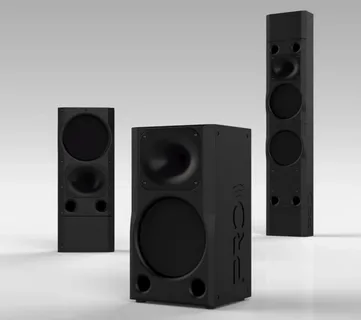
Great sound reproduction depends on more than volume. A capable speaker system must deliver enough output to reach its intended listening area while preserving the detail, balance, and character of the original audio. Whether someone is upgrading a vehicle's sound system or building a powerful setup for professional use, selecting suitable drivers can make a significant difference in overall performance.
Every component contributes to the final result. Cone construction affects how a driver responds to audio signals, amplifier matching determines available power, and installation influences sound distribution. Understanding these factors helps buyers choose equipment that delivers strong projection without sacrificing vocal clarity, instrumental definition, or listening comfort.
What Makes a Speaker Deliver Strong Acoustic Performance?
A speaker converts electrical audio signals into sound waves through the movement of its diaphragm. Although this process appears straightforward, maintaining accuracy at high output levels requires careful engineering. The driver must move in response to the incoming signal while controlling unwanted vibration, distortion, and heat.
Several design elements influence this performance. The magnet assembly provides the force needed to move the voice coil, while the suspension helps control cone movement. The cone material affects stiffness, weight, and damping characteristics. The frame keeps the assembly aligned and provides a stable mounting structure.
These elements work together to determine how effectively a speaker handles different frequencies and power levels. A well-designed driver should maintain controlled movement and consistent output throughout its intended operating range.
Why professional-grade sound drivers Improve Audio Projection
Selecting professional-grade sound drivers can help create a system capable of delivering strong output with greater control. These drivers are often designed around demanding operating conditions, where efficiency, power handling, and reliable sound reproduction are important considerations.
Sensitivity plays a major role in projection. A speaker with higher sensitivity can generally produce more acoustic output from the same amplifier power when compared under equivalent measurement conditions. This can be useful when a system needs substantial volume without requiring excessive amplifier capacity.
Power handling is equally important. A driver must manage the electrical energy supplied by its amplifier without excessive heating or mechanical stress. Its voice-coil design, cooling features, suspension, and excursion capability all contribute to dependable operation.
However, strong projection should not come at the expense of clarity. Choosing a driver that suits the required frequency range and installation environment is essential for achieving a balanced result.
Understanding the Relationship Between Frequency and Sound Detail
Different frequencies contribute different qualities to music and other audio content. A balanced system must reproduce these ranges effectively so that no important element becomes overpowering or difficult to hear.
Low frequencies and physical impact
Bass frequencies create depth and weight. They contribute to kick drums, bass guitars, electronic effects, and other low-frequency elements. Subwoofers are designed to reproduce these signals with greater excursion and output capability than most smaller full-range drivers.
Enclosure design strongly affects bass performance. A sealed enclosure can provide controlled low-frequency reproduction, while a properly tuned ported enclosure may increase output around its tuning frequency. The correct choice depends on the driver's specifications and the desired listening characteristics.
Midrange frequencies and natural reproduction
The midrange contains much of the information that makes voices and instruments recognizable. Poor midrange reproduction can make music sound distant, hollow, or harsh.
Dedicated midrange drivers help reproduce vocals, guitars, keyboards, and other instruments with greater focus. Their cone design, sensitivity, and frequency response influence how naturally they reproduce these sounds.
High frequencies and acoustic precision
High-frequency drivers reproduce cymbal details, upper harmonics, and subtle elements that contribute to clarity. Tweeters are designed to handle this range, allowing the main speakers to focus on lower frequencies.
Proper integration is important. Excessive high-frequency output can make music sound sharp, while insufficient output may reduce definition. Crossover settings and tweeter positioning help establish a more natural balance.
Matching Amplifier Power with Speaker Requirements
A speaker system needs an amplifier that can provide suitable power without forcing the equipment beyond its operating limits. Choosing an amplifier based only on its advertised maximum wattage can lead to an unsuitable combination.
RMS ratings offer a more useful way to compare continuous power handling. Buyers should consider the speaker's RMS rating, nominal impedance, and the amplifier's output at the corresponding load.
For example, a four-channel amplifier can support multiple full-range speakers, while a monoblock amplifier is commonly selected for subwoofer applications. Larger installations may require separate amplification channels for different driver groups.
Gain structure also deserves attention. Gain controls match the amplifier's input sensitivity to the source signal; they do not simply increase available power. Incorrect adjustment can cause clipping and introduce distortion.
A suitable amplifier should provide clean output at the desired listening level while maintaining compatibility with the connected speakers.
Improving Projection Through Speaker Placement
Even high-quality equipment can produce uneven results when installed in unsuitable positions. Sound waves interact with nearby surfaces, reflections, and the surrounding environment. These interactions influence how listeners perceive volume, clarity, and frequency balance.
In automotive applications, door position, mounting depth, cabin shape, and speaker direction affect sound distribution. Secure mounting helps reduce unwanted vibration, while appropriate sealing can improve the performance of door-mounted drivers.
For professional sound installations, speaker placement must account for listening distance, audience coverage, room dimensions, and reflective surfaces. The goal is to distribute sound consistently rather than creating areas that are excessively loud or difficult to hear.
Angling speakers toward the intended listening area can also improve direct sound delivery. However, the ideal position depends on the driver design and the environment in which it operates.
Crossover Design for Better Driver Coordination
When a system contains multiple speaker types, each driver should receive the frequencies it is designed to reproduce. A crossover manages this distribution and helps prevent unnecessary strain.
High-pass filters reduce low-frequency signals sent to smaller speakers. Low-pass filters direct bass frequencies toward subwoofers, while band-pass filters can isolate the operating range of dedicated midrange drivers.
The selected crossover frequency must suit the capabilities of the connected drivers. Filter slopes also influence how quickly frequencies are reduced beyond the crossover point.
Phase alignment is another consideration. If drivers reproduce overlapping frequencies without suitable integration, certain sounds may become weaker or uneven around the listening position.
A digital signal processor can provide detailed control over crossover points, equalization, time alignment, and individual channel levels. These adjustments help create a smoother transition between drivers and improve the overall presentation.
Construction Materials and Their Influence on Reliability
Speaker materials influence durability, response characteristics, and long-term performance. Manufacturers use different cone materials and structural designs depending on the intended application.
Paper cones are valued for their lightweight construction and acoustic properties. Polypropylene offers moisture resistance and can be suitable for many automotive environments. Composite materials may combine stiffness and reduced weight to support specific performance goals.
Voice-coil materials and winding configurations also matter. The voice coil converts electrical energy into mechanical movement, making its thermal capacity and construction important for power handling.
The magnet assembly contributes to the driver's motor strength. Its design influences how effectively the speaker controls cone movement, particularly during demanding playback.
No single material guarantees better sound. Overall engineering, component quality, and application suitability determine whether a particular design meets the user's requirements.
Reducing Distortion During Demanding Playback
Distortion can reduce clarity and make an otherwise powerful system sound unpleasant. It may result from amplifier clipping, excessive speaker excursion, poor installation, damaged components, or operating equipment beyond its intended limits.
Several practical measures can help maintain cleaner playback:
-
Choose speakers with suitable power handling for the intended application.
-
Match amplifier output to the speakers' impedance and RMS requirements.
-
Set amplifier gains correctly to prevent unnecessary clipping.
-
Use appropriate high-pass and low-pass filters.
-
Secure speaker mounting points to reduce rattling and vibration.
-
Avoid operating drivers continuously beyond their recommended limits.
-
Inspect wiring and connections for damage or loose contact.
These measures help protect equipment while supporting consistent sound quality at different listening levels.
Planning a System Around the Intended Listening Experience
Before buying equipment, consider what the system needs to accomplish. A setup designed for strong vocal projection may require different drivers from one intended to reproduce deep bass or provide broad sound coverage.
Start by identifying the required frequency range and listening environment. Next, compare sensitivity, RMS power handling, impedance, and physical dimensions. Check amplifier compatibility and determine whether additional components, such as subwoofers, tweeters, or a signal processor, are necessary.
Budget planning should include installation materials, wiring, mounting hardware, and electrical upgrades where required. These details are easy to overlook when most attention goes toward the speakers themselves.
A system designed around actual listening requirements is more likely to deliver reliable results than one assembled by choosing components independently.
Bringing Dynamic Output and Acoustic Detail Together
Dynamic sound, strong projection, and precise detail depend on a complete system working in harmony. Suitable drivers establish the foundation, amplifiers provide clean power, crossovers manage frequency distribution, and careful placement helps sound reach the intended listening area.
The strongest setup is not necessarily the one with the highest wattage or loudest output. It is the one that maintains control across different frequencies, reproduces important details naturally, and performs reliably under demanding conditions.
By evaluating technical specifications and planning every part of the installation, buyers can create an audio system that combines impressive output with a more refined and engaging listening experience.

 English
 Arabic
 French
 Spanish
 Portuguese
 Deutsch
 Turkish
 Italiano
 Russian
 Romaian
 Portuguese (Brazil)
 Greek