


Overheating in Traffic Around Manchester: Pull Over, Cool Down or Recover?
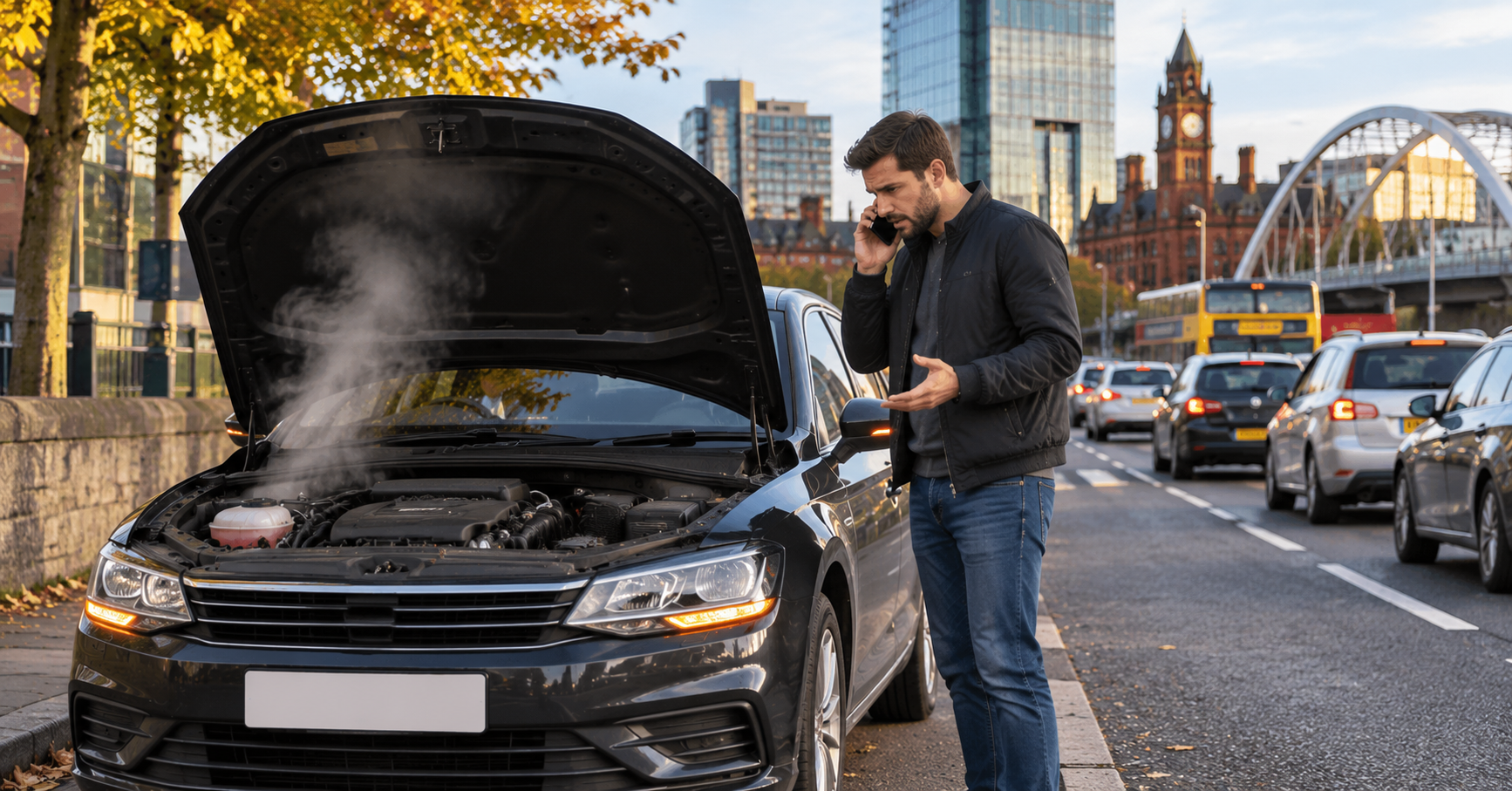
If your car overheats in Manchester traffic, find a safe place to stop, switch off the engine and allow it to cool. Do not remove the radiator or coolant expansion tank cap while the engine is hot. If the vehicle continues overheating, loses coolant or shows signs of mechanical damage, arrange professional recovery rather than driving further.
Traffic congestion around Manchester can place additional demands on a vehicle's cooling system. Slow-moving journeys, frequent stopping and limited airflow may expose problems that are less noticeable on open roads.
Knowing how to respond to an overheating engine can help prevent expensive mechanical damage and reduce the risk of a dangerous roadside breakdown.
Why Do Cars Overheat in Heavy Traffic?
Your engine produces considerable heat during normal operation. The cooling system helps regulate temperature through coolant circulation, the radiator, thermostat and cooling fan.
When traffic moves slowly, less natural airflow passes through the radiator. The cooling fan becomes particularly important because it helps maintain cooling when the vehicle is stationary.
If the fan, thermostat, water pump or another cooling system component develops a fault, engine temperature may rise beyond its normal operating range.
Common causes include low coolant levels, cooling fan failure, coolant leaks, radiator blockages and defective thermostats.
An overheating engine does not necessarily mean the entire cooling system has failed. However, the actual problem should be identified before the vehicle is driven again.
How Can You Recognise an Overheating Engine?
The clearest warning is a temperature gauge moving into the red zone or a dashboard overheating warning.
Other possible symptoms include steam emerging from beneath the bonnet, reduced engine performance, unusual smells or a loss of heating performance.
Some vehicles may enter a reduced-power mode to help protect the engine. Do not assume that an overheating warning is harmless because the vehicle still appears to drive normally.
Continuing to operate an overheating engine can damage the cylinder head, head gasket and other internal components.
Step 1: Find a Safe Place to Stop
When you notice an overheating warning, your first priority should be finding somewhere safe to stop.
Avoid sudden braking or unpredictable steering movements. If possible, leave busy traffic and enter a suitable car park, side road or other safe stopping area.
Switch on your hazard warning lights when necessary to alert other road users. If you are on a motorway or another high-speed road, follow the official breakdown safety procedures rather than attempting roadside repairs.
Never stop in an unsafe position simply to inspect your engine.
Step 2: Switch Off the Engine and Allow It to Cool
Once your vehicle is safely parked, switch off the engine and allow the cooling system to cool naturally.
Do not immediately remove the radiator cap or coolant expansion tank cap. Hot cooling systems can remain under pressure, and opening the cap may release boiling coolant or steam.
This presents a significant risk of burns. The RAC's engine overheating guidance also advises drivers against opening a pressurised cooling system while hot.
If steam or smoke is visible, keep a safe distance and avoid touching hot engine components.
Step 3: Look for Warning Signs Without Taking Risks
After the engine has cooled sufficiently, you may be able to identify obvious external signs of a problem.
For example, a visible coolant puddle beneath the vehicle could indicate a leak. An empty coolant reservoir, damaged hose or unusual smell may also suggest cooling system trouble.
However, many overheating problems cannot be diagnosed through visual inspection alone. The absence of a visible leak does not mean the vehicle is safe to drive.
If you are unsure about the fault, avoid dismantling components or attempting repairs without appropriate knowledge.
Should You Continue Driving After the Engine Cools?
Allowing the engine to cool does not necessarily resolve the underlying problem.
If a cooling fan has failed or coolant is escaping from the system, the temperature may rise again shortly after restarting.
Repeated overheating can cause increasingly serious damage. If your vehicle has suffered severe overheating, lost substantial coolant or displayed signs of engine damage, it should be inspected before further driving.
A qualified mechanic can assess the cooling system and determine whether the vehicle is roadworthy. The safest decision depends on the fault, the vehicle's condition and the surrounding road environment.
When Is Professional Recovery Necessary?
Professional recovery is advisable when the vehicle cannot be driven safely without risking additional damage.
This may include situations involving persistent overheating, significant coolant loss, steam, unusual mechanical noises or an engine that has stopped unexpectedly. Motorists considering vehicle recovery options in Oldham or Greater Manchester can contact Nationwide Recovery to discuss suitable assistance.
The company provides breakdown recovery services for drivers whose vehicles cannot safely complete their journeys. When contacting a recovery operator, describe the overheating symptoms and explain whether the vehicle starts, moves or has visible fluid leaks.
Sharing your exact location and preferred destination can also help the operator plan the recovery.
How Can Manchester Drivers Reduce Overheating Risks?
Preventative maintenance is one of the most effective ways to reduce overheating problems.
Check coolant levels according to the manufacturer's instructions and arrange inspections if you repeatedly need to top up the system.
Investigate unusual temperature readings, coolant stains and changes in engine performance before they develop into more serious problems. Cooling fan operation, hoses, radiators and thermostats should also be assessed during appropriate maintenance checks.
Before a long journey, confirm that your vehicle is in suitable mechanical condition.
Final Thoughts
An overheating engine should never be ignored, particularly during congested journeys around Manchester.
Stopping safely, switching off the engine and allowing the cooling system to cool are important immediate steps. However, temporary cooling does not guarantee that the mechanical problem has been resolved.
If the vehicle continues overheating or shows signs of serious damage, arranging professional recovery is generally safer than attempting to complete the journey.

 English
 Arabic
 French
 Spanish
 Portuguese
 Deutsch
 Dutch
 Italiano
 Russian
 Romaian
 Portuguese (Brazil)
 Greek