


Can You Breastfeed After Breast Augmentation? What Women Should Know
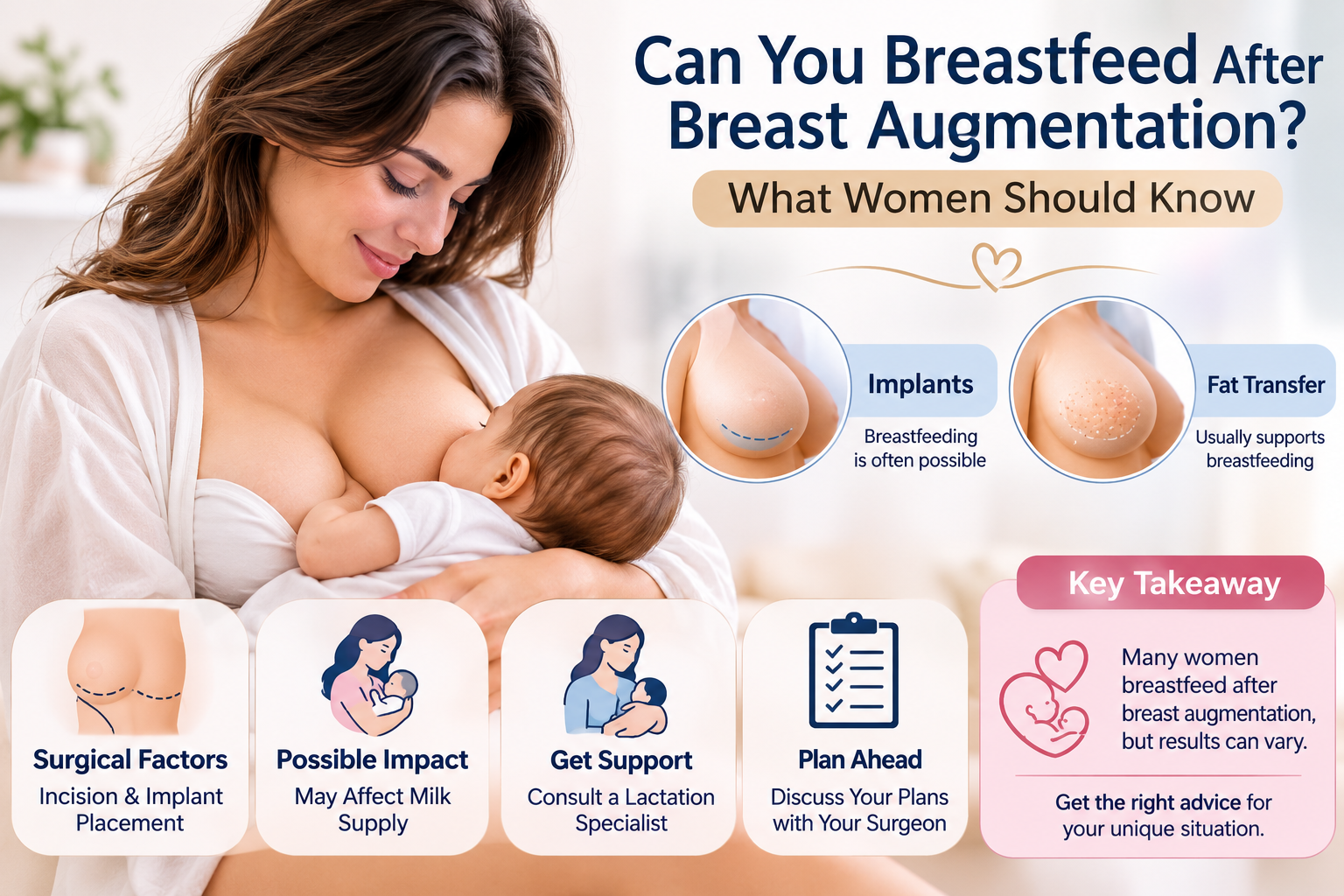
Planning to have children after breast augmentation raises an important question: will breast implants affect your ability to breastfeed? For many women, the answer is yes, breastfeeding is still possible. However, Breast Augmentation in Jeddah can sometimes influence milk production, nipple sensation, or the flow of milk through the breast ducts.
The outcome depends on several factors, including the surgical technique, incision location, implant placement, natural breast anatomy, and individual healing. Understanding these details before surgery can help women make decisions that support both their aesthetic goals and future breastfeeding plans.
If you are considering breast enlargement in Jeddah and hope to breastfeed in the future, here is what you should understand before choosing a procedure.
The Short Answer: Breast Implants Do Not Automatically Prevent Breastfeeding
Most women who undergo breast augmentation retain at least some ability to produce breast milk. However, not everyone develops a full milk supply.
Breastfeeding depends on a coordinated system involving milk-producing glands, milk ducts, nipple sensation, and hormones. During pregnancy, hormonal changes prepare the breast tissue for lactation. After childbirth, a baby's sucking stimulates nerve pathways that help release prolactin and oxytocin, hormones involved in milk production and milk flow.
Breast surgery may affect some of these structures. If the ducts or nerves are disrupted, milk production or milk transfer may become more difficult.
The US Centers for Disease Control and Prevention (CDC) explains that many mothers with previous breast surgery can produce some milk, although additional breastfeeding support may be necessary.
Four Surgical Factors That May Influence Breastfeeding:
The ability to breastfeed after breast augmentation is not determined by implant material alone. The way surgery is performed can be equally important.
1. Incision Location and Milk Duct Preservation
The incision used during breast implant surgery may influence the risk of disrupting nerves or milk ducts.
-
Inframammary incision: Made in the natural fold beneath the breast. It generally avoids a direct incision around the nipple and areola.
-
Periareolar incision: Made around the edge of the areola. Depending on the surgical approach, it may affect ducts or nerves involved in lactation.
-
Transaxillary incision: Made through the armpit, avoiding a direct incision on the breast itself.
Incisions around the areola may carry a greater risk of reduced milk production, particularly if ducts or nerves are damaged. However, the actual outcome depends on how much tissue remains connected and how healing progresses.
Women who plan to breastfeed should discuss incision options with their plastic surgeon before surgery.
2. Implant Placement: Above or Below the Chest Muscle
Breast implants can be positioned in different anatomical locations.
Subglandular placement: The implant sits behind the breast tissue but in front of the pectoral muscle.
Submuscular placement: The implant is positioned beneath the chest muscle.
According to the CDC, implants placed below the muscle generally affect milk production less than implants positioned above it. Nevertheless, implant placement alone cannot guarantee successful breastfeeding because other factors, including natural breast development and surgical technique, also matter.
3. Nipple Sensation and Nerve Function
Nipple sensation plays an important role in breastfeeding. When a baby suckles, sensory signals travel through nerves to the brain, helping trigger the hormonal response responsible for milk production and release.
Some women experience temporary changes in nipple sensitivity after breast augmentation. In certain cases, sensation may remain altered.
If the nerves involved in lactation are affected, the let-down reflex may become less effective. This does not necessarily mean breastfeeding will be impossible, but it may create additional challenges.
4. Existing Breast Tissue and Natural Milk Supply
Not every breastfeeding difficulty after breast augmentation is caused by implants.
Some women naturally have insufficient glandular tissue, a condition sometimes associated with underdeveloped or widely spaced breasts. This can affect milk production even without previous breast surgery.
A woman's original breast anatomy is therefore an important part of preoperative assessment. The surgeon should consider existing tissue volume, breast development, and any history of breastfeeding difficulties.
Does Silicone or Saline Implant Material Affect Breast Milk?
A common concern is whether silicone or saline implants can affect the quality or safety of breast milk.
Saline implants contain sterile saltwater inside a silicone outer shell. Silicone gel implants contain cohesive silicone gel. Both types are used for breast augmentation, but neither can guarantee a particular breastfeeding outcome.
The US Food and Drug Administration (FDA) states that it is not known whether small amounts of silicone pass from implant shells into breast milk. However, available research has not established that silicone implants create a specific breastfeeding-related health problem for infants.
The CDC also notes that research is limited, but there have been no recent reports of clinical problems in infants of mothers with silicone breast implants.
Women should discuss implant information, potential risks, and future pregnancy plans with their healthcare provider rather than assuming one implant material is automatically better for breastfeeding.
What If You Become Pregnant After Breast Augmentation?
Pregnancy naturally changes breast tissue. Hormonal changes cause the milk-producing glands to develop, and the breasts may become larger, fuller, or more sensitive.
Women with breast implants can experience these changes just like other pregnant women. However, previous surgery may influence how much milk they produce after delivery.
Possible experiences include:
-
Normal breast enlargement during pregnancy
-
Increased fullness when milk production begins
-
Nipple sensitivity or changes in sensation
-
Partial milk production rather than a complete supply
-
The need for additional feeding support
Pregnancy can also change the cosmetic appearance of augmented breasts. Skin stretching, weight fluctuations, and changes in breast volume may affect shape and firmness.
How to Prepare for Breastfeeding After Breast Implant Surgery?
If you already have implants and are planning a pregnancy, preparation can make breastfeeding easier to manage.
Before delivery: Tell your obstetrician, midwife, and healthcare team about your breast augmentation. If possible, provide details about the implant position, incision location, and surgical technique.
After delivery: Seek early guidance from a qualified lactation consultant, especially if your baby has difficulty latching or appears unsatisfied after feeding.
Monitor milk production: Breast fullness alone does not confirm that your baby is receiving enough milk. Healthcare professionals can assess feeding effectiveness and monitor the baby's weight gain.
Consider additional feeding support: If milk production is insufficient, your healthcare provider may recommend expressed breast milk, pasteurised donor human milk, or infant formula as appropriate.
The CDC recommends careful monitoring of infant growth and additional lactation support for mothers who have undergone breast surgery.
Should You Delay Breast Augmentation Until After Having Children?
There is no universal rule that every woman must wait until she has completed her family before having breast augmentation.
The decision depends on personal priorities, medical suitability, and the possibility of future breast changes.
If breastfeeding is a major priority, discuss it before surgery. You can ask your surgeon about techniques that aim to preserve breast ducts and nipple sensation, and whether a particular implant position or incision may be more appropriate.
Some women prefer to postpone elective breast surgery until after pregnancy and breastfeeding because these life events can change breast shape and volume. Others choose surgery earlier after understanding the possible limitations.
The important point is to make the decision with realistic expectations and clear medical advice.
Breast Augmentation Cost in Jeddah:
The cost of breast augmentation varies according to implant material, surgical technique, treatment complexity, and whether additional procedures are required.
The published estimated prices at Enfield Royal Clinic Jeddah are:
| Procedure | Estimated Cost |
|---|---|
| Saline Implant Augmentation | SAR 22,000–28,000 |
| Silicone Implant Augmentation | SAR 26,000–34,000 |
| Fat Transfer Breast Augmentation | SAR 28,000–38,000 |
| Breast Augmentation with Lift | SAR 35,000–45,000 |
These are the clinic's listed treatment estimates, not guaranteed individual quotations. The final price is confirmed after consultation and assessment.
Breastfeeding support, lactation consultations, and infant monitoring are separate healthcare considerations and should not be assumed to be included in a breast augmentation package.
Meet the Breast Augmentation Medical Expert:
Dr. Mohamed Asem is a Plastic and Reconstructive Surgeon listed as the medical expert for breast augmentation at the clinic. His credentials include SCFHS-Licensed Consultant status and registration with the Irish Medical Council.
His clinical focus includes breast augmentation, breast reduction, breast lifting, and body contouring procedures. During a consultation, women can discuss their desired breast shape, existing anatomy, implant options, incision placement, and future pregnancy plans.
For patients who hope to breastfeed, discussing these priorities before surgery is particularly important. A personalised surgical plan can take future lactation goals into consideration, although no technique can guarantee a full milk supply.
Frequently Asked Questions:
Can you breastfeed normally with breast implants?
Many women with breast implants can breastfeed, but some experience reduced milk production. The result depends on breast anatomy, surgical technique, incision location, and preservation of milk ducts and nerves.
Do breast implants affect the quality of breast milk?
Current evidence has not established a specific harmful effect on breast milk from silicone or saline implants. However, research on certain aspects of silicone exposure remains limited, so individual concerns should be discussed with a healthcare professional.
Are implants under the muscle better for breastfeeding?
The CDC indicates that implants below the chest muscle usually affect milk production less than implants above the muscle. However, this does not guarantee successful breastfeeding.
Can you breastfeed if the incision was around the areola?
Yes, breastfeeding may still be possible. However, an incision around the areola can increase the possibility of damage to ducts or nerves, depending on the surgical technique.
Should I tell my surgeon that I want children in the future?
Absolutely. Future pregnancy and breastfeeding plans are important considerations during breast augmentation planning. Discussing them early allows your surgeon to explain suitable approaches and potential limitations.
Final Takeaway: Plan Breast Augmentation With Your Future in Mind
Breast Augmentation does not automatically take away the ability to breastfeed. Many women successfully breastfeed after implant surgery, while others may need additional support or supplementation because of reduced milk production.
The most important considerations include preserving breast ducts and nerves, selecting an appropriate surgical approach, understanding your natural breast anatomy, and preparing for postpartum monitoring.
If you are considering breast augmentation and hope to have children in the future, make breastfeeding an explicit part of your consultation. An informed decision should support your aesthetic preferences while taking your long-term health and family plans into account.

 English
 Arabic
 French
 Spanish
 Portuguese
 Deutsch
 Turkish
 Dutch
 Italiano
 Romaian
 Portuguese (Brazil)
 Greek