


Uber Clone vs. Custom Taxi App Development: Which Is Better?
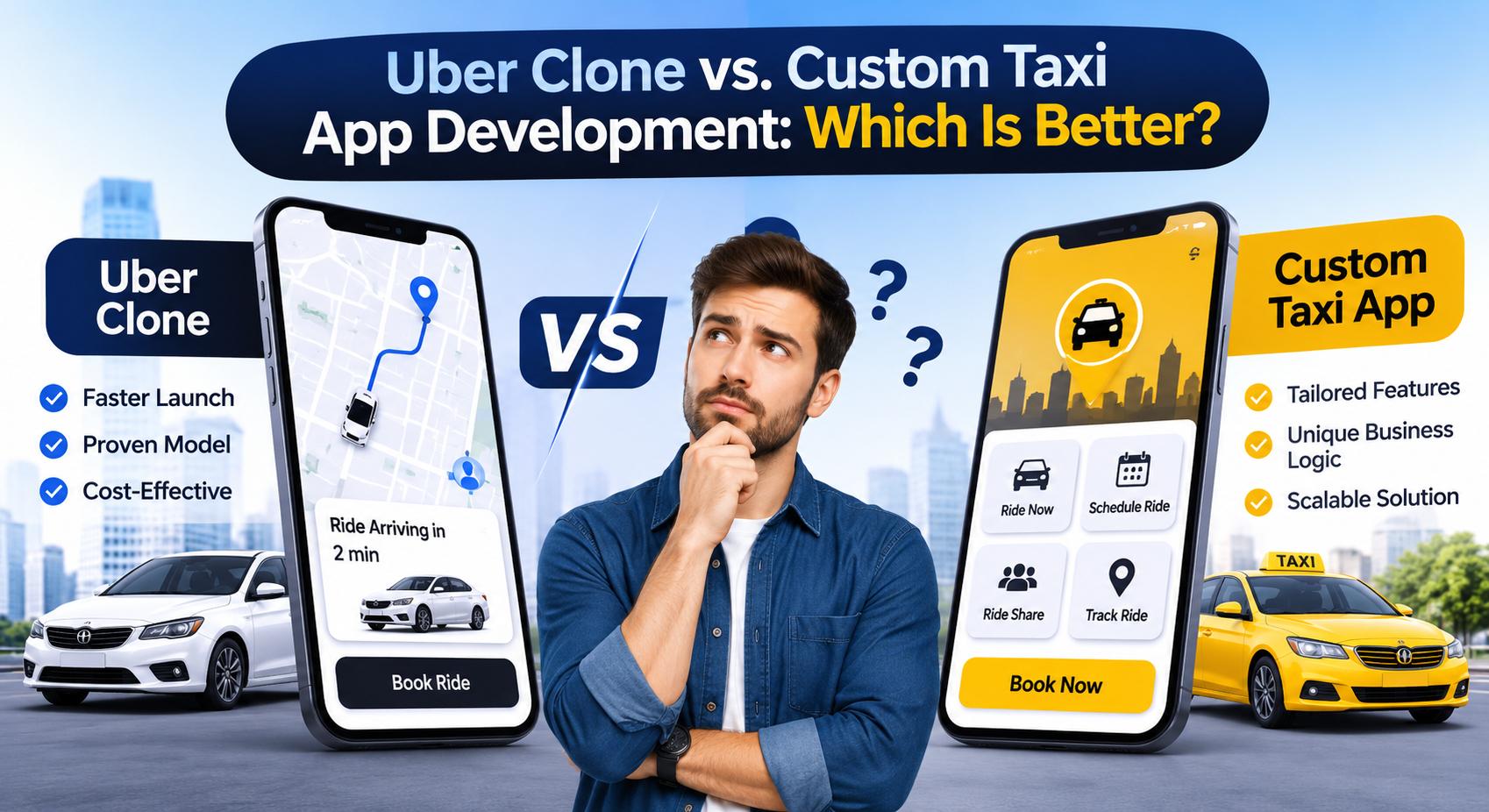
The ride-hailing industry continues to evolve as customers increasingly expect convenient bookings, transparent pricing, and real-time transportation services. For entrepreneurs planning to enter this competitive market, choosing the right application development approach is a crucial business decision.
Two popular options are Uber clone app development and custom taxi app development. Both approaches help businesses establish digital transportation platforms, but they differ in development time, cost, customization, and scalability. Understanding these differences can help entrepreneurs select a solution that aligns with their objectives.
What Is Uber Clone App Development?
Uber clone app development involves creating a taxi-booking application based on the functionality and operational model of established ride-hailing platforms like Uber. It provides a pre-built foundation that businesses can customize with their brand identity, preferred features, and operational requirements.
Typically, an Uber clone includes passenger and driver applications alongside an administrative dashboard. Essential features include:
-
Real-time GPS tracking and automated ride dispatch.
-
Fare estimation and flexible payment options.
-
Driver registration and profile management.
-
Ride scheduling and booking management.
-
Ratings, reviews, and push notifications.
Since the foundational architecture is already available, businesses can reduce development time and accelerate their market entry.
What Is Custom Taxi App Development?
Custom taxi app development involves building a transportation application from the ground up according to specific business requirements. Every component, including the interface, backend architecture, integrations, and functionality, can be designed around the company's operational blueprint.
This approach offers extensive flexibility. Businesses can implement specialized booking workflows, unique pricing algorithms, loyalty programs, corporate transportation features, and third-party integrations.
However, developing everything independently requires substantial planning, technical expertise, testing, and financial investment. The development lifecycle may also be considerably longer.
Key Differences Between Uber Clone and Custom Taxi App Development
Although both solutions serve similar business objectives, their development approaches differ in several important areas.
Development Time: Uber clone solutions generally offer a shorter development timeline because their core modules are already available. Custom taxi applications require more time for planning, designing, coding, and testing.
Development Cost: An Uber clone can be a more economical starting point because businesses can use existing functionality. Custom development typically involves higher initial investment due to the resources required to build the platform from scratch.
Customization: Custom taxi app development provides extensive control over application architecture, features, and workflows. Uber clone solutions also support customization, although the available flexibility depends on their underlying architecture.
Scalability: Both approaches can support business expansion when developed with suitable architecture. However, scalability depends on infrastructure, technology choices, and the ability to accommodate growing bookings and users.
Deployment: Pre-built Uber clone software can accelerate implementation, while custom applications usually require a longer development cycle.
Advantages and Disadvantages of Each Approach
An Uber clone is suitable for startups seeking a faster and more economical launch. Its pre-developed modules can reduce initial engineering effort, while customizable branding helps establish an independent market identity. Nevertheless, customization may be limited by the underlying software architecture.
Custom taxi app development offers greater autonomy over functionality, design, and integrations. It is particularly useful for businesses with unconventional operational requirements. Its drawbacks include higher development expenses, longer delivery schedules, and ongoing technical maintenance responsibilities.
Neither approach is universally superior. The appropriate choice depends on the complexity of the business model and available resources.
Factors to Consider When Choosing the Right Solution
Before selecting a development approach, entrepreneurs should evaluate several important considerations:
-
Budget: Determine the initial investment and long-term maintenance costs.
-
Launch Timeline: Consider how quickly the business needs to enter the market.
-
Feature Requirements: Identify essential functionalities and specialized operational needs.
-
Customization: Evaluate branding, workflows, integrations, and administrative flexibility.
-
Scalability: Ensure the platform can accommodate increasing bookings, drivers, and geographical expansion.
-
Technical Support: Assess the availability of upgrades, security improvements, and ongoing assistance.
A comprehensive evaluation prevents unnecessary expenditure and supports sustainable business development.
Conclusion
Choosing between Uber clone and custom taxi app development ultimately depends on business priorities. An Uber clone is an appealing option for entrepreneurs seeking faster deployment, established functionality, and controlled initial investment. Custom development is better suited to organizations requiring distinctive features and extensive architectural control.
For businesses looking to launch a customizable ride-hailing platform without building everything from scratch, SpotnRides offers an Uber clone solution designed to support taxi business operations and market expansion.

 English
 Arabic
 French
 Spanish
 Portuguese
 Deutsch
 Turkish
 Italiano
 Russian
 Romaian
 Portuguese (Brazil)
 Greek