Incense smoke curls above a stone altar. Prayer flags flutter as Ama Dablam rises beyond the tents. For many people on an Amadablam Expedition, this is the start of a puja: a Buddhist prayer ceremony for a safe climb.
A Mountain With a Mother’s Name
Ama Dablam stands in Nepal’s Khumbu region. Its name is often translated as “Mother’s Necklace.” Its long ridges look like a mother’s arms, while hanging ice looks like a charm on a necklace.
The mountain is beautiful, but its steep slopes make it a serious climb.
The Walk That Comes First
Many teams fly to Lukla, then walk through Namche Bazaar, Tengboche, and Pangboche. The trail crosses rivers and winds past forests and stone homes.
Small lodges called tea houses offer beds and hot meals. Teams take rest days along the way to help their bodies adjust to the thin air.
The Journey in Numbers
A full expedition from Kathmandu often takes about 30 days, including travel and rest. The return walk from Lukla to base camp via Namche and Pangboche takes about 10 days and covers roughly 65 to 80 kilometers (40 to 50 miles). The walk reaches about 4,570 meters (14,990 feet) at base camp. The highest point of the climb is the summit, at 6,812 meters (22,349 feet). Extra trips between camps add distance.
A Circle of Prayer
At base camp, many teams ask a lama, or Buddhist teacher, to lead a puja before they climb higher. The lama reads prayers beside an altar made of stones.
The team may offer food or incense. Climbers may place their boots and ice axes near the altar for a blessing. Together, they ask for safe passage and show respect for the mountain.
More Than a Photo
Many Sherpa people follow Buddhism and hold mountains sacred. For them, a puja is a time of faith, not a show. Customs may differ from one team to another.
Visitors can ask if they may join or take photos. Listening to the lama and following local advice helps keep the ceremony respectful.
Above the Prayer Flags
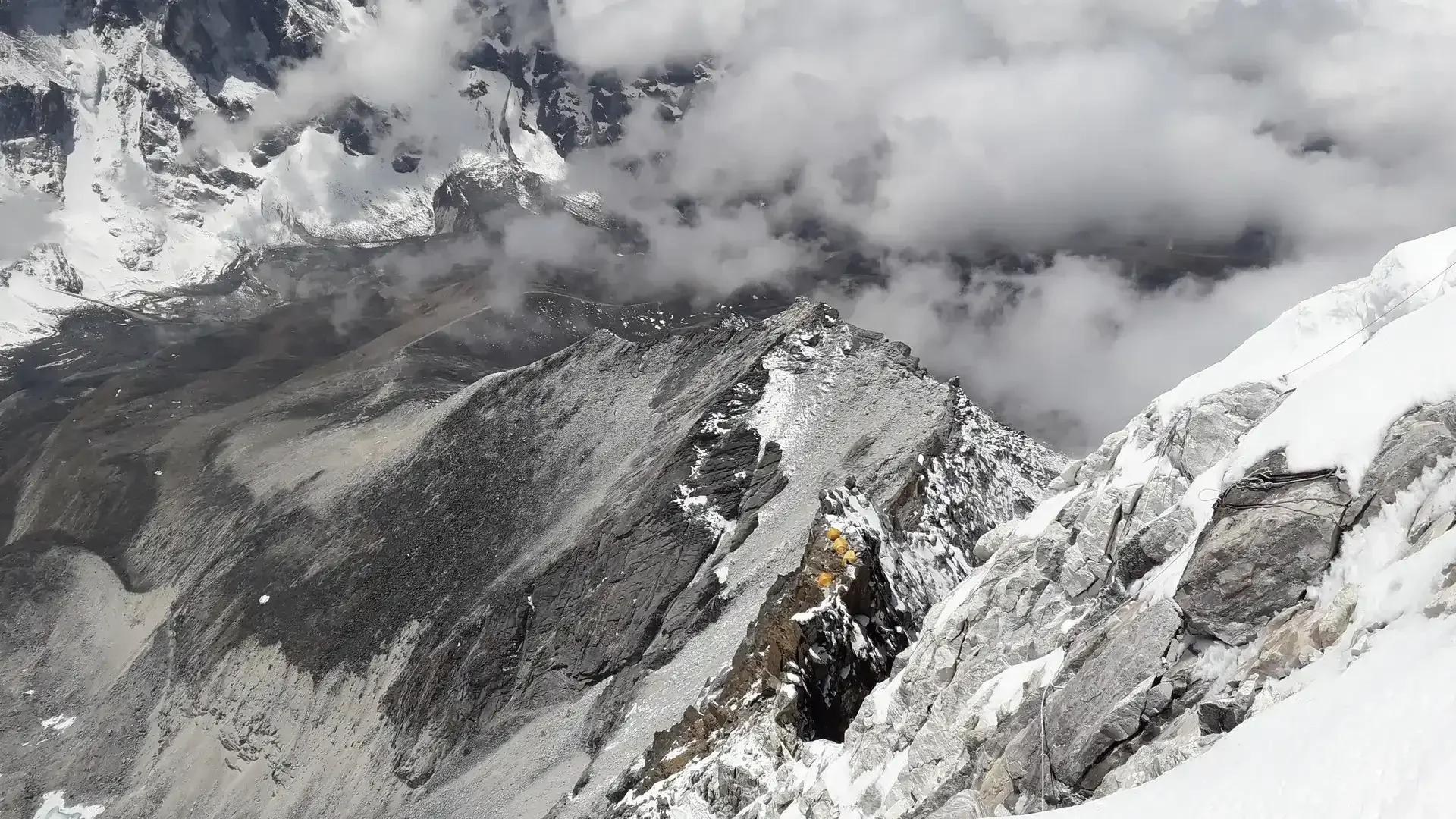
After the puja, climbers prepare for the steep route above camp. They cross rock, snow, and ice. Falling rocks, snow slides, and storms can make the climb dangerous.
Ama Dablam is not a beginner’s mountain. Climbers need experience and practice with ropes before the trip. They also need helmets, ice axes, and crampons. Crampons are metal spikes that fit on boots and help grip ice.
Listen to the Thin Air
High in the mountains, each breath brings in less oxygen. A headache, feeling dizzy, or feeling sick can be signs of altitude sickness.
Stop going higher and tell the guide. If signs get worse or do not improve, go down with help and get medical care.
Confusion, trouble walking, or trouble breathing at rest can mean an emergency. Go down with help right away and get urgent medical care.
A Local Team Behind the Trip
Nepal Social Treks and Expedition offers guided treks and climbing trips in Nepal. The team can help arrange guides, porters, permits, transport, and places to stay.
Before booking, ask if an Ama Dablam trip is available, what gear and meals are included, and how emergencies are handled. Travel insurance should cover rope climbing to at least 6,812 meters and emergency rescue. Fair pay, insurance, and warm gear matter for workers, too.
A Wish to Carry Home
The puja gives the team a moment to pause before the climb. Whether the summit is reached or not, care for one another and a safe return matter most.




 English
 Arabic
 French
 Spanish
 Portuguese
 Turkish
 Dutch
 Italiano
 Russian
 Romaian
 Portuguese (Brazil)
 Greek