


Chemical Peel Frosting Explained in Dubai
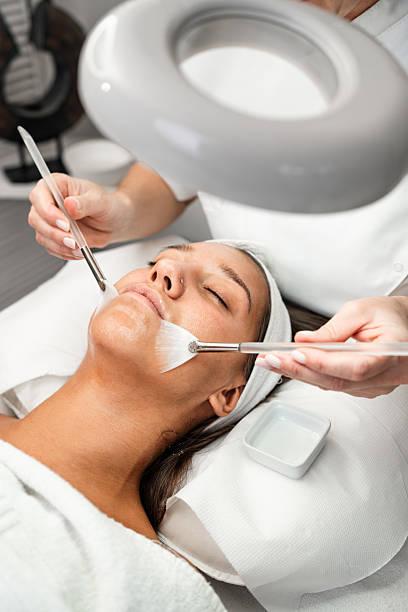
During certain medium-depth exfoliating procedures, the skin may develop a visible white or pale appearance known as frosting. This reaction can be an important clinical observation when performing a Chemical Peel in Dubai, but it should never be interpreted as a simple measure of treatment success. Its appearance and significance depend on the formulation, the skin's response, and the professional technique being used.
Understanding clinical frosting helps explain why medium-depth peels require medical supervision. It also highlights why patients should not attempt to reproduce professional treatments using concentrated acids or home-use products.
What Is Frosting During a Chemical Peel?
Frosting refers to a visible whitening or opaque appearance that may develop on the skin during certain chemical peel procedures. It can occur when the treatment produces changes in the superficial skin proteins and surrounding tissue.
The appearance may vary across the treated area. Some regions may develop more noticeable whitening than others, while other formulations may produce little or no visible frosting.
It is important to understand that frosting is not the same as ordinary dryness or surface residue. A trained clinician interprets the response in the context of the particular peel and the patient's skin.
Why Frosting Can Occur During a Medium-Depth Peel
Some medium-depth chemical peel formulations cause controlled changes within the treated skin layers. These changes can create a visible white appearance.
The reaction may provide clinical information about how the skin is responding, but it does not independently establish the exact depth or predict the final result.
Frosting and Protein Changes
Certain chemical agents interact with proteins in the skin. This interaction can produce an opaque appearance that clinicians recognise as frosting.
The visible response is influenced by several factors, including:
-
The chemical formulation.
-
Individual skin characteristics.
-
Previous treatments and skin preparation.
-
The condition of the skin barrier.
-
The clinical response during treatment.
Because these factors vary, the same appearance should not be assumed to have identical meaning in every patient.
Different Clinical Responses and Their Interpretation
Frosting can vary in intensity and distribution. Clinicians may describe different visible patterns when documenting a peel response.
However, these observations are not a substitute for a full clinical assessment.
Mild or Patchy Whitening
Some areas may show limited or uneven whitening. This can reflect differences in skin condition, surface characteristics, or treatment response.
Patchy appearance should be interpreted carefully rather than automatically viewed as a sign that more treatment is needed.
Read More: Crown Hair Transplant in Dubai: Why the Vertex Needs Expert Planning
More Pronounced Frosting
A more obvious white appearance may occur with certain formulations and treatment responses. It requires professional interpretation because visible intensity alone does not confirm that the desired endpoint has been reached.
Areas Without Visible Frosting
Not every peel produces a visible white endpoint. The absence of frosting does not necessarily mean the treatment has failed or that additional treatment is required.
Different chemical agents have different clinical behaviours, so the expected response must be understood before the procedure begins.
Why Frosting Is Not a Treatment Score
Patients sometimes assume that a more dramatic white appearance means a better result. This is misleading.
The purpose of a chemical peel is to achieve an appropriate and controlled response for the patient's skin concern. More visible reaction does not automatically mean greater benefit.
Excessive treatment intensity may increase the possibility of:
-
Prolonged redness and irritation.
-
Delayed skin recovery.
-
Post-inflammatory hyperpigmentation.
-
Hypopigmentation.
-
Infection.
-
Scarring.
These risks make careful treatment selection more important than achieving a particular visual effect.
How Skin Type Influences the Clinical Endpoint
Skin tone, sensitivity, and pigment history influence how a clinician plans and monitors a medium-depth peel.
Patients with darker skin tones or a history of melasma and post-inflammatory hyperpigmentation may need particularly conservative consideration. Inflammation can trigger additional pigment changes, even when a procedure is performed with professional intent.
Before a Chemical Peel in Dubai, the clinician may review:
-
Fitzpatrick skin type.
-
Previous pigment changes after irritation.
-
Existing melasma or post-acne marks.
-
Skin sensitivity and barrier condition.
-
Previous chemical peel reactions.
-
Recent tanning or sun exposure.
The assessment helps determine whether the treatment is appropriate and what level of intervention is reasonable.
What Happens to the Skin After a Medium-Depth Peel?
Following treatment, the skin may experience redness, tightness, sensitivity, and visible peeling. The recovery process varies according to treatment depth, formulation, and individual healing response.
Patients should avoid judging the final result while the skin is still recovering.
Redness and Temporary Sensitivity
Redness can occur as part of the skin's response. Persistent, worsening, or unusually painful symptoms should be reported to the treating clinician.
Peeling and Skin Renewal
The treated skin may shed over time. This process should be allowed to happen naturally.
Pulling, rubbing, or picking at peeling areas can increase irritation and the risk of scarring or pigmentation changes.
Gradual Appearance Changes
Improvements in tone and texture may become more apparent after recovery. The outcome depends on the original concern and the skin's response rather than the visible frosting alone.
Why Professional Monitoring Matters
Medium-depth peels require a clear understanding of chemical behaviour, skin anatomy, treatment suitability, and possible complications.
A trained professional must interpret the clinical response rather than rely on a single visual sign. This is particularly important when treating patients with pigmentation concerns or reactive skin.
A consultation should also establish whether a medium-depth treatment is appropriate or whether a more conservative alternative would better match the patient's needs.
Clinic Note: Frosting is a clinical observation, not a target that patients should try to achieve. At Tajmeels Clinic, treatment planning should focus on skin suitability, controlled response, and realistic recovery expectations rather than the intensity of visible whitening.
Frequently Asked Questions
Does frosting mean a chemical peel is working?
It can be a clinical sign associated with certain peel reactions, but it does not independently prove treatment success. The response must be interpreted according to the formulation and skin condition.
Do all chemical peels cause frosting?
No. Visible frosting is associated with certain chemical agents and treatment types. Other peels may produce different responses without a white appearance.
Is more frosting better?
No. A stronger visible reaction does not automatically produce better results and may indicate a more significant skin response that requires professional interpretation.
Can frosting cause permanent skin damage?
Frosting itself is an observation, not a diagnosis of damage. However, excessive or inappropriate treatment can lead to complications such as pigment changes and scarring.
Should I remove the white areas after treatment?
Patients should not rub, scrape, or attempt to remove treated areas. Follow the clinician's aftercare instructions and report unexpected symptoms.
Discuss Professional Chemical Peel Treatment at Tajmeels Clinic
Understanding the skin's response to exfoliation is an important part of making informed treatment decisions. Medium-depth procedures require appropriate patient selection, clinical monitoring, and aftercare to support a controlled recovery.
Tajmeels Clinic provides an opportunity to discuss skin concerns and personalised aesthetic treatment options in Dubai. A professional consultation can help determine whether a chemical peel is suitable and explain what to expect throughout the treatment process.

 English
 Arabic
 French
 Spanish
 Portuguese
 Deutsch
 Turkish
 Dutch
 Italiano
 Romaian
 Portuguese (Brazil)
 Greek