


How to Become a Commercial Pilot in India: Complete Career Guide 2027
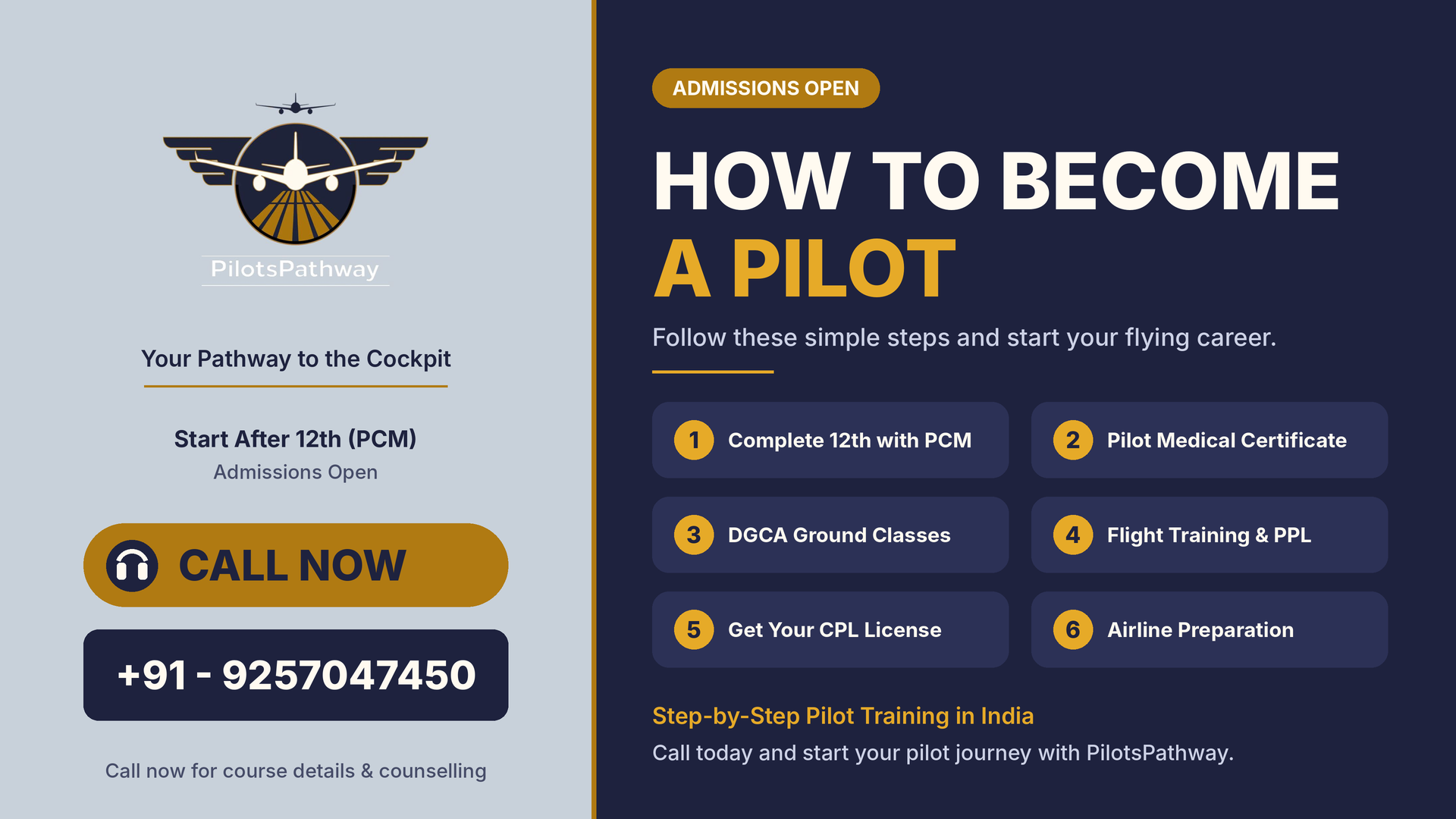
Every year, thousands of young people in India look up at the sky and wonder if they could one day sit in the cockpit of an airliner. The good news is that the path is clear and open to anyone who is willing to study hard, stay healthy, and plan carefully. If you have been searching for how to become a commercial pilot, this guide explains every stage in simple words, from the basic eligibility rules to the training, the exams, and the job opportunities that follow. We also look at the cadet pilot program in India, the choices available for flying training in India, and how Pilots Pathway supports students who want to begin this journey with confidence.
What Does a Commercial Pilot Do?
A commercial pilot is a trained and licensed professional who flies an aircraft for payment. This can mean flying passengers for an airline, carrying cargo, working for a charter company, or taking part in other aviation services. A commercial pilot is responsible for the safety of everyone on board, and this is why the training is detailed, strict, and regulated by the government. Pilots must plan their flights, check the weather, manage fuel, communicate with air traffic control, and make careful decisions in every situation, including emergencies.
The role also needs strong personal qualities. A good pilot stays calm under pressure, works well with a team, follows procedures without shortcuts, and keeps learning throughout a long career. If these qualities sound like you, then learning how to become a commercial pilot can be the first step toward a rewarding profession.
Step One: Check the Basic Eligibility
Before you spend money or time on training, you should make sure you meet the basic rules set by the Directorate General of Civil Aviation, known as the DGCA. To start, you need to complete Class 12 with physics and mathematics as subjects. These two subjects are important because aviation uses them every day, whether in navigation, fuel planning, or understanding how an aircraft behaves in the air. If you did not study these subjects in school, you can still complete them through an open schooling board, so the dream is not closed to you.
You must also be at least 17 years old to begin training and 18 years old to receive the Commercial Pilot License. Another important requirement is good health. Pilots need to pass a medical examination from a DGCA approved medical examiner, which checks eyesight, hearing, heart health, and general fitness. It is wise to complete this medical check early, because it tells you whether you are fit to continue before you invest in the full course.
Step Two: Begin with Ground Classes and Basic Training
Once you are eligible, the next stage is learning the theory. Ground classes cover subjects such as air navigation, aviation meteorology, air regulations, and technical knowledge about aircraft and engines. These subjects prepare you for the DGCA written examinations, which you must clear before you can earn your license. Many students find these exams challenging, so good teaching, regular practice, and a steady study routine make a large difference.
Alongside theory, many students start with a Private Pilot License. PPL training in India is a popular first step because it teaches the basics of flying in a smaller and more affordable format. Under DGCA rules, a PPL student must be at least 17 years old and complete a minimum of 40 hours of flying. During this stage, you learn take-off, landing, turning, climbing, navigation, radio communication, and how to handle simple emergencies. Good PPL training in India builds a strong foundation, and the hours you complete can help you in the later stages of commercial training.
Step Three: Complete Your Flying Hours
After the basics, you move on to the main part of your training, where you build real flying experience. To receive a Commercial Pilot License under DGCA rules, you must complete a minimum of 200 hours of flying. These hours include solo flights, cross-country flights where you travel from one airport to another, night flying, and instrument flying, where you learn to fly using only the aircraft's instruments when you cannot see outside.
This stage is where good flying training in India matters most. The quality of your instructors, the condition of the aircraft, the availability of flying slots, and the weather in the training area all affect how quickly and how well you learn. Some students complete the hours in the minimum time, while others take longer because of weather delays or the need for extra practice. This is normal, and a good school will be patient and honest about your progress. Before you choose a school for flying training in India, you should ask about the number of aircraft, the size of each batch, the average time students take to finish, and the safety record of the school.
Step Four: Use a Flight Simulator
A flight simulator is a machine that copies the controls and behaviour of a real aircraft, and it is an important part of modern pilot training. In a simulator, you can practise emergency situations such as engine failure, bad weather, or system problems without any danger. You can also repeat difficult procedures as many times as needed until you feel confident.
Simulator training saves both time and money, because it prepares you for the real aircraft before you spend costly hours in the air. It also helps you build the habits of discipline and checklist use that airline pilots depend on. Many students who prepare for airline selection also use simulators to practise for the practical tests that airlines conduct.
Step Five: Pass the Skill Test and Get Your License
When you have completed your ground exams and flying hours, you take a final skill test with an examiner approved by the DGCA. During this test, the examiner checks how well you handle the aircraft, how you plan and navigate, and how you make decisions. If you pass, you receive your Commercial Pilot License, which allows you to work as a professional pilot.
However, many new pilots then go on to earn extra qualifications, such as an instrument rating or a multi-engine rating, which help them get better job opportunities. Airlines also give further training on the specific aircraft type you will fly, so learning continues even after the license is in your hands.
Understanding the Cadet Pilot Program in India
Another route that many students are curious about is the cadet pilot program in India. A cadet program is an arrangement where an airline or an aviation organisation selects candidates, trains them, and prepares them to fly for that airline. The selection usually includes written tests, aptitude checks, interviews, and medical fitness checks. Students who are chosen follow a structured plan of training, which can give them a clearer path from the classroom to the cockpit.
The main benefit of a cadet pilot program in India is that it offers a defined route toward a flying career. However, the number of seats is limited, and competition is strong, so you should prepare well and also keep other options open. Rules, fees, and eligibility for these programs can change, so it is always best to check the official website of the airline or organisation before you apply. To improve your chances, work on your mathematics, physics, English communication, and general knowledge, and keep yourself physically fit. Practising with mock interviews and simulator sessions can also build your confidence for the selection day.
How to Choose the Right Flight School
Choosing the right school is one of the most important decisions in your journey. Many students search for the top pilot training in india, but the best school is not always the most famous or the most expensive. The best school for you is one that is approved by the DGCA, has qualified instructors, offers enough flying slots, and is honest about costs and timelines. You should visit the school if possible, talk to students who are already training, and ask for a written fee structure that shows what is included and what is not.
When you look for the top pilot training in india, pay attention to the quality of ground classes, the age and condition of the aircraft, and the support given after training. A school that helps you prepare for airline interviews and guides you about the next steps is giving you real value. Avoid any institute that promises guaranteed jobs or shows very low prices without clear proof, because honest training takes time and effort, and real costs cannot be hidden for long.
How Pilots Pathway Helps Students
Pilots Pathway is a pilot training company based in India that guides students through each stage of the journey. Its courses include the Private Pilot License course, CPL ground training, CPL flight training, flight simulator sessions, airline preparation, a cadet pilot course, a foundation course, and DGCA ground classes. This range means a student can follow one clear plan from the first day of learning to the day of airline preparation.
A student who joins Pilots Pathway can start with the foundation course to understand the basics of aviation, continue with DGCA ground classes to prepare for the written exams, practise on a flight simulator, and then move on to flight training. Those who want to apply for airline selection can use the airline preparation classes and the cadet pilot course to get ready. If you are still unsure about how to become a commercial pilot, you can speak with the team at Pilots Pathway to understand which course suits your age, education, and goals. Having proper guidance from the start can save you time, effort, and money.
Tips to Succeed in Your Pilot Journey
Becoming a pilot takes patience, so it helps to follow a few simple habits. First, study your ground subjects seriously from the beginning, because clearing exams on the first attempt saves both time and money. Second, take care of your health with regular exercise, healthy food, and enough sleep, since you must keep your medical certificate valid throughout your career. Third, practise your English, because it is the language of aviation and clear communication is a vital part of flying safely.
Fourth, plan your budget early. Flight training is a large investment, so ask for a full fee breakdown, keep some savings for extra hours or exam attempts, and look at education loans if needed. Finally, stay curious and humble. Aviation is a field where learning never stops, and the best pilots are those who keep improving, listen to their instructors, and respect every rule of safety.
Final Words
Learning how to become a commercial pilot is easier when you understand each step clearly. You begin with the right education and a medical check, move through ground classes and PPL training in India, complete your flying hours through good flying training in India, pass your skill test, and then look for airline opportunities, including the cadet pilot program in India. Choosing a school with a strong name among the top pilot training in india options, and one that follows DGCA rules, will protect your time and your money. With honest guidance and steady effort, and with the support of Pilots Pathway, your dream of flying can become a real and well-planned career.

 English
 Arabic
 French
 Spanish
 Portuguese
 Deutsch
 Turkish
 Dutch
 Italiano
 Russian
 Romaian
 Portuguese (Brazil)