


The Ultimate Guide To Operational Amplifiers (Op Amps): A Comprehensive Analysis From Principles To Applications
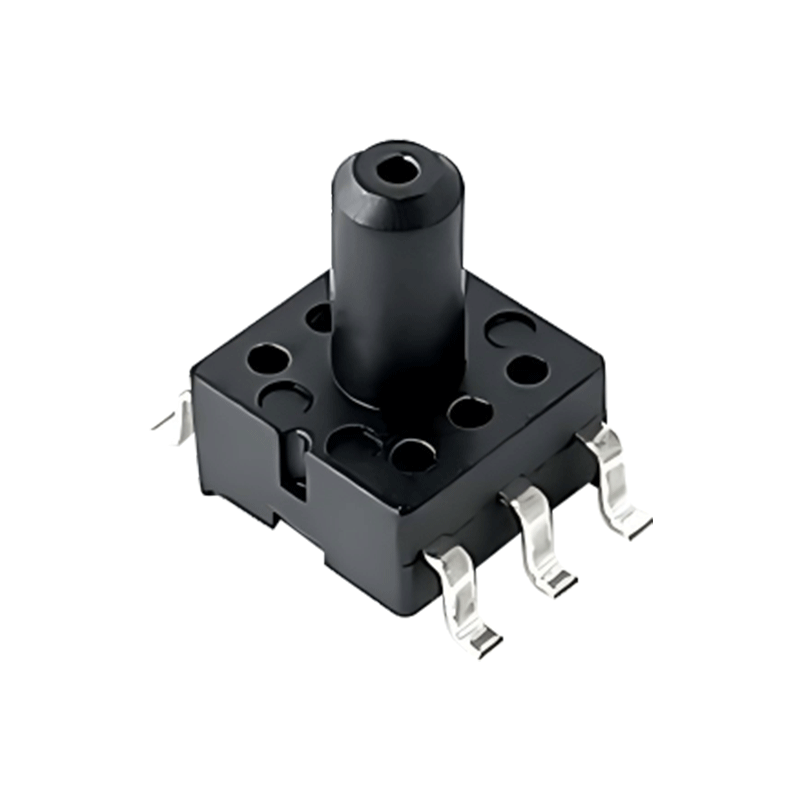
An Operational Amplifier (Op Amp) is a high-gain voltage amplifier with direct current coupling, featuring differential input and single-ended output. It can amplify tiny potential differences at the input by hundreds of thousands of times for output. It was originally mainly used in analog signal circuits for mathematical operations such as addition and subtraction, hence the name operational amplifier.
Core Functions and Working Principles of Operational Amplifiers
The main function of an operational amplifier is to amplify the difference between two analog signals with extremely high gain, and this type of amplifier is also called a differential amplifier. Its working logic is clear: when the voltage at the non-inverting input terminal (+) is higher than that at the inverting input terminal (-), a positive amplified signal is output; conversely, a negative amplified signal is output. In addition to the high gain characteristic, operational amplifiers also have the advantages of extremely high input impedance and very low output impedance, which enables them to effectively isolate the front and rear stages in the circuit and reduce the influence of signal loading.
Due to its extremely high open-loop gain, even a very small voltage difference at the input is sufficient to drive the output to saturation (maximum or minimum voltage value). Therefore, in practical circuit design, operational amplifiers are almost always used in a negative feedback configuration. Negative feedback refers to returning a part of the output signal to the inverting input terminal (-) through an external circuit (such as a resistor), thereby precisely controlling the overall circuit's amplification factor, improving stability, and widening the frequency band.
Key Performance Parameters of Operational Amplifiers
When selecting and applying operational amplifiers, engineers need to pay attention to a series of key parameters to ensure circuit performance. These parameters include but are not limited to:
- Low-frequency gain: The voltage amplification capability of the amplifier in the low-frequency region.
- Unity gain frequency: The frequency point where the amplifier gain drops to 1, related to bandwidth performance.
- Phase margin: An important indicator for measuring system stability.
- Common-mode rejection ratio: The ability of the amplifier to suppress common-mode signals at the two input terminals, which is crucial in noisy environments.
- Input offset voltage: The small voltage difference that needs to be compensated at the input terminal to make the output zero, affecting DC accuracy.
- Slew rate: The maximum rate of change of the output voltage, determining the response speed under large signals.
- Input common-mode range: The voltage range that the input terminal can withstand when the amplifier is working normally.
- Power consumption and output swing: Directly affect the energy efficiency and dynamic output range of the system.
Wide Application Fields of Operational Amplifiers
Benefiting from its excellent performance and high reliability, operational amplifiers have become a cornerstone component of modern electronic systems. It is widely used in household appliances, industrial automation control, precision measuring instruments, medical equipment, communication systems and many other fields. With the maturity of integrated circuit technology, the cost of general-purpose operational amplifiers has become highly competitive, and their robust design even allows the output terminal to be short-circuited to ground for a short time without being easily damaged, further improving the durability and design flexibility of the system.
Understanding the basic principles, key parameters and application methods of operational amplifiers is an indispensable core knowledge for any engineer engaged in electronic circuit design and system optimization. Correct selection and configuration of op amps can significantly improve the accuracy, efficiency and overall performance of analog signal processing circuits.

 English
 Arabic
 French
 Spanish
 Portuguese
 Deutsch
 Turkish
 Dutch
 Italiano
 Russian
 Portuguese (Brazil)
 Greek