


How Can a Plastic Container Mould Fit Production Needs?
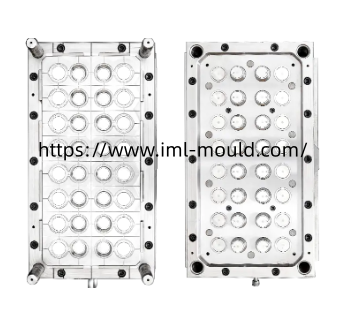
Plastic Container Mould purchasing involves more than comparing quotations or counting cavities. Buyers need to consider the finished package, production environment, material requirements, and expected order volume before confirming a tooling project. A structured evaluation can reduce design changes, prevent compatibility issues, and establish clear expectations between both parties. For food packaging businesses, these decisions influence product appearance, filling performance, stacking, storage, and daily production arrangements.
Define Product Requirements Before Requesting a Quotation
Start by preparing detailed information about the intended package. Its capacity, shape, dimensions, wall thickness, opening structure, and application should all be clearly specified. A small sauce cup has different design requirements from a multi-compartment lunch box or a large takeaway box.
Consider how the finished item will be used. Will it hold liquids, sauces, fruit, dairy products, or dry food? Does it need to withstand transportation, refrigeration, or repeated stacking? These details help the engineering team evaluate the structure and identify areas that may require additional attention.
Drawings are useful, but physical samples, product photographs, and three-dimensional files can provide further clarification. If the design is still under development, discuss possible adjustments before production begins. This can help prevent unnecessary revisions after machining has started.
Confirm Steel Grades and Structural Materials
Tooling materials influence wear resistance, maintenance requirements, and expected service life. Buyers should ask which steel grades are proposed for the fixed and moving components, as well as which material will be used for the supporting base.
For thin-wall packaging applications, the product information from iml-mould lists domestic 2344 and S136 as options for the main forming components. P20 and 4Cr13 are listed for the supporting base, with customer-specified materials also available. These specifications should be evaluated according to the product design, expected production volume, processing conditions, and maintenance plan.
Clarify whether the quoted material specification applies to all major components or only selected sections. Buyers can request a written material list and confirm whether certificates or inspection records will be provided. Clear documentation makes it easier to compare quotations and understand exactly what is included in the project.
Match Cavity Configuration With Production Demand
Cavity quantity affects output planning, machine requirements, tooling structure, and project cost. A higher cavity count may increase the number of parts produced in one cycle, but it also requires suitable machine capacity and balanced material distribution.
Rather than choosing a configuration based only on a supplier recommendation, provide estimated monthly demand, target output, available injection machine model, and expected production schedule. The supplier can then assess whether the proposed layout fits the project.
Different packaging products may use two, four, or more cavities depending on their dimensions and structure. A large lunch box may need a different arrangement from a small sauce cup. Buyers should also ask how the layout affects maintenance access and whether individual components can be inspected or replaced conveniently.
The objective is to select a configuration that fits actual production conditions instead of paying for capacity that the factory cannot use efficiently.
Evaluate Runner, Cooling, and Ejection Systems
The runner system controls how molten resin enters the cavities. For thin sections, filling balance deserves particular attention because uneven flow can contribute to incomplete filling, inconsistent wall thickness, or visible defects. The supplier should explain the proposed gate position and runner arrangement, including whether a needle valve or needle-point hot runner is suitable.
Cooling is another important factor. The product must reach a suitable condition before it can be released from the tooling. Ask how the cooling channels are arranged and how the design addresses different wall sections, corners, and deeper areas.
The ejection system must also match the product geometry. Thin packaging parts may be vulnerable to deformation during release, so the ejector layout should distribute force appropriately. Ask how the design protects visible surfaces and helps the finished item retain its intended shape.
These systems work together. Reviewing them as a complete arrangement is more useful than assessing each component in isolation.
Check Lid Fit and Machine Compatibility
Many food packages require a separate lid, so buyers should evaluate both components as a functional set. Dimensions, edge profiles, closure structures, and sealing requirements need to be confirmed before final approval.
For takeaway applications, buyers may also require stackability, compartment separation, or tamper-evident features. Include these details in the product drawings and sample evaluation criteria. A lid that looks correct on its own may still create problems if it does not fit the matching base consistently.
Machine compatibility should be confirmed at the same time. Provide the injection machine's clamping force, tie-bar spacing, platen dimensions, and other relevant specifications. The supplier can use this information to assess whether the proposed tooling can be installed and operated under the intended conditions.
Request Trial Samples and Acceptance Criteria
A quotation and design drawing cannot fully demonstrate how a production tool will perform. Before shipment or final acceptance, buyers should request trial samples and agree on measurable inspection points.
These may include product weight, key dimensions, wall thickness, surface appearance, filling completeness, lid fit, stacking performance, and visible deformation. If the package will hold food or liquid, define any relevant leakage or closure checks as well.
Cycle time should be recorded under stated machine and processing conditions. A figure achieved during a particular trial should not automatically be treated as a guaranteed result for every production environment. Resin grade, machine settings, cooling conditions, and product geometry can all affect actual performance.
Ask for trial records, sample measurements, and a list of adjustments made during testing. This information gives both parties a shared reference for later production.
Discuss Maintenance and Project Support
A purchasing decision should account for the period after delivery. Buyers should clarify what maintenance guidance is supplied, which components are considered wear parts, and how technical questions will be handled if production issues occur.
It is also useful to confirm the project schedule, design approval process, payment milestones, packaging arrangements, and delivery terms in writing. If future product sizes or package styles are planned, mention them early so the supplier can discuss possible design considerations.For packaging companies developing thin-wall boxes, cups, sauce packaging, and related products, iml-mould offers tooling solutions with options for material selection, runner configuration, and product customization. Buyers can review the product details and discuss project requirements directly at https://www.iml-mould.com/ before preparing drawings, samples, and production specifications for a quotation.

 English
 Arabic
 French
 Spanish
 Portuguese
 Deutsch
 Turkish
 Dutch
 Italiano
 Russian
 Romaian
 Greek