


Inside the World of AI Agents: Technologies, Applications, and Business Impact
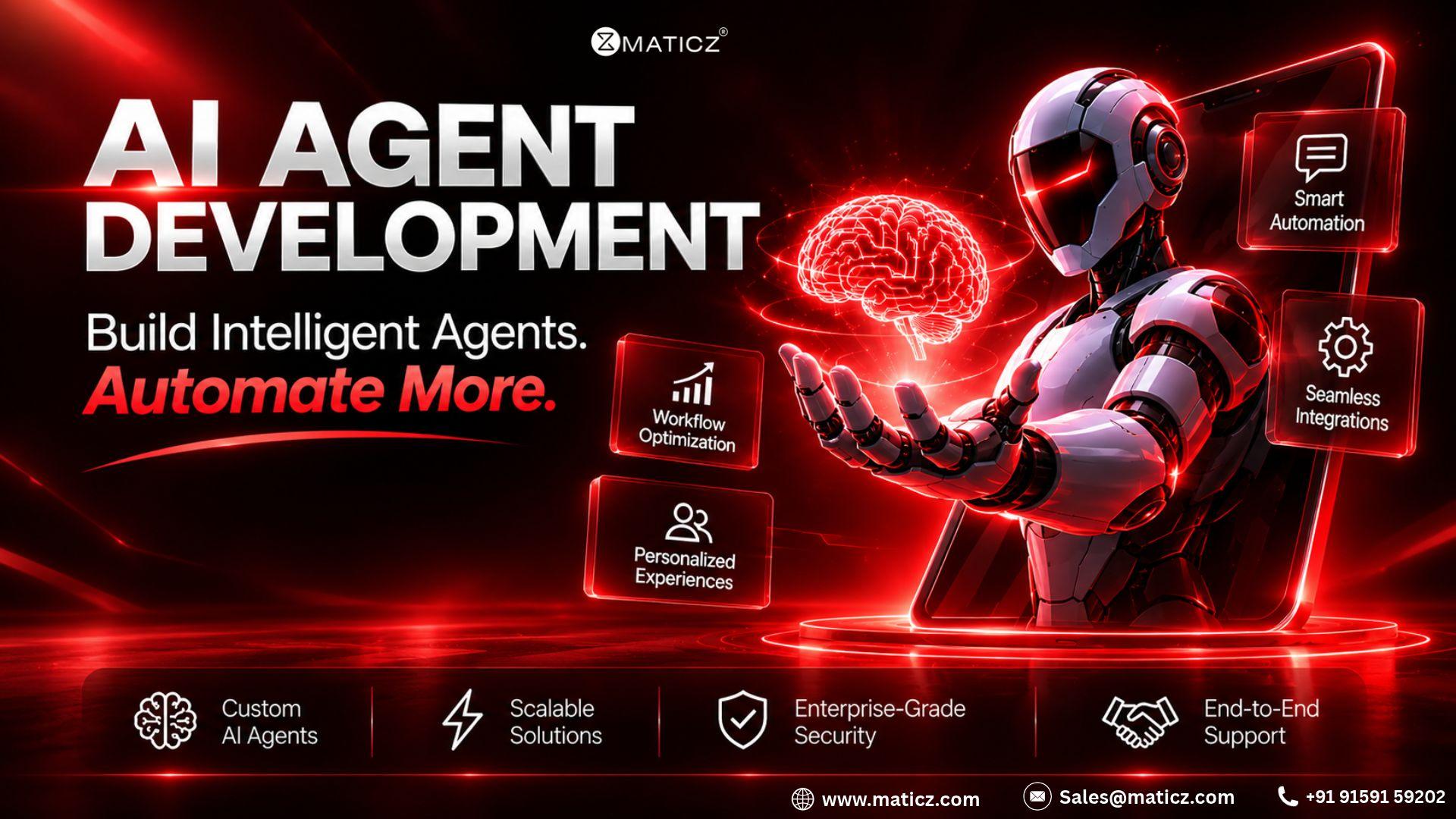
Artificial Intelligence is changing how businesses manage their operations, interact with customers, and make decisions. From automating repetitive tasks to analyzing large amounts of information, AI has become an important part of modern business operations. Among the latest developments, AI agents are gaining attention because of their ability to understand instructions, make decisions, and perform tasks with limited human involvement.
Unlike traditional automation tools that follow predefined rules, AI agents can process information, respond to changing situations, and interact with different applications to achieve specific goals. As organizations explore new ways to improve efficiency, AI agent development is becoming an important area of investment.
What Are AI Agents and How Do They Work?
AI agents are intelligent software systems designed to perform tasks based on specific objectives. They collect information from their environment, analyze the available data, and decide what action should be taken next.
For example, an AI agent used in customer support can understand a customer's question, search a company knowledge base, and provide a relevant answer. If the request requires additional assistance, it can create a support ticket or transfer the conversation to a human representative.
These agents can also connect with external tools, databases, and business applications. This allows them to complete multiple steps within a workflow instead of handling only one predefined task.
Depending on their design, AI agents can work independently on routine activities or collaborate with employees when human approval is required.
Technologies That Power AI Agent Development
Building an effective AI agent involves combining several technologies that support its ability to understand information and perform actions.
Large Language Models (LLMs): LLMs help AI agents understand natural language instructions, interpret user requests, and generate meaningful responses. They provide the language understanding required for conversational and task-based applications.
Machine Learning: Machine learning helps systems identify patterns, analyze information, and support decision-making based on available data.
Natural Language Processing (NLP): NLP enables AI agents to understand human communication, recognize user intent, and process text-based information.
Application Programming Interfaces (APIs): APIs allow agents to communicate with external applications, databases, CRM platforms, and other business systems.
Retrieval-Augmented Generation (RAG): RAG helps AI agents retrieve relevant information from internal documents and knowledge bases before generating responses. This can make answers more relevant to specific business information.
Agent Orchestration: This technology coordinates multiple agents, tools, and tasks. It allows different AI agents to work together on more complex business processes.
Combining these technologies helps developers build intelligent systems that can support different operational requirements.
Real-World Applications of AI Agents Across Industries
AI agents are not limited to a single industry. Their ability to understand information and perform tasks makes them useful across different business environments.
In healthcare, AI agents can support appointment scheduling, administrative communication, and document organization. They can help staff manage routine activities while allowing healthcare professionals to focus on patient care.
In banking and finance, AI agents can assist with customer queries, document processing, transaction monitoring workflows, and financial information management. Sensitive financial activities still require appropriate verification and human oversight.
E-commerce businesses can use AI agents to provide product recommendations, track orders, manage return requests, and answer customer questions. These capabilities can improve the shopping experience and reduce the workload on customer support teams.
In manufacturing, AI agents can support inventory monitoring, production planning, equipment maintenance workflows, and supply chain coordination. They can help teams access relevant operational information and respond to changing requirements.
Similarly, businesses in education can use AI agents to support student queries, organize learning resources, and provide assistance with administrative tasks.
Business Benefits of Implementing AI Agents
One of the main reasons businesses are exploring AI agents is their ability to improve operational efficiency. They can handle repetitive activities, reduce manual effort, and help employees complete routine tasks more quickly.
Another benefit is improved customer experience. AI agents can respond to common requests, provide relevant information, and support customer interactions across different communication channels.
Scalability is also an important advantage. Organizations can expand their AI agent capabilities as business requirements change. Additional tools, integrations, and workflows can be introduced without rebuilding the entire system.
AI agents can also support better decision-making by collecting and organizing relevant information. However, their outputs should be reviewed when decisions involve financial, legal, security, or other high-impact consequences.
Challenges Businesses Should Consider
Although AI agents offer several opportunities, successful implementation requires careful planning. Data quality is one of the major considerations because inaccurate information can affect the reliability of agent responses.
Integration with existing business applications can also be challenging, particularly when organizations use multiple systems with different technical requirements.
Security, privacy, access permissions, and monitoring should be included in the development process. Businesses must establish clear limits on what agents can access and which actions they are allowed to perform.
Working with an experienced AI agent development company can help organizations plan the right architecture, select suitable technologies, and build solutions that match their business objectives.
The Growing Business Impact of AI Agents
AI agents are gradually changing the relationship between people and business technology. Instead of using software only to complete individual tasks, organizations can build intelligent systems that coordinate multiple activities and support broader business goals.
As AI models and integration technologies continue to improve, multi-agent systems are expected to create more opportunities for advanced workflow automation. Businesses will be able to connect different agents to manage information, support employees, and improve operational processes.
AI agent development is becoming an important part of this transformation. Organizations that understand its technologies, applications, and limitations can make better decisions when adopting intelligent automation. The real business value comes from using AI agents to solve practical problems, support human teams, and create more efficient ways of working.

 English
 French
 Spanish
 Portuguese
 Deutsch
 Turkish
 Dutch
 Italiano
 Russian
 Romaian
 Portuguese (Brazil)
 Greek