


Why We Still Check Behind Us in Horror Games
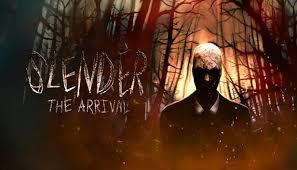
Even when there’s no reason to.
Even when the game hasn’t given any clear signal.
Even when nothing has followed you for the past ten minutes.
You still turn the camera. Just to check.
It’s a small action, almost automatic. But it says a lot about how horror games work—and how they get into your head.
The Fear That Doesn’t Need Proof
What’s interesting is that you don’t always check because something happened.
You check because something could happen.
That possibility is enough.
Horror games train you to think in terms of risk rather than certainty. You’re not reacting to visible threats—you’re responding to potential ones.
And once that mindset settles in, it doesn’t go away easily.
You don’t need confirmation. The idea alone is enough to make you turn around.
The Game Teaches You Early
Most horror games introduce this behavior subtly.
A sound behind you. A scripted moment where something appears after you pass a certain point. A brief glimpse of movement when you’re not fully looking.
Nothing too overwhelming—just enough to plant a thought:
Maybe I should be paying attention to what’s behind me.
From that point on, you carry that awareness with you.
Even if the game never repeats the same trick, the habit stays.
There’s a good explanation in [how early design cues shape player behavior], especially how small, early events influence how players interpret the rest of the experience.
You learn quickly.
And then you keep learning, even when there’s nothing new to teach.
Vulnerability Comes From Direction
In most games, you focus forward. That’s where progress is. That’s where objectives are.
Horror games complicate that.
They make you aware that danger isn’t limited to what you’re facing.
Something could be behind you. Or above you. Or just outside your field of view.
And because your perspective is limited, you never have complete information.
That limitation creates vulnerability.
You can’t see everything at once. So you compensate by checking.
Again and again.
The Cost of Not Checking Feels Higher
Even if the actual consequences are rare, they feel significant.
If something does happen behind you, it tends to be memorable.
A sudden appearance. A sound that comes too close. A moment where you realize you missed something important.
Those moments stick.
So even if they only happen occasionally, they shape your behavior consistently.
You’d rather check unnecessarily than risk missing something once.
You Start Imagining Movement
After a while, it’s not even about actual events.
Your mind starts filling in gaps.
A shadow might look like movement. A sound might feel directional. The environment itself starts to suggest presence, even when nothing is there.
That’s when checking becomes almost instinctive.
Not because the game told you to—but because your brain is trying to confirm what it thinks it might have perceived.
There’s an interesting angle in [why players perceive threats that aren’t there], especially how expectation can create the illusion of activity.
You’re not just reacting to the game anymore.
You’re reacting to your own interpretation of it.
It Breaks Your Sense of Progress
Constantly checking behind you interrupts flow.
You stop, turn, confirm, turn back, continue.
It’s a small disruption, but repeated over time, it changes how movement feels.
Progress becomes less smooth. More fragmented.
And that fragmentation adds to the tension.
You’re not just moving forward—you’re moving cautiously, aware that your attention is split.
Part of you is always looking back.
The Environment Feels Less Stable
When you feel the need to check behind you, it changes how you perceive space.
It’s no longer a fixed environment you move through.
It becomes something more dynamic. Less predictable.
Even if nothing is actually changing, the possibility that it could creates unease.
You don’t fully trust the space.
And that lack of trust is enough to keep you alert.
It Carries Outside the Game
This habit doesn’t always stay contained.
After playing for a while, you might notice yourself more aware of your surroundings. Not dramatically—just small things.
Glancing behind you. Noticing sounds more quickly. Being slightly more alert than usual.
It fades, of course.
But for a short time, that heightened awareness lingers.
Horror games don’t just create fear—they create patterns of attention.
And those patterns can stick, even briefly.
You Know It’s Probably Nothing
That’s the part that makes it interesting.
You’re aware, on some level, that there’s likely nothing there.
The game hasn’t given you a reason. There’s no clear signal.
And yet, you check anyway.
Not because you believe something is there—but because you’re not entirely sure that nothing is.
That small gap between logic and instinct is where a lot of horror lives.
Why It Works So Well
Turning around is a simple action.
But it represents something deeper: uncertainty, vulnerability, anticipation.
It’s a response to not having full control. To not having full visibility.
And because horror games are built around those limitations, that response becomes natural.
You adapt to the environment by trying to reduce uncertainty—even if only for a second.
Even if it doesn’t actually change anything.
The Habit That Stays
Long after you’ve finished playing, you might not remember every scare.
But you remember the feeling of not wanting to ignore what’s behind you.
Of needing to check, just in case.

 English
 Arabic
 French
 Portuguese
 Deutsch
 Turkish
 Dutch
Dutch
 Italiano
 Russian
 Romaian
 Portuguese (Brazil)
 Greek
Greek