


The Definitive Masterclass on Advanced Thermal Imaging and Precision Engagement
Introduction to the Evolution of Thermal Technology
For centuries, hunters, wildlife managers, and security professionals faced a strict operational boundary when the sun dipped below the horizon. Traditional nighttime observation depended almost exclusively on ambient starlight, moonlight, or bulky infrared illuminators. While legacy image-intensification night vision units served their purpose, they suffered from critical vulnerabilities. Heavy cloud cover, dense fog, torrential rain, or complete subterranean darkness could easily blind these systems. Furthermore, sudden exposure to bright artificial light sources—such as vehicle headlights or tactical flashlights—frequently damaged sensitive internal tubes, completely disabling the equipment during high-stakes moments.
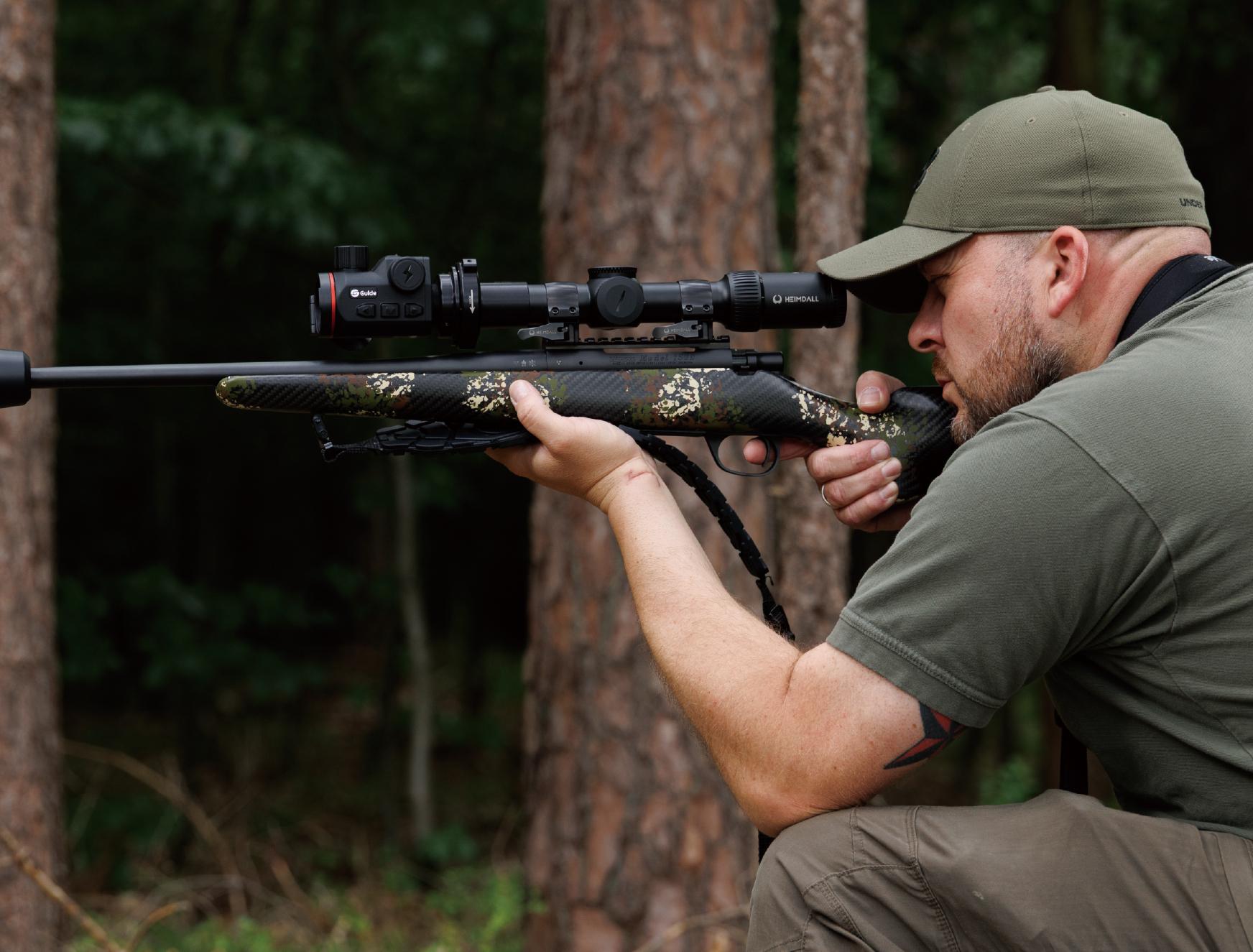
The advent of thermal imaging technology permanently shattered these limitations. Instead of attempting to amplify invisible or faint ambient light, thermal sensors detect the infrared thermal radiation naturally emitted by all objects possessing a temperature above absolute zero. Because every living creature, vehicle, rock, and tree radiates heat energy, thermal imaging cuts effortlessly through pitch-black darkness, thick brush, heavy haze, and adverse weather conditions. For precision marksmen who demand uncompromised daylight optical clarity, comfortable eye relief, and absolute zero retention, pairing their trusted riflescope with a high-performance clip on thermal scope attachment represents the ultimate evolution in modern shooting and observation capabilities.
The Physics of Infrared Radiation and Thermal Core Mechanics
To fully grasp why thermal optics outperform traditional night vision, one must understand the underlying physics ofalin the electromagnetic spectrum. Visible light occupies only a minuscule sliver of this spectrum, while infrared radiation sits safely beyond the limits of human vision. Thermal devices operate primarily within the long-wave infrared (LWIR) band, where molecular heat energy translates directly into thermal signatures.
Understanding Microbolometers and Sensor Processing
At the core of every premium thermal device is an advanced sensor array called a microbolometer. When long-wave infrared energy passes through a specialized Germanium objective lens and strikes the microbolometer grid, it alters the electrical resistance of individual pixels. The internal digital processor measures these microscopic resistance variations, constructs an accurate thermal map, and renders a high-contrast visual image onto an internal micro-display screen in real time.
Strategic Advantages of Modular Systems Versus Dedicated Scopes
When upgrading a rifle platform for round-the-clock engagement, shooters frequently debate whether to purchase a dedicated thermal riflescope or invest in a modular clip-on system. While standalone thermal scopes have specialized applications, seasoned marksmen and tactical professionals overwhelmingly favor modular configurations for several distinct reasons.
Preserving Established Ergonomics and Muscle Memory
One of the most significant hurdles when transitioning to thermal optics is adapting to an entirely new sighting system. Dedicated thermal scopes often feature digital reticles, unfamiliar eye relief distances, and complex menu interfaces that require extensive retraining. By contrast, mounting an auxiliary clip-on thermal imaging attachment directly in front of your trusted daytime riflescope allows you to retain your established shooting posture, comfortable eye relief, and native optical magnification. Your hard-earned muscle memory remains completely intact, drastically reducing the adjustment period during critical encounters.
Evaluating Core Technical Specifications
Navigating the specifications sheet of modern thermal optics can be intimidating. To make an informed investment that matches your specific operational requirements, you must carefully evaluate several essential hardware parameters.
1. Sensor Resolution and Pixel Pitch
Core resolution dictates the foundational clarity of your thermal image. Common resolutions range from 256x192 pixels for compact units up to 640x512 pixels (or higher) for professional-grade hardware. A higher resolution sensor provides a denser pixel grid, allowing you to discern fine anatomical details—such as antler points or facial structures—at much greater distances. Additionally, pixel pitch (measured in micrometers, such as 12um or 17um) determines how closely packed the sensors are, enabling more compact lens designs and enhanced optical magnification scaling.
Advanced Field Strategies and Environmental Dynamics
Owning high-end thermal hardware is only half the battle; mastering its application in the field requires a thorough understanding of environmental thermodynamics and scanning discipline.
Decoding Thermal Gradients and Solar Loading
Thermal imaging relies entirely on temperature contrast. During peak daytime hours, intense solar radiation heats up the surrounding terrain—rocks, soil, and vegetation absorb this energy and radiate it outward. In extreme heat, the ground can match the temperature of wildlife, temporarily reducing visual contrast. Conversely, as evening approaches, inorganic matter sheds heat much faster than organic tissue, creating an ideal window for high-contrast thermal observation. Learning to anticipate how different materials retain and release heat allows you to predict where game or subjects will congregate as temperatures drop.
Systematic Scanning Methodologies
When scanning expansive terrain with a thermal clip on for scope, sweeping your rifle indiscriminately from side to side is inefficient and causes rapid eye fatigue. Instead, employ a grid-scanning technique: break your field of view into distinct sectors, pausing for several seconds in each zone to let subtle heat signatures or slight movements register against the background. Pay special attention to natural pinch points, woodline transitions, water sources, and elevation changes where targets naturally seek shelter or travel corridors.
Conclusion
The integration of modular thermal optics into modern shooting, hunting, and outdoor observation workflows has permanently elevated the standards of nocturnal accuracy and versatility. By bridging the gap between traditional daytime glass and advanced infrared detection, shooters gain the ultimate tactical advantage without sacrificing comfort, familiarity, or precision. Whether managing wildlife populations, protecting agricultural property, or navigating complex low-light environments, equipping your rifle with reliable thermal solutions ensures absolute confidence when operating after dark.
Frequently Asked Questions
Does attaching a thermal clip-on alter the zero of my daytime riflescope? Premium thermal clip-ons are engineered with precision optical alignment to ensure your daytime zero remains completely undisturbed. However, verifying your point of impact at a local shooting range prior to a field expedition is always recommended.
Can exposure to bright sunlight damage a thermal sensor? No. Unlike legacy image-intensifier tubes that can be permanently burned out by bright lights or direct sunlight, thermal sensors detect heat radiation and are entirely immune to light-induced damage.
How do these modular thermal devices mount to a rifle? They typically secure via specialized threaded adapter rings that attach directly to the objective bell of your day scope, or through quick-detach mounts attached to a Picatinny rail immediately in front of your primary optic.
What is the typical battery operating time for modern thermal units? Most modern thermal clip-ons provide between 4 and 8 hours of continuous runtime using internal rechargeable batteries, with USB-C connectivity allowing connection to external power banks for extended overnight monitoring.
What is the typical detection range of a quality thermal clip-on? Detection distances vary based on sensor resolution, germanium objective lens size, and atmospheric humidity, with standard units easily spotting large targets at ranges exceeding 1,000 yards under favorable conditions.

 Arabic
 French
 Spanish
 Portuguese
 Deutsch
 Turkish
 Dutch
Dutch
 Italiano
 Russian
 Romaian
 Portuguese (Brazil)
 Greek
Greek