


Bispecific T-Cell Engagers in Refractory Autoimmune Disease: From Oncology Strategy to Investigational Autoimmune Therapy
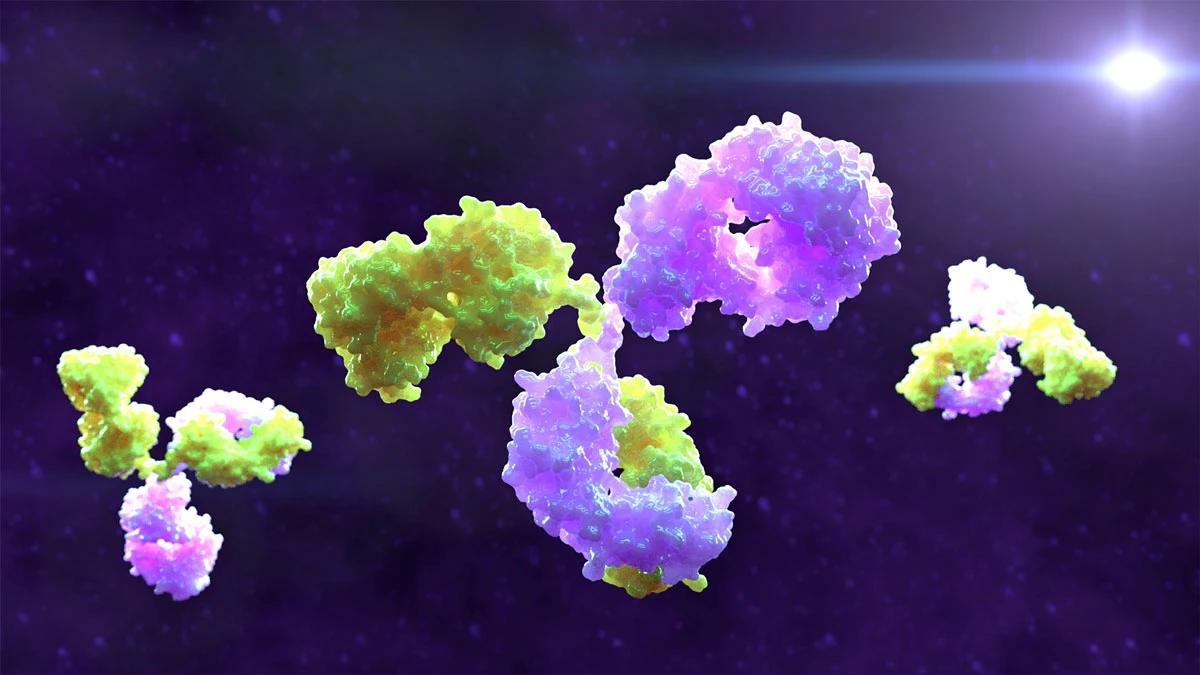
Conceptual visualization of a bispecific T-cell engager connecting a T cell with a target cell.
Bispecific T-cell engagers have long been associated with oncology, where their ability to connect T cells with malignant cells has enabled a clinically established mechanism for targeted immune activation. Now, researchers are beginning to explore whether the same strategy could be redirected toward a very different therapeutic challenge: severe autoimmune connective tissue diseases that no longer respond adequately to conventional treatment.
The idea is compelling. Some refractory autoimmune diseases involve pathogenic B cells, plasma cells, and persistent autoantibody production. If these disease-driving populations could be selectively depleted rather than broadly suppressed, treatment might move closer to immune resetting rather than continuous immunosuppression.
However, applying T-cell engagement outside oncology raises a fundamental question: Can aggressive immune-cell depletion be controlled precisely enough to suppress autoimmunity without creating unacceptable risks?
Why T-Cell Engagers Are Drawing Attention in Autoimmune Disease
Bispecific T-cell engagers, or TCEs, are engineered antibodies capable of binding two targets at once. One arm typically recognizes CD3 on T cells, while the other binds an antigen expressed on the target cell.
This physical bridging brings T cells into close proximity with selected cells and promotes cytotoxic activity.
In cancer, this mechanism is used to direct T cells toward malignant populations. In autoimmune disease, the objective is different. Researchers are investigating whether TCEs can remove immune-cell populations that contribute to persistent autoantibody production and chronic inflammation.
B-cell-directed strategies are already well established in autoimmune medicine, but standard depletion approaches may not eliminate all disease-relevant populations. Long-lived plasma cells, for example, can continue producing pathogenic antibodies even after conventional B-cell-targeted therapies have reduced circulating B cells.
This has made targets such as CD19 and B-cell maturation antigen, or BCMA, increasingly interesting.
Early Clinical Findings Support Further Investigation
A 2026 study published in Nature Medicine evaluated bispecific T-cell engagers in patients with treatment-refractory autoimmune connective tissue diseases.
Five patients with antisynthetase syndrome received the CD19×CD3 bispecific T-cell engager blinatumomab, while five patients with systemic sclerosis received the BCMA×CD3 T-cell engager teclistamab.
The findings were notable because both approaches were associated with reductions in targeted immune-cell populations and reductions in autoantibody levels.
Among patients with antisynthetase syndrome, investigators reported improvements in myositis-related findings and stabilization of interstitial lung disease. Among patients with systemic sclerosis, treatment was associated with improvements in skin fibrosis, stabilization of lung involvement, and resolution of tendon friction rubs.
These observations suggest that directly eliminating disease-driving B-lineage cells may warrant investigation alongside broader immunosuppression.
Yet the study remains exploratory. The patient population was small, there was no randomized control group, and additional maintenance therapy was used. These factors make it impossible to determine comparative efficacy or long-term durability from this study alone.
The treatment-related risks also require careful attention. Cytokine release syndrome was observed, including grade 3 cases, and respiratory infections requiring antibiotics were also reported.
For autoimmune applications, efficacy alone will not be sufficient. The benefit–risk profile will depend on balancing immune-cell depletion with preservation of host defense.
The Engineering Challenge Is Different From Oncology
Repurposing the T-cell engager concept for autoimmune disease is not simply a matter of transferring an oncology molecule into a new indication.
In cancer, strong target-cell killing may often be desirable. In autoimmune disease, the objective may be more nuanced. Developers may need to eliminate pathogenic populations while avoiding excessive depletion of protective immune cells.
This places greater emphasis on antibody architecture.
Binding affinity, epitope selection, target density, CD3 engagement, molecular geometry, Fc configuration, and pharmacokinetic behavior can all influence T-cell activation.
Excessive T-cell engagement may increase the risk of cytokine release and systemic inflammation. A molecule with insufficient activity may fail to eliminate the pathogenic immune population.
For developers investigating these trade-offs, technical resources on bispecific antibody engineering provide useful background on format selection, molecular design, structural optimization, and Fc engineering approaches relevant to next-generation bispecific molecules.
Binding Is Only the Beginning
One of the most important lessons in bispecific antibody development is that dual-target binding does not automatically guarantee therapeutic performance.
A candidate can demonstrate acceptable affinity in a biochemical assay while behaving very differently in a cellular environment.
For T-cell engagers, development programs must examine more than whether the molecule recognizes CD3 and its intended immune-cell antigen.
· Does T-cell activation occur only when the target cell is present?
· How efficiently is cytotoxicity induced?
· What cytokines are released?
· How does antigen density affect activity?
· Does the molecule activate T cells in the absence of its intended target?
· Is activity maintained across different cellular contexts?
These questions are especially important in autoimmune disease, where unnecessary T-cell activation could introduce significant toxicity.
Resources covering bispecific antibody analysis illustrate the types of biochemical and functional characterization commonly used during development, including binding analysis, stability testing, structural assessment, and cell-based evaluation.
Purification Can Influence How Preclinical Data Are Interpreted
Bispecific antibodies are also more difficult to manufacture and purify than many conventional monoclonal antibodies.
Depending on the molecular format, developers may encounter incorrect chain pairing, aggregates, fragments, misassembled products, and other impurities.
These issues are not purely manufacturing concerns. They can directly affect experimental interpretation.
For example, aggregates may contribute to nonspecific immune activation, while incorrectly assembled antibody species can complicate potency measurements.
A well-controlled purification strategy is therefore essential before functional conclusions are drawn.
Technical information on bispecific antibody purification strategies offers a useful overview of affinity capture, chromatographic polishing, and purification workflows that can be adapted to different antibody formats.
Preclinical Development Must Address More Than Potency
For autoimmune-directed T-cell engagers, conventional potency testing represents only one part of the development process.
Researchers must also consider pharmacokinetics, pharmacodynamics, cytokine responses, tissue distribution, target-cell recovery, immune reconstitution, and infection risk.
The duration of immune-cell depletion may prove particularly important.
A therapy that substantially depletes a pathogenic population may produce strong short-term clinical improvement, but prolonged depletion could also increase susceptibility to infection or interfere with normal immune responses.
Conversely, rapid immune-cell recovery could potentially allow disease-associated populations to return.
This makes preclinical model selection and translational study design especially important.
A broader overview of bispecific antibody preclinical research can help illustrate how pharmacology, safety, pharmacokinetics, and functional activity are typically investigated before clinical development.
Could T-Cell Engagers Change the Treatment Philosophy of Autoimmune Disease?
The most interesting aspect of T-cell engagers in autoimmune medicine may not be the molecules themselves, but the therapeutic philosophy they represent.
Much of autoimmune treatment has historically focused on suppressing immune pathways over long periods. T-cell engagers introduce the possibility of directly eliminating selected disease-driving immune populations and then allowing immune-cell populations to reconstitute.
That strategy resembles immune resetting more than chronic immune suppression.
However, several major questions remain unanswered.
Researchers still need to determine which patients are most suitable for this approach, which cellular targets provide the best balance of efficacy and safety, how long immune-cell depletion should last, and whether clinical responses persist after immune reconstitution.
Long-term infection risk and immune recovery will also require careful evaluation.
CD19- and BCMA-directed approaches may ultimately prove useful in different disease settings because they target different stages of B-cell differentiation.
The future of autoimmune T-cell engagers may therefore depend less on identifying a single superior molecule and more on matching the right immune target, molecular design, and treatment strategy to the underlying disease biology.
From Proof of Concept to Precision Immunotherapy
The early clinical evidence surrounding bispecific T-cell engagers in refractory autoimmune connective tissue diseases is important because it expands the boundaries of a technology originally developed for cancer.
Yet the field remains at an early stage.
Small clinical cohorts can establish biological plausibility, but they cannot answer questions about comparative effectiveness, patient selection, long-term remission, or rare adverse events.
Future progress will depend on larger controlled studies, deeper immune profiling, improved molecular engineering, and rigorous preclinical evaluation.
If these challenges can be addressed, bispecific T-cell engagers may become part of a broader shift in autoimmune medicine: from broad immunosuppression toward targeted modulation of immune-cell populations implicated in disease.
For now, the technology represents not a replacement for established treatment, but a rapidly developing experimental strategy with the potential to reshape how researchers think about refractory autoimmune disease.
References
1. "Bispecific T Cell Engagers for Treatment-Refractory Autoimmune Connective Tissue Diseases," Nature Medicine, vol. 32, 2026, pp. 1530-1542. https://doi.org/10.1038/s41591-026-04238-4
2. Madsen, A.V., et al. "Design and Engineering of Bispecific Antibodies: Insights and Practical Considerations," Frontiers in Bioengineering and Biotechnology, vol. 12, 2024, article 1352014. https://doi.org/10.3389/fbioe.2024.1352014
For educational and industry-information purposes only. The linked technical pages are provided as external resources and are not endorsements of any specific product or therapeutic approach.

 English
 Arabic
 French
 Spanish
 Portuguese
 Deutsch
 Turkish
 Dutch
 Italiano
 Russian
 Romaian
 Portuguese (Brazil)