


The Best Veterinary Model May Not Be the Most Advanced One
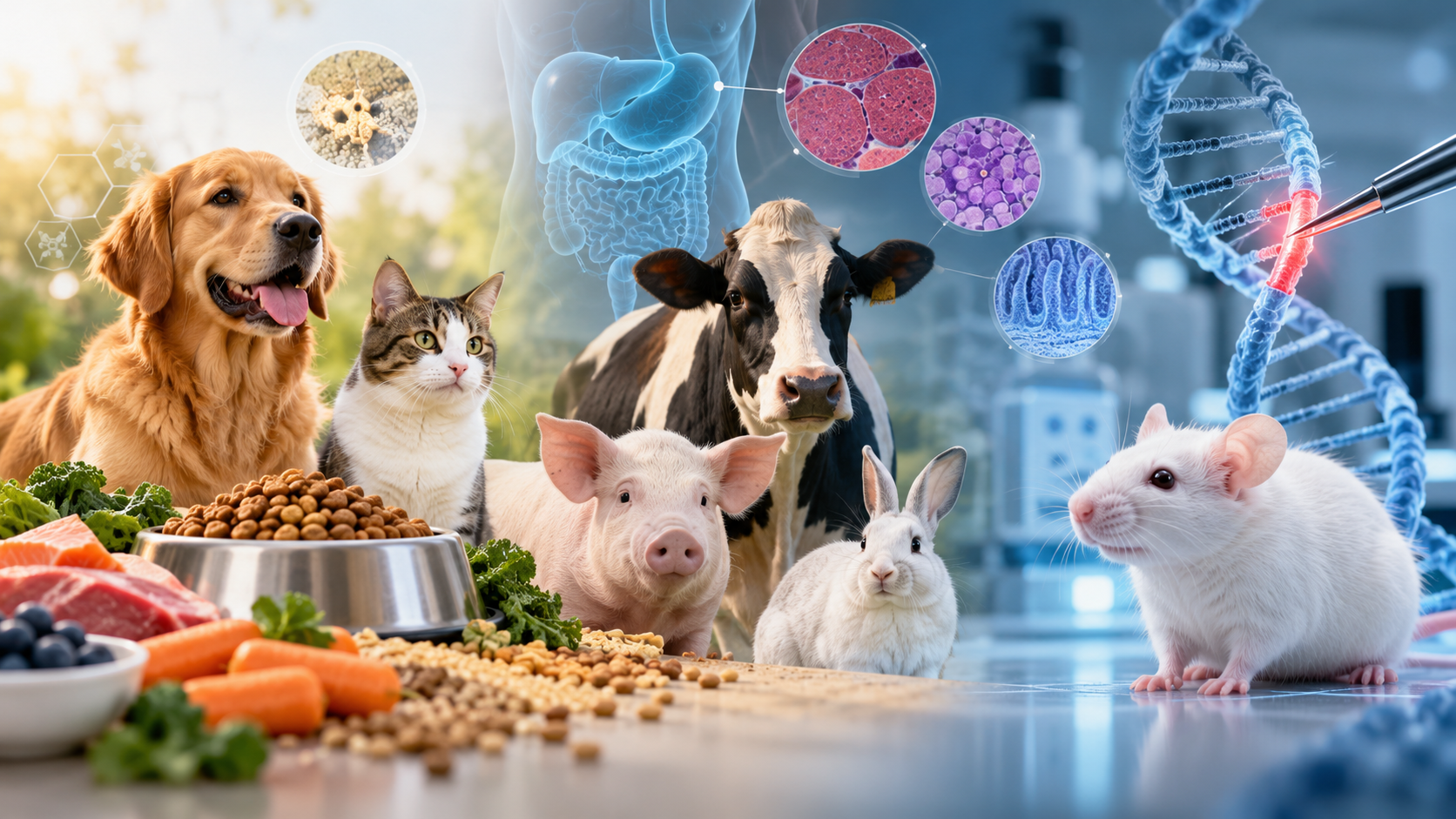
Is the most technologically sophisticated animal model always the most scientifically useful one? Not necessarily. In veterinary and comparative research, model value depends less on technological complexity than on how well the experimental system reflects the biological mechanism being investigated. Diet, metabolism, genetics, species, strain, age, and environmental exposure can all shape disease phenotypes and treatment responses. As veterinary research becomes increasingly mechanism-driven, the focus is shifting from simply reproducing a phenotype to selecting and validating models that are genuinely fit for purpose.
A Technically Successful Model Can Still Be the Wrong Model
Animal model development is often discussed as a technical challenge: induce a disease phenotype, confirm that it appears, and proceed with the experiment.
But this logic can be misleading.
A model may successfully reproduce obesity, hyperglycemia, inflammation, tumor growth, or another visible phenotype while failing to recreate the biological pathway that matters most to the research question.
Conversely, a highly controlled genome-edited model may isolate a molecular mechanism extremely well while overlooking environmental, nutritional, or physiological factors that strongly influence disease development in real animals.
This raises a more useful question than simply asking whether a model "works":
Does the model reproduce the biology required to answer the research question?
For veterinary studies, this question is particularly important. Species differences, breed-specific genetics, diet, age, husbandry conditions, metabolism, immune function, and environmental exposure may all influence experimental outcomes.
The future of veterinary modeling may therefore depend less on finding the most advanced technology and more on matching the right modeling strategy to the right biological problem.
Start With the Biological Question, Not the Technology
A common mistake in study design is choosing the modeling technique before defining what the experiment actually needs to measure.
Genome editing, dietary induction, pharmacological induction, surgical models, spontaneous disease models, and metabolic manipulation all have legitimate applications. However, each approach captures a different dimension of biology.
A more rational workflow begins with several questions:
l What mechanism is being investigated?
l Is the phenotype primarily genetic, environmental, nutritional, metabolic, or multifactorial?
l Which species and strain best reproduce the biological features of interest?
l Which endpoints are required to confirm that the model is relevant?
l Will the model be used for mechanistic research, intervention testing, pharmacology, nutrition studies, or biomarker analysis?
Only after these questions have been answered should the modeling technology be selected.
This approach reduces the risk of building an experimentally impressive model that ultimately provides limited biological insight.
Diet-Induced Models: When Environment Is Part of the Disease
Diet-induced animal models are particularly useful when nutrition and long-term environmental exposure contribute directly to phenotype development.
This is relevant to conditions such as obesity, metabolic syndrome, insulin resistance, fatty liver disease, dyslipidemia, cardiovascular dysfunction, and nutrient deficiency or excess.
Unlike a model in which a single gene is altered, dietary models can reproduce the cumulative interaction between nutrient composition, metabolism, physiology, and time.
A useful overview of this approach can be found in this resource on diet-induced animal model development, which illustrates how variables such as species, strain, diet composition, feeding duration, and phenotypic assessment can be incorporated into model design.
The diet itself should not be treated merely as a tool for producing a target phenotype.
Fat content, carbohydrate composition, protein source, micronutrient concentration, fiber, cholesterol, and other dietary components may significantly influence metabolic outcomes. Therefore, diet formulation should be regarded as an experimental variable rather than background husbandry information.
This becomes particularly important when researchers attempt to compare studies. Two models described as "high-fat diet models," for example, may produce substantially different outcomes if their fat sources, energy density, feeding periods, strains, or ages differ.
Metabolism Cannot Be Reduced to Body Weight
One of the biggest limitations in metabolic animal research is overreliance on visible or easily measurable endpoints.
Body weight is informative, but it rarely tells the full story.
Two animals with similar weight gain may have different levels of insulin sensitivity, liver lipid accumulation, inflammatory signaling, circulating metabolites, gastrointestinal microbiota, or endocrine dysfunction.
For this reason, veterinary nutrition and metabolism studies increasingly require multidimensional model characterization.
A broader framework for nutrition and metabolism animal model development may include glucose tolerance, insulin sensitivity, biochemical parameters, tissue histopathology, microbiome analysis, and metabolite profiling.
The key lesson is that model validation should reflect the biological hypothesis.
If a study investigates glucose regulation, body weight alone is insufficient. If the research focuses on hepatic lipid metabolism, circulating biomarkers without tissue analysis may also be inadequate.
This leads to an important principle:
Validation criteria should be defined before model induction begins.
When validation is treated as an afterthought, researchers risk selecting endpoints that merely confirm the expected result instead of genuinely testing whether the model represents the intended biological state.
Genome Editing: Precision Does Not Eliminate the Need for Validation
Genome-edited models have transformed experimental biology by allowing researchers to manipulate specific genes with increasing precision.
Knockout, knock-in, knockdown, conditional knockout, and humanized models can help investigate gene function, hereditary disease mechanisms, therapeutic targets, signaling pathways, and genotype-phenotype relationships.
However, a confirmed genetic modification does not automatically produce a meaningful disease model.
A technically successful edit may fail to generate the expected phenotype. Compensatory pathways may reduce the biological effect, while unexpected developmental consequences can introduce confounding variables.
For this reason, resources on genome-edited animal model development emphasize multiple stages of characterization rather than genotype confirmation alone.
A robust validation strategy may include:
Molecular validation: confirming that the intended genetic alteration has occurred.
Transcriptional validation: determining whether gene expression changes as expected.
Protein-level validation: assessing the downstream impact on protein abundance or function.
Phenotypic validation: establishing whether the alteration produces biologically relevant structural, physiological, behavioral, metabolic, or pathological changes.
Off-target assessment may also be necessary depending on the editing strategy and intended application.
Genome editing therefore provides experimental control, but experimental control should not be confused with biological completeness.
Diet-Induced or Genome-Edited: Which Is Better?
Neither.
The better model depends on the hypothesis.
If the study asks whether disruption of a specific gene alters a defined signaling pathway, a genome-edited model may offer the clearest answer.
If the question concerns how prolonged nutritional exposure affects metabolism, inflammatory signaling, tissue physiology, or systemic disease development, a diet-induced model may offer greater biological relevance.
For multifactorial disorders, combining approaches may be even more informative.
A genetic predisposition can interact with diet, age, microbiota, or environmental exposure. In such cases, studying a single factor in isolation may oversimplify the disease.
The strongest model is therefore not necessarily the simplest or most technologically advanced. It is the model whose design reflects the causal structure of the biological problem.
Phenotype Reproduction Is Only the Beginning
Researchers should also distinguish between phenotypic similarity and mechanistic similarity.
Two models may produce comparable external phenotypes while reaching them through very different biological pathways.
This distinction matters when animal models are used to evaluate therapeutic interventions.
A drug may appear effective in a model because it targets the specific mechanism used to induce the phenotype. If that mechanism differs substantially from the natural disease process, the result may have limited predictive value.
Therefore, model development should ideally connect four elements:
Research question → induction mechanism → validation strategy → downstream application
Breaking any link in this chain can weaken interpretation.
Toward More Fit-for-Purpose Veterinary Models
The next stage of veterinary model development is unlikely to be defined by a single breakthrough technology.
Instead, progress may come from better experimental alignment.
Diet-induced models provide a way to examine nutritional and environmental contributions to disease.
Metabolism models integrate physiological, biochemical, histological, and molecular endpoints.
Genome-edited models allow researchers to isolate genetic mechanisms and investigate specific molecular pathways.
These approaches should not be viewed as competing technologies. They are different tools for answering different kinds of biological questions.
The most useful model is therefore not the one with the most sophisticated engineering.
It is the one that provides the most scientifically defensible answer to the question being asked.
For veterinary drug discovery, animal nutrition research, metabolic disease studies, genetic research, and comparative biology, this shift from "Can we create the phenotype?" to "Does this model represent the biology we need to understand?" may be one of the most important improvements in experimental design.

 English
 Arabic
 French
 Spanish
 Portuguese
 Turkish
 Dutch
 Italiano
 Russian
 Romaian
 Portuguese (Brazil)
 Greek